Views: 0 Author: Site Editor Publish Time: 2025-05-30 Origin: Site
The vacuum forming process transforms a flat thermoplastic sheet into a shaped product by heating the sheet, forming it over a mold and applying vacuum pressure. After cooling, the formed part is released, trimmed and prepared for its final application.
This process is widely used for plastic packaging, trays, protective covers, automotive components and custom parts. The final quality depends on material selection, sheet thickness, heating uniformity, mold design, vacuum performance and cooling control. This guide explains how vacuum forming works and what manufacturers should consider when selecting materials and equipment.
The vacuum forming process converts a flat thermoplastic sheet into a three-dimensional product.
The main stages include sheet preparation, clamping, heating, mold positioning, vacuum application, cooling, release and trimming.
Heating uniformity, sheet thickness, mold ventilation and cooling control all affect the final product.
Different materials, including ABS, PVC, PP, PET and PS, require suitable process settings and machine configurations.
Vacuum forming is often used for trays, packaging, protective covers, automotive parts and custom plastic components.
The right equipment should be selected according to product dimensions, mold layout, material, forming depth, production volume and finishing requirements.
The vacuum forming process is a type of thermoforming that shapes a heated plastic sheet over or inside a mold by removing the air between the sheet and the mold surface. As the air is evacuated, atmospheric pressure pushes the softened sheet against the mold, allowing it to take the required shape.
Unlike injection molding, vacuum forming starts with a prepared plastic sheet rather than melted plastic pellets. This makes the process suitable for many applications that require formed sheet products, including packaging, trays, protective covers, equipment housings and interior components.
A typical process includes the following stages:
Selecting and preparing the plastic sheet
Securing the sheet in a clamping frame
Heating the sheet until it reaches a suitable forming condition
Positioning the heated sheet over the mold
Applying vacuum pressure
Cooling the formed part
Releasing and trimming the product
The quality of the final product depends on how well these stages work together. A forming problem may not be caused by the vacuum system alone. It may also result from an unsuitable material, uneven heating, poor mold ventilation, excessive forming depth or insufficient cooling.
For this reason, vacuum forming should be treated as a complete process rather than a single machine action.
The process begins with the selection of a thermoplastic sheet that matches the product requirements. The material should provide the required balance of stiffness, flexibility, transparency, impact resistance, chemical resistance and appearance.
The sheet specification should include:
Material type
Sheet thickness
Sheet width and length
Surface finish
Color or transparency
Recycled or virgin material content
Supplier processing recommendations
Common materials used in vacuum forming include ABS, PVC, PP, PET and PS. Other thermoplastics may also be suitable depending on the product and equipment configuration.
Before forming, the sheet should be clean, flat and free from damage. Contamination, moisture, scratches or inconsistent thickness can affect heating and surface quality. If the sheet is stored incorrectly, it may also absorb moisture or become distorted before entering the machine.
Sheet preparation is particularly important for packaging and appearance-sensitive parts. A small surface defect in the sheet may become more visible after the material is stretched over the mold.
The plastic sheet is secured in a clamping frame before heating. The clamping system must hold the sheet firmly enough to prevent movement while still allowing the material to stretch during forming.
A stable clamping process helps maintain:
Accurate product positioning
Consistent material distribution
Repeatable forming results
Correct alignment with the mold
Reliable trimming references
If the sheet moves during heating or forming, the finished part may have uneven dimensions or an inconsistent edge position. Poor clamping may also create wrinkles near the frame or affect the amount of material available for deep sections of the mold.
For automated production, the sheet feeding and clamping systems should work together. The machine should position each sheet consistently so that the mold cavities, cutting lines and finished products remain aligned from cycle to cycle.
Heating softens the thermoplastic sheet and prepares it for forming. The sheet must reach a suitable forming condition throughout the forming area. If it is too cold, it may resist stretching and fail to reproduce the mold shape. If it is overheated, it may sag excessively, stick to the mold or become too thin in certain areas.
Heating performance is affected by:
Material type
Sheet thickness
Heater design
Heating time
Distance between the heater and sheet
Number of heating zones
Sheet color and surface finish
Production cycle requirements
A sheet with uneven temperature distribution may produce uneven wall thickness, incomplete corners or visible surface defects. For larger sheets and multi-cavity molds, independent heating zones can help operators adjust different areas of the sheet.
The correct temperature should not be selected only according to a general material name. Different sheet suppliers, grades, additives and thicknesses can behave differently. Process settings should be confirmed through testing and adjusted according to the product design.
Once the sheet reaches a suitable forming condition, it is positioned over or inside the mold. The mold may be a positive mold or a negative mold, depending on the required product dimensions and surface characteristics.
A positive mold forms the sheet over the outside of a raised tool. A negative mold forms the sheet inside a cavity. The choice affects:
Which surface receives the mold detail
How the material stretches
The final internal and external dimensions
Product release behavior
Wall thickness distribution
For deeper products, additional forming support may be considered. Depending on the machine and mold design, this can include pre-stretching or plug assistance before the vacuum is fully applied.
The purpose of this stage is to guide the softened sheet into the correct position before the vacuum pulls it against the mold. Accurate positioning helps prevent uneven stretching and improves repeatability.
After the sheet is placed on the mold, air is removed from the space between the sheet and the mold. The resulting pressure difference draws the sheet tightly against the mold surface.
During this stage, several factors influence the result:
Vacuum system response
Mold ventilation
Product geometry
Forming depth
Sheet temperature
Material flexibility
Speed of vacuum application
The mold must allow trapped air to escape. If the air cannot leave certain areas quickly enough, the sheet may not reach the bottom of the cavity or reproduce small details accurately.
Vacuum forming is often suitable for relatively straightforward shapes and packaging products. For parts that require sharper details or stronger surface definition, a combined pressure and vacuum process may be more appropriate. MINGDU’s Pressure And Vacuum Forming Machine category can be reviewed when a project requires greater forming flexibility.
After the plastic sheet has taken the shape of the mold, it must cool sufficiently before release. Cooling allows the material to solidify and maintain the formed geometry.
Cooling time depends on:
Material type
Sheet thickness
Product wall thickness
Mold material
Mold temperature
Product size
Cooling system design
Required production cycle
If the part is released too early, it may warp, shrink unevenly or lose important details. If cooling takes too long, production output may be reduced.
Cooling should be consistent across the mold. A product with uneven cooling may have different dimensions from one side to the other. This can create problems during stacking, assembly, sealing or fitting with other components.
After cooling, the formed part is released from the mold. Excess material around the product perimeter is then removed through trimming, punching, die cutting or another suitable method.
The trimming stage affects:
Edge appearance
Product dimensions
Stacking performance
Safety during handling
Compatibility with downstream packaging
Material recovery
Inspection should confirm that the finished product meets the required dimensions and appearance. Typical checks may include cavity depth, edge position, wall thickness, surface quality, deformation and consistency between cavities.
For automated production, trimming and stacking can be integrated into a multi-station workflow. This reduces the need for manual transfer and helps maintain a consistent production sequence.
Material selection and sheet thickness have a direct effect on the vacuum forming process. Two sheets with the same dimensions may behave differently if they use different plastics or have different thicknesses.
ABS can be considered for products that require impact resistance, rigidity and a durable surface. It is often used for formed covers, housings and industrial components.
During forming, the heating profile and product geometry should be carefully reviewed to reduce uneven stretching in corners and deep sections.
PVC can be used for selected packaging, protective products and formed components. It can provide useful processing characteristics, but the sheet formulation and intended application should be confirmed before production.
For more information about PET and PVC characteristics, see Advantages of Using PET and PVC in Thermoforming.
PP may be selected when flexibility, chemical resistance or certain heat performance characteristics are required. It is used in a range of packaging and industrial applications.
PP sheet may require different heating and forming conditions from PS or PVC. The machine supplier should review the exact sheet specification and product geometry before confirming the process.
PET is often considered for products that require transparency, stiffness or a clear appearance. It may be used for packaging, trays and protective products.
Uniform heating is important when forming PET sheet because uneven softening may affect wall thickness and surface quality.
PS may be suitable for lightweight trays, containers and other packaging products that require rigidity and cost-effective forming.
The appropriate thickness depends on the product’s strength requirements, cavity depth, stacking method and intended handling conditions.
Sheet thickness affects:
Heating time
Material stretching
Forming depth
Final wall thickness
Cooling time
Product rigidity
Material cost
Production cycle time
A thicker sheet may provide a stronger product but require more heat and cooling time. A thinner sheet may reduce material usage but require more precise process control.
The correct sheet thickness should be selected according to the finished product rather than the machine’s maximum capacity alone.
The mold is one of the most important elements in the vacuum forming process. It determines the product’s shape, dimensions, surface details and release behavior.
Positive and negative molds create different relationships between the sheet and the mold surface. The correct choice depends on the required product dimensions and which side of the product needs the most detail.
Small ventilation holes allow air to escape from the mold cavity. If ventilation is insufficient, air pockets may remain between the plastic sheet and the mold. This can lead to incomplete forming or soft details.
Ventilation should be positioned according to the cavity geometry and areas where air may become trapped.
A suitable draft angle helps the formed part release from the mold. Vertical or undercut sections can make demolding more difficult and may require special mold construction.
Draft angle should be considered at the product design stage rather than added after the mold has already been manufactured.
Sharp internal corners can cause excessive material stretching and localized thinning. Appropriate corner radii allow the sheet to flow more smoothly into the cavity.
The required radius depends on the material, sheet thickness, forming depth and product function.
Deep cavities require more stretching than shallow cavities. As forming depth increases, the risk of uneven wall thickness and incomplete forming may also increase.
For deep products, the design may require:
More controlled heating
Suitable mold ventilation
Pre-stretching
Additional forming support
Careful cooling
Appropriate material thickness
The mold should include a clear relationship between the formed cavity and the final cutting line. Poor alignment can create uneven edges, inconsistent product dimensions or difficulty during stacking.
Mold design, machine configuration and cutting equipment should therefore be reviewed as one system.
| Defect | Possible Causes | Process Areas to Review |
|---|---|---|
| Uneven wall thickness | Uneven heating, excessive stretching or unsuitable mold geometry | Heating zones, sheet thickness and mold design |
| Incomplete forming | Insufficient vacuum, poor ventilation or low sheet temperature | Vacuum system, vent holes and heating settings |
| Webbing or folds | Excessive sheet movement or unsuitable cavity arrangement | Mold layout, pre-stretching and forming sequence |
| Warping | Early release, uneven cooling or internal material stress | Cooling time, mold temperature and release timing |
| Surface marks | Dirty sheet, damaged mold or contact during forming | Sheet preparation, mold condition and handling |
| Rough or uneven edges | Inaccurate cutting or unstable product positioning | Trimming tool, mold alignment and cutting settings |
| Cracking or tearing | Excessive stretching, low temperature or unsuitable thickness | Material selection, heating and forming depth |
| Dimensional variation | Inconsistent temperature, vacuum or sheet positioning | Machine repeatability and process monitoring |
These defects should not be solved by changing only one parameter. For example, increasing vacuum pressure may not correct incomplete forming if the sheet is too cold or the mold has inadequate ventilation.
A structured troubleshooting process should compare the defect location, material condition, mold geometry, machine settings and production timing.
Vacuum forming and pressure forming both use heat to soften plastic sheet, but they apply forming force differently.
Vacuum forming uses negative pressure to draw the heated sheet against the mold. It can be suitable for:
Trays
Containers
Protective covers
Simple packaging
Large formed surfaces
Products with moderate detail
Pressure forming uses positive air pressure in addition to vacuum. This pushes the sheet more closely against the mold and may improve the reproduction of fine details, edges and textures.
Pressure forming may be considered for:
Products with sharper features
Detailed packaging
Parts requiring clearer surface definition
Components with tighter dimensional requirements
Applications where appearance is important
MINGDU’s Pressure Forming Machine range can be reviewed for projects that require pressure-assisted forming.
The right process depends on the product design, material, forming depth, surface requirements and production volume. Vacuum forming is not automatically better for every application, and pressure forming is not necessary for every product.
Vacuum forming can be used to produce a broad range of formed plastic products. Typical applications include:
Food trays
Plastic containers
Blister packaging
Product inserts
Protective packaging
Display packaging
Interior panels
Covers
Trim components
Protective housings
Formed storage parts
Equipment covers
Machine housings
Protective guards
Tool trays
Custom enclosures
Medical trays
Protective covers
Equipment inserts
Retail displays
Custom product components
The appropriate equipment depends on the product size, material, forming depth, mold structure and required production volume.
When selecting vacuum forming equipment, begin with the product rather than the machine name. A supplier should understand the part design and production requirements before recommending a configuration.
The forming area must accommodate the product layout, mold border, cutting clearance and material flow. For multi-cavity molds, the available area determines how many products can be produced during each cycle.
Confirm that the machine can process the required sheet materials and thicknesses. Do not rely only on a general statement such as “suitable for plastic sheet.” Ask for confirmation based on the exact material grade and thickness.
The maximum forming depth should be compared with the deepest area of the product, including mold clearance and design requirements.
Review the number of heating zones, temperature adjustment method and ability to achieve uniform heating across the forming area.
The vacuum system should respond consistently and work with the mold’s ventilation design. The supplier should explain how vacuum performance is maintained during repeated production cycles.
Ask how the formed product is cooled and released. The cooling method should support stable dimensions and a production cycle appropriate for the product.
If the product requires clean edges, in-line punching or trimming, confirm whether these functions are included in the machine configuration or require separate equipment.
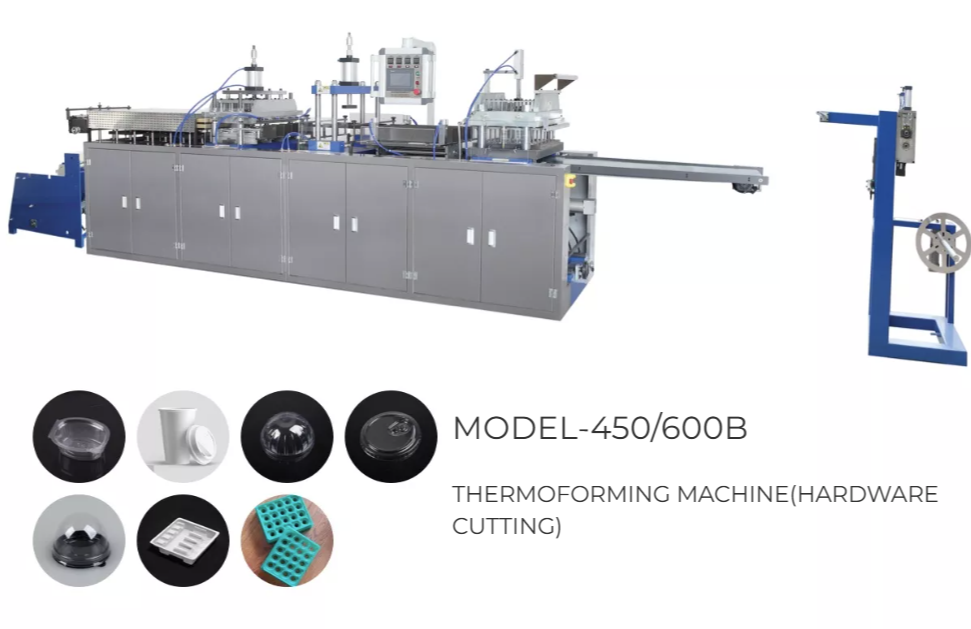
For high-volume production, automated feeding, forming, cutting and stacking may improve workflow consistency. A Multistation Thermoforming Machine can be considered when several operations need to be coordinated in one production line.
Before placing an order, provide the supplier with:
Product drawing
Physical sample
Material information
Sheet thickness
Required forming depth
Target output
Mold layout
Downstream packaging requirements
Testing with the actual material and product design is the most practical way to confirm forming quality and production suitability.
The vacuum forming process heats a thermoplastic sheet and shapes it over a mold by removing air between the sheet and the mold. The formed part is then cooled, released and trimmed.
A plastic sheet is clamped and heated until it becomes flexible. It is positioned over a mold, and vacuum pressure draws it against the mold surface. After cooling, the product is removed and finished.
Common materials include ABS, PVC, PP, PET and PS. The suitable material depends on the product design, sheet thickness, required performance and machine configuration.
Uneven wall thickness may result from inconsistent sheet heating, excessive stretching, unsuitable material thickness, deep cavities, poor mold design or incorrect forming settings.
Vacuum forming can be used for high-volume production when the machine, mold layout and automation level are properly matched to the product. Automated feeding, forming, cutting and stacking can support continuous production.
Vacuum forming uses vacuum pressure to draw the sheet against the mold. Pressure forming adds positive air pressure to improve contact between the sheet and mold, which may produce sharper details and better surface definition.
Defects can be reduced by selecting a suitable material, controlling sheet heating, improving mold ventilation, checking vacuum performance, allowing enough cooling time and maintaining accurate trimming and release conditions.
The vacuum forming process is a coordinated sequence that turns a flat thermoplastic sheet into a finished three-dimensional product. Sheet preparation, clamping, heating, mold design, vacuum application, cooling and trimming all influence the final result.
Material type and sheet thickness should be selected according to the product’s required strength, appearance and forming depth. Mold ventilation, draft angles, corner radii and trimming references should also be considered before production begins.
For straightforward trays, containers and protective covers, vacuum forming can provide a flexible manufacturing solution. Products with sharper details or more demanding surface requirements may benefit from pressure-assisted forming. High-volume production may require a multi-station system that combines forming, cutting and stacking.
If you are planning a new vacuum forming project, prepare your product drawing, sample, material information and target output before contacting a machine supplier.
Contact MINGDU to discuss your requirements and receive a suitable equipment recommendation.