
Views: 0 Author: Site Editor Publish Time: 2026-08-17 Origin: Site
Edge trim and skeletal waste inevitably occur during any thermoforming run. However, allowing excessive scrap directly erodes your gross margins. It severely disrupts daily production schedules and delays customer deliveries. High scrap rates are not just a standard cost of doing business. You must view them as a correctable metric. This metric links directly to your Overall Equipment Effectiveness (OEE). Measuring material losses often reveals hidden process bottlenecks across your facility floor.
This guide provides a practical framework for operations and plant managers. You will learn how to accurately assess process improvements. We will help you evaluate equipment upgrades carefully. You can make evidence-based decisions using these industry insights. Apply these proven strategies to sustainably reduce thermoforming scrap today and protect your bottom line.
Excessive plastic sheet waste often stems from a combination of outdated tooling design, inconsistent heating profiles, and manual handling errors.
Deciding between process optimization (training, standard operating procedures) and capital expenditure (precision automation) requires a strict ROI analysis based on your facility's volume and speed.
Evaluating new thermoforming equipment or automation partners should focus on features-to-outcomes, integration scalability, and verifiable reductions in defect rates.
Sustainable scrap reduction requires balancing material efficiency with realistic production targets—avoiding exaggerated industry claims (e.g., "90% reduction overnight") in favor of consistent, measurable gains.
Excessive scrap compounds financial damage rapidly across your entire operation. You lose money on raw resin and extruded sheet costs immediately. Wasted machine time drags down your OEE score significantly. You also burn valuable electrical energy producing defective parts. Heating thick plastic sheets consumes massive power. Throwing away the final part wastes all that embodied energy. Labor costs rise when operators must manually sort bad products from good ones.
A healthy scrap rate distinguishes between unavoidable skeletal waste and functional defects. Unavoidable waste happens between nested parts on the plastic web. Functional defects include webbing, chilling marks, and uneven wall thickness. Webbing happens when excess material folds over itself during forming. Chilling marks occur when hot plastic hits a cold mold too quickly. You should aim to eliminate functional defects entirely. Industry standards suggest keeping total functional defects below 2% for high-volume runs.
We must also consider regulatory compliance closely. Tightening environmental regulations demand better material efficiency across manufacturing sectors. Corporate sustainability mandates mean you cannot afford to waste plastic. Many companies face strict ESG (Environmental, Social, and Governance) reporting requirements now. Minimizing plastic waste directly improves your ESG scorecard. Efficient material usage operates as a strict compliance necessity today. It is no longer just an optional cost-saving measure.
Plant managers face two primary avenues to fix defect issues. You can optimize current workflows. Alternatively, you can invest in new technology. Start by evaluating quick process interventions. Rigorous setup standardization prevents many common operational errors. Optimize your plug-assist timing and depth for better material distribution. Consider switching to syntactic foam plugs to reduce chilling marks. Syntactic foam transfers heat poorly. This property prevents the plastic from cooling prematurely during stretching. Train operators thoroughly on thermal management techniques. These quick wins often yield immediate results.
Sometimes legacy equipment creates the actual bottleneck. Look for clear indicators of hardware failure. Machines incapable of holding tight temperature tolerances cause massive waste. Inconsistent vacuum pressure leads to poor detail replication. Vacuum pumps degrade over time. Clogged filters reduce suction speed. This slow suction prevents sharp corner definition. If you see these signs, equipment upgrades provide long-term ROI.
Approach your floor audit objectively. Do not try to buy a hardware solution for a fundamental training problem. Verify your baseline data first. Analyze operator logs carefully before committing to expensive machinery. Track baseline data over 30 days to spot trends. A reliable audit ensures you address the true root cause.
Consider these quick wins to optimize current workflows:
Standardize setup sheets for every specific product run.
Adjust plug-assist parameters to improve uniform material distribution.
Train operators to identify early thermal variations.
Calibrate oven zone controllers weekly to prevent temperature drift.
Inspect vacuum seals and lines for hidden air leaks.
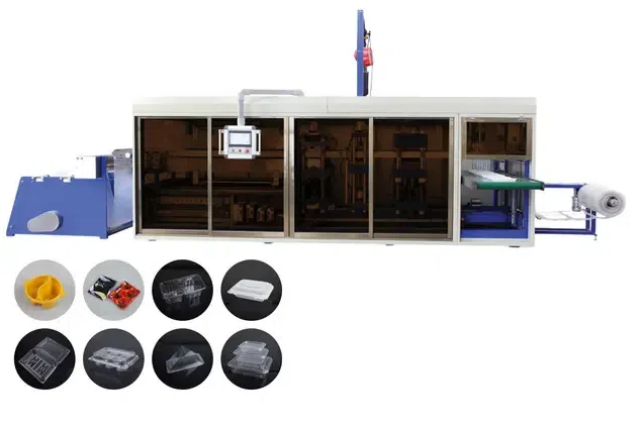
Material utilization dictates your overall profitability. You must focus on material handling prior to the forming process. First, examine your tooling and layout design. Optimizing mold layouts drastically cuts skeletal web waste. Reduce the spacing between cavities where possible. Utilize advanced nesting software to pack parts efficiently. Modern algorithms analyze geometry to interlock shapes perfectly. This software minimizes the plastic grid left behind. However, beware of too little spacing. If cavities sit too close, the web snaps during transport.
Next, address gauge variation and extrusion synergy. Incoming material inconsistency poses a massive risk. Tight gauge control on the plastic sheet prevents severe forming issues. A 10% thickness variation causes huge heating differences. The thin spots overheat and sag heavily. The thick spots remain stiff. Thin spots lead to tearing during the vacuum phase. Thick spots cause incomplete forming or webbing. Work closely with your sheet supplier. Demand strict tolerance limits on all extruded rolls.
Finally, look at trimming accuracy. Precise registration matters immensely during in-line trimming. Match-metal trimming provides incredibly clean cuts. Steel rule dies wear out quickly and cause angel hair dust. CNC routing also requires exact calibration. Poor trimming damages perfectly formed parts at the final stage. You ruin all previous value added to the sheet. Maintain sharp blades and strict index alignments. Doing so will securely reduce thermoforming scrap across your finishing lines.
Follow these layout optimization steps carefully:
Analyze current cavity spacing metrics across all active molds.
Apply nesting software to test tighter grid configurations.
Redesign the mold base to support the new layout safely.
Run pilot tests to ensure no webbing occurs between closer parts.
Document the new web fraction and update production cost models.
High-speed lines present unique scalability challenges. Human intervention simply cannot keep pace with rapid defect identification. Operators miss subtle flaws when parts cycle every few seconds. Precision automation serves as a vital defect-prevention tool. It goes far beyond mere labor reduction.
Automated vision inspection systems catch defects instantly. High-speed cameras analyze wall thickness and part geometry in milliseconds. Closed-loop thermal controls adjust heater bands in real time. Proportional-Integral-Derivative (PID) controllers predict temperature drops efficiently. They supply power before the heating zone cools down. Robotic part handling prevents scratching and stacking damage. Robots remove parts perfectly without bending the warm plastic. These technologies ensure every cycle matches the golden profile.
However, you must acknowledge adoption risks transparently. Integration downtime temporarily halts production schedules. It might take two weeks to wire and test new sensors. You will likely need specialized maintenance staff or PLC programmers. Advanced systems require complex calibration periods before reaching peak performance. Plan your deployment carefully to mitigate these workflow disruptions.
Ground your ROI expectations in verifiable data. Precision automation delivers unmatched consistency. This consistency flattens scrap rate variance over time. You will see predictable, stable yields rather than wild daily fluctuations. Automation removes human guesswork from complex heating profiles.
Buying new machinery or consulting services requires a structured evaluation lens. You must map technical features directly to operational outcomes. Quartz infrared heaters provide faster, more even heat penetration. Ceramic heaters react slowly, but quartz reacts in seconds. This specific feature results in fewer cold-form tears. Servo-driven platens offer precise motion control. Pneumatic cylinders often bounce at the end of their stroke. Servos stop smoothly. They prevent jerky movements causing the hot sheet to warp.
When evaluating vendors, ask tough questions. Focus heavily on pilot testing capabilities. Demand clear service level agreements (SLAs) for maximum uptime guarantees. Inquire about their post-installation support infrastructure. You need reliable technical partners, not just equipment sellers.
To build your shortlist, follow these next-step actions. First, conduct a comprehensive scrap audit. Collect scrap parts for one week. Categorize them by defect type and weigh each category. Quantify your current material losses accurately. Calculate the lost material cost. Define a realistic budget based on those lost revenue figures. Finally, request targeted technical demonstrations. Ask suppliers to show how they address your specific defect data. This approach helps you confidently reduce thermoforming scrap and boost margins.
Thermoforming Equipment Features and Defect Reduction Outcomes
Technical Feature | Operational Outcome | Common Defect Prevented |
|---|---|---|
Quartz Infrared Heaters | Faster, uniform heat penetration | Cold-form tears, uneven stretching |
Servo-Driven Platens | Precise, repeatable motion control | Webbing, material warping |
Closed-Loop Pyrometers | Real-time temperature adjustments | Chilling marks, overheating burns |
Automated Vision Systems | Instant identification of flaws | Shipping out-of-spec products |
Advanced Nesting Software | Tighter part spacing on the web | Excessive skeletal waste |
Successfully minimizing waste requires addressing multiple root causes simultaneously. You must optimize material handling, thermal processing, and trimming stages. Move past simple symptom management today. Build a verifiable business case for process overhauls. Alternatively, target precise equipment investments based on concrete data. Schedule a comprehensive facility audit soon. Consult an equipment specialist to review your unique production metrics. Download a technical specifications comparison guide to evaluate modern solutions. Taking these deliberate actions protects your margins and streamlines your factory floor.
A: Acceptable rates depend heavily on part geometry. Unavoidable web and trim waste often ranges between 15% and 30%. However, functional defect scrap should remain below 2% to 3%. Aim for realistic industry benchmarks rather than theoretical zeros. Focus on eliminating functional defects completely.
A: Automated controls stabilize process variables immediately upon installation. You will see more consistent heat profiles on the very first run. However, expect a brief calibration period. Fine-tuning the PID loops takes a few shifts. Once calibrated, defect rates drop significantly and remain stable.
A: Nesting and layout software operates perfectly pre-production. You can use it regardless of your machine age. However, closed-loop machine software requires modern hardware. You will likely need modern PLC retrofits to integrate real-time adjustments. Evaluate your current controllers before buying advanced software packages.
A: Regrinding recovers some raw material value. It is an excellent sustainability practice. However, recycling does not solve the primary scrap problem. It cannot recover the machine time, labor, or energy wasted during the defective cycle. You must focus on preventing scrap in the first place.


