
Views: 0 Author: Site Editor Publish Time: 2026-08-18 Origin: Site
Choosing the wrong polymer for a thermoforming run presents serious operational risks. You might face immediate product spoilage, extensive tooling modifications, or total compliance failures across your target markets. The core conflict almost always involves a tough physical trade-off. Packaging engineers must balance retail-ready optical clarity against extreme temperature tolerance. We see this daily when evaluating PP vs PET thermoforming for high-volume production lines. Our goal is to provide packaging engineers, procurement managers, and product designers an evidence-based framework. You will learn how to select the right material based on thermal performance, physical yield metrics, and evolving sustainability mandates. We will break down material properties, dimensional shrinkage factors, and regulatory compliance requirements. This ensures you specify the exact polymer needed for your application. You can then avoid costly production delays and maintain optimal shelf life.
Visuals vs. Thermal: PET dominates in high-clarity retail displays and cold-chain; PP is required for microwaveability, hot-fill, and high heat resistance.
Yield Economics: PP has a lower specific gravity (density), yielding more packaging units per pound of resin compared to PET, though it often requires more complex thermoforming control.
Sustainability & Compliance: Both are highly recyclable (Codes #1 and #5), but standardizing on post-consumer recycled PET (rPET) is currently easier for meeting strict European (EFSA) and FDA food-grade compliance mandates.
Tooling Realities: You cannot seamlessly swap PET and PP on the same mold; differing shrinkage rates require dedicated tooling strategies.
Mastering the nuances of PP vs PET thermoforming requires understanding fundamental polymer behavior. These two plastics react entirely differently under heat. Operators must adjust their machinery, heating zones, and cooling cycles accordingly.
Polyethylene Terephthalate (PET) is an amorphous polymer during the forming stage. It provides a wide, forgiving processing window. Operators prefer PET because it behaves predictably when heated. The material exhibits a very low dimensional shrinkage rate. This allows the plastic to conform easily to intricate mold details using standard vacuum or pressure forming techniques. PET also boasts exceptional structural rigidity. Engineers frequently leverage this rigidity to achieve thinner down-gauging. You can reduce the sheet thickness significantly without losing structural integrity or stacking strength.
Polypropylene (PP) is a semi-crystalline polymer. It acts as the high-skill alternative to PET. PP is highly prone to dimensional shrinkage. It often shrinks between 1.5% and 2%, compared to PET’s negligible rate of less than 0.5%. Processing PP requires extremely precise temperature control. It absorbs heat differently and drops abruptly when it reaches its melt phase. Uneven heating causes immediate webbing, warping, and material sagging. Successful PP forming often requires heated plug assists. These plug assists pre-stretch the material before the vacuum applies. You also need highly specific mold cooling systems to stabilize the polymer structure before ejection.
Many production managers hold a dangerous misconception. They believe they can seamlessly swap materials mid-production on the exact same mold. Changing from PET to PP demands completely new tooling. You must account for the massive dimensional shrinkage discrepancies. PP requires different draft angles, altered release mechanisms, and specialized cooling channels. Using a PET mold for a PP run guarantees dimensional failure. Lids will not snap onto bases. Trays will warp upon cooling.
Evaluating packaging performance means looking closely at the physical limitations of the plastic. Retail environments demand specific optical properties. Food products demand specific atmospheric barriers.
Performance Metric | PET (Polyethylene Terephthalate) | PP (Polypropylene) |
|---|---|---|
Optical Clarity | Excellent (Glass-like) | Naturally Hazy (Milky appearance) |
Heat Deflection | Deforms around 70°C (158°F) | Stable up to 120°C (248°F) |
Oxygen Barrier (O2) | Excellent | Poor (Requires EVOH layer) |
Moisture Barrier | Good | Exceptional |
Consumer perception relies heavily on optical clarity. PET offers glass-like transparency. It perfectly suits cosmetics and fresh food displays. Shoppers want to see the exact texture of a salad or the color of a premium lotion. Standard PP is inherently hazy. It possesses a milky, translucent quality. Clarified PP (cPP) does exist as an alternative. Chemical manufacturers add specific nucleating agents to improve its transparency. However, cPP increases raw material requirements. It still falls slightly short of PET’s premium gloss and light transmission levels.
Temperature tolerance usually dictates the final material choice. PET deforms at roughly 70°C (158°F). It works perfectly for ambient, chilled, and frozen packaging applications. However, PET completely fails in microwaves or hot-fill processing lines. The plastic will warp and melt almost instantly. PP withstands temperatures up to 120°C (248°F). It serves as the absolute industry standard for microwave-safe deli containers. It easily handles hot-fill liquids like soups, sauces, and pasteurized beverages.
Shelf life extension depends on controlling atmospheric ingress. PET provides excellent oxygen (O2) and carbon dioxide (CO2) barriers. It prevents rapid oxidation in fresh foods and sensitive cosmetics. It traps modified atmospheres effectively inside the package. PP provides an exceptional moisture vapor barrier. It keeps dry snacks crisp and prevents liquid loss. However, standard PP offers a very poor oxygen barrier. If you need oxygen protection using PP, you must co-extrude it with EVOH. This multi-layering adds significant complexity to the manufacturing and recycling phases.
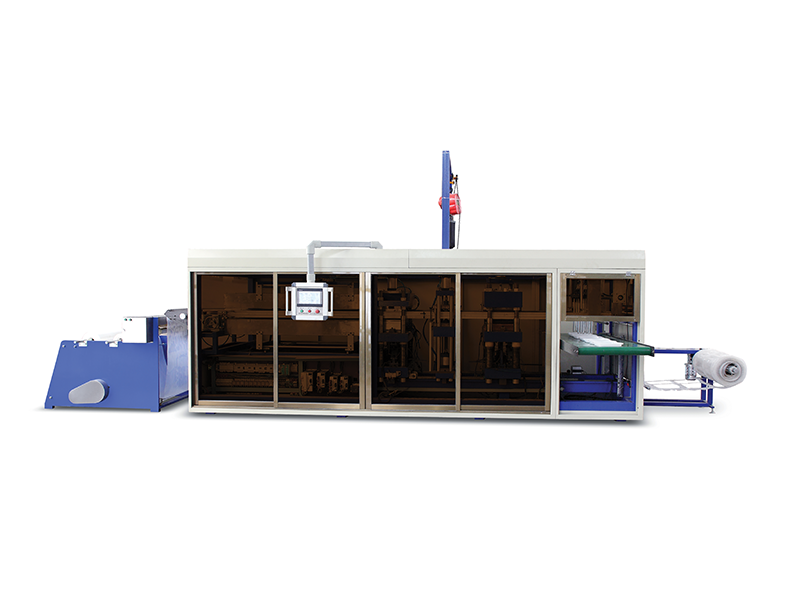
Different industries prioritize different polymer traits. Matching the right plastic to the right product ensures safety, functionality, and consumer satisfaction.
The food sector places intense demands on rigid packaging. The choice between polymers dictates how the consumer interacts with the meal.
When to choose PET: Specify PET for salad bowls, bakery clamshells, cold-pressed juice cups, and fresh-cut fruit trays. These applications require high visibility. They do not undergo thermal stress during filling or consumption.
When to choose PP: Specify PP for microwavable ready-meal trays, hot soup containers, and dairy tubs. Yogurt and margarine require PP because it withstands automated filling stresses and prevents moisture loss.
The CPET Alternative: You should also consider Crystalline PET (CPET). CPET acts as a premium dual-ovenable alternative to PP. It handles both microwave and conventional oven safety. It uses nucleating agents to crystallize the PET, granting it extreme heat resistance.
Cosmetics packaging blends aesthetic luxury with chemical safety. The formulations inside often contain aggressive active ingredients.
When to choose PET: Use PET for transparent blister packs and high-end retail display trays. In this sector, perceived value ties directly to pristine clarity. Brands want their products suspended in crystal-clear housings.
When to choose PP: Use PP for packaging requiring high chemical resistance. Essential oils, aggressive solvents, and alcohol-based formulas will degrade standard PET over time. PP resists these chemicals effectively. It prevents cracking, crazing, and chemical leaching.
Modern packaging design must prioritize environmental impact. Designing a compliant PP vs PET thermoforming system requires understanding global recycling streams.
PET carries Resin Identification Code #1. It enjoys the most robust, globally established closed-loop recycling infrastructure. Municipalities collect, sort, and process PET bottles and trays with high efficiency. PP carries Resin Code #5. It is widely recyclable in theory. However, food-grade recycled PP (rPP) streams remain less mature. It is significantly harder to source high-quality rPP at an industrial scale. The sorting technology for PP tubs still lags behind the optical sorters used for PET.
The European market context is rapidly changing how brands select materials. The EU Plastic Tax and strict EFSA (European Food Safety Authority) regulations push brands toward high-percentage rPET. Achieving strict food-contact certification with rPET is currently much more reliable. EFSA requires proof of 95% food-contact origin for recycled plastics. The PET bottle deposit schemes provide this clean stream naturally. The PP market struggles to prove this origin due to mixed household collections.
Evaluating the true carbon footprint requires a full Life Cycle Assessment. PP requires less energy to manufacture initially. Its lower density makes it lighter to ship, reducing transportation emissions. However, PET balances the LCA scale at the end of its life. PET's drastically higher end-of-life recovery rate means fewer virgin materials enter the ecosystem. Your specific LCA outcome depends heavily on regional recycling capabilities.
Efficient production depends on maximizing material yield and optimizing cycle times. The physical characteristics of the resin dictate how many units you can pull from a single roll.
Specific gravity plays a massive role in high-volume manufacturing. You must compare the density of the two polymers. PP has a specific gravity of approximately 0.90 g/cm³. PET sits much higher at roughly 1.33 g/cm³. This density gap changes production output entirely. PP yields roughly 30% more parts per pound of resin. A 1000-pound roll of PP will generate significantly more individual trays than a 1000-pound roll of PET. This volumetric advantage deeply impacts long-term production efficiency.
You must factor in processing dynamics when planning a production schedule. PP requires much higher processing temperatures to reach its forming state. It possesses a higher specific heat capacity. Furthermore, PP demands longer cooling times inside the mold before safe ejection. These extended heating and cooling phases can slow down cycle times. You might produce fewer parts per minute compared to a highly optimized PET line.
Your engineering logic should follow a strict hierarchy. If microwaveability is completely non-negotiable, you must accept PP's specific tooling requirements and slower cycle times. If your product requires pristine clarity and rapid, high-yield thermoforming speeds, default to PET. Never try to compromise by running one material on machinery calibrated for the other.
There is no universal "better" plastic in the thermoforming industry. The final verdict depends entirely on your specific product requirements. PET consistently wins on aesthetic clarity, oxygen barrier performance, and current circularity mandates. PP clearly wins on thermal resistance, chemical durability, and sheer raw material yield per pound.
We recommend several immediate next steps for buyers and engineers. First, request detailed Material Data Sheets (MDS) from your resin suppliers. Second, order physical prototypes of both materials if custom tooling is not yet cut. Finally, conduct a localized Life Cycle Assessment based specifically on your target distribution market. Understanding local recycling infrastructure ensures your final package meets both performance and compliance goals.
A: No. You cannot use the same mold due to severe shrinkage discrepancies. PP shrinks up to 2%, while PET shrinks less than 0.5%. Running PP on a PET mold causes dimensional failure, severe warping, and improper lid fitment. Each material requires dedicated tooling, distinct draft angles, and specific cooling channels.
A: No. Crystalline PET (CPET) undergoes a specialized manufacturing process. Manufacturers add nucleating agents to the PET resin. This process crystallizes the polymer structure. CPET withstands extreme temperatures, making it safe for both microwaves and conventional ovens. Standard PET remains amorphous and deforms around 70°C.
A: PET handles general cold-chain well but becomes brittle at extreme sub-zero temperatures. Copolymer PP is actually best for deep freezing. While homopolymer PP cracks in the cold, copolymer PP contains additives preventing brittleness. It survives extreme freezer impacts much better than standard PET.
A: PET has a highly robust, global recycling infrastructure. Clear PET bottles and trays are easily sorted and reprocessed into food-grade rPET. The PP recycling stream is still developing. While PP tubs are collected, sorting food-grade rPP at scale remains technologically challenging compared to PET.


