
Views: 0 Author: Site Editor Publish Time: 2026-01-27 Origin: Site
Are you wondering which materials can be thermoformed? Thermoforming is a versatile process used across industries like packaging, automotive, and consumer goods. In this article, we’ll explore popular materials such as ABS, PVC, and polycarbonate. You’ll learn how these materials are formed, their applications, and the benefits they offer for different industries.
Thermoforming is a process used to create plastic parts by heating a thermoplastic sheet until it becomes pliable, forming it over a mold, and then cooling it to solidify the shape. The basic steps in the thermoforming process are:
1. Heating: The thermoplastic sheet is heated until it becomes soft and flexible.
2. Forming: The soft plastic is then placed over a mold and shaped using either vacuum or pressure techniques.
3. Cooling: After the material has taken shape, it is cooled to harden and retain its new form.
These steps are essential to achieve precise, high-quality parts that can be used in a variety of industries, such as packaging, automotive, and consumer goods manufacturing.
While the heating and forming are relatively straightforward, the cooling process ensures that the plastic maintains its new shape, preventing it from warping or deforming.
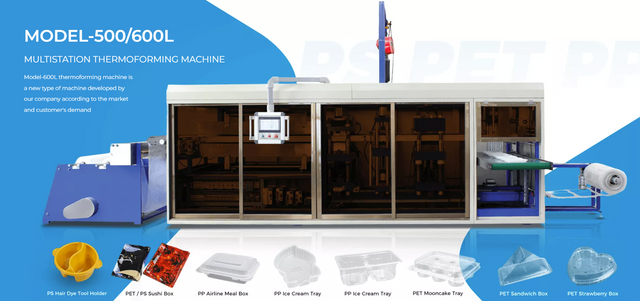
Thermoforming is typically performed using two main techniques: vacuum forming and pressure forming. Both methods are used depending on the complexity and details required in the final part. Let's break them down:
● Vacuum Forming: This method is generally used for simple, large-area applications where the need for intricate detail is not as critical. During vacuum forming, a heated plastic sheet is stretched over a mold, and a vacuum is applied to pull the material into the shape of the mold. It’s cost-effective and ideal for producing large quantities of items like trays, containers, and packaging.
● Pressure Forming: This technique uses compressed air to apply pressure and ensure that the plastic sheet conforms to the mold with great detail. It’s ideal for applications requiring high-definition features such as automotive parts, medical devices, and consumer goods where fine details matter. This process allows for sharper edges and better depth of detail than vacuum forming.
Certain materials are more suitable for specific thermoforming techniques. Below is a breakdown of some common thermoforming materials and the techniques that work best with them:
Material | Best For | Thermoforming Method |
HIPS (High Impact Polystyrene) | Packaging, trays, food containers | Vacuum Forming |
PVC (Polyvinyl Chloride) | Medical devices, signage | Vacuum and Pressure Forming |
ABS (Acrylonitrile Butadiene Styrene) | Automotive parts, appliance housings | Pressure Forming |
Polycarbonate (PC) | Safety shields, retail displays | Pressure Forming |
● HIPS and PVC are better suited for vacuum forming as they require less pressure and can maintain their shape with a vacuum pull.
● ABS and Polycarbonate require more precise shaping, which is achieved using pressure forming to ensure high-quality, detailed outputs.
Mingdu Machinery’s advanced multistation thermoforming machines are optimized for both vacuum and pressure forming techniques, providing flexibility in handling materials such as ABS, PVC, and HIPS. The Model-500L and Model-600L are perfect for materials like ABS, offering automated cycles to improve production efficiency and product consistency.
ABS is a widely-used plastic known for its rigidity and impact strength, making it a popular choice for heavy-gauge thermoforming. It provides excellent durability, which is crucial in many industrial and consumer applications. ABS is particularly effective in creating parts that need to endure rough handling or exposure to the elements.
● Common Applications:Automotive Parts: Used for bumpers, dashboards, and interior trim, where high impact resistance is essential.
○ Consumer Goods: Toys, electronics housings, and kitchen appliances.
○ Packaging: Durable and lightweight packaging for various products, from consumer electronics to medical devices.
Mingdu Machinery’s Multistation Thermoforming Machines are perfect for ABS thermoforming, as they offer efficient processing and high precision for creating strong, durable components. The Model-500L and Model-600L are particularly well-suited for working with ABS to produce high-strength, high-quality parts for industries like automotive and consumer goods. By integrating automated processes for forming, cutting, and stacking, Mingdu's solutions help manufacturers streamline production and reduce labor costs.
Polyvinyl Chloride, or PVC, is one of the most versatile thermoformable plastics available. Its ability to withstand weathering and chemical exposure makes it a popular choice for both indoor and outdoor applications. PVC offers a balance of rigidity, chemical resistance, and easy machinability, which allows for wide-ranging uses across many industries.
● Common Applications:Construction: PVC is used in pipes, flooring, and wall cladding due to its durability and resistance to environmental factors.
○ Medical Devices: From medical trays to tubing, PVC provides a safe, cost-effective solution for the healthcare industry.
○ Outdoor Signage: PVC's weatherability makes it ideal for outdoor displays and advertising.
Mingdu’s general-purpose thermoforming machines are specifically designed to handle materials like PVC, making them an excellent option for creating medical trays, displays, and outdoor signage. With machines such as the Model-500 series, Mingdu enables manufacturers to achieve high precision and efficiency when working with PVC, ensuring smooth mold changeover and easy operation.
Polycarbonate (PC) is a high-performance material known for its high impact resistance, clarity, and heat resistance, making it suitable for both thick and thin-gauge thermoforming. Polycarbonate is used in applications where durability and transparency are crucial, such as safety shields, automotive components, and retail displays.
● Common Applications:Safety Equipment: Used in the production of protective shields and visors for industrial and consumer use.
○ Retail Displays: Clear polycarbonate is ideal for high-quality display cases and sign holders.
○ Automotive: Headlights, taillights, and interior components require the strength and clarity polycarbonate provides.
Material | Applications | Thermoforming Method |
ABS | Automotive parts, packaging, consumer goods | Pressure and Vacuum Forming |
PVC | Medical devices, signage, construction materials | Vacuum and Pressure Forming |
Polycarbonate (PC) | Safety equipment, automotive, retail displays | Pressure Forming |
Polycarbonate (PC) is widely recognized for its superior clarity, high impact resistance, and heat tolerance, making it ideal for a variety of applications that require both transparency and durability. This material is frequently used in industries where strength and transparency are essential, such as:
● Safety Glasses & Shields: The clarity and impact strength of polycarbonate make it a common choice for protective eyewear.
● Retail Displays: Its transparency makes it perfect for displays where visibility is crucial.
● Signs: Both indoor and outdoor signs benefit from polycarbonate’s resistance to weathering and UV light, ensuring longevity.
Mingdu’s precision thermoforming machines are designed to work seamlessly with polycarbonate. These machines provide precise control over the forming process, ensuring that even complex shapes are created with high accuracy, which is critical for industries like safety equipment and retail displays. The Model-600L is an ideal choice for processing polycarbonate, offering enhanced cycle efficiency and minimal waste.
High-Density Polyethylene (HDPE) is a widely used plastic known for its durability, chemical resistance, and low moisture absorption. It is particularly suitable for products that require strength and stability in harsh environments. HDPE is often used in a variety of applications, such as:
● Packaging: It’s commonly found in food containers, bottles, and other types of packaging, thanks to its resistance to chemicals and moisture.
● Consumer Goods: Many household products like cutting boards, plastic bags, and toys are made from HDPE because of its resilience and safety features.
● Industrial Applications: HDPE is also used in pipes, chemical containers, and other industrial products.
Mingdu’s Thin-Gauge Thermoforming Machines are perfectly suited for processing HDPE. These machines offer advanced temperature control and efficient molding capabilities, ensuring that HDPE is formed accurately and consistently. With models like the Model-500 and Model-600, manufacturers can create food-safe containers, trays, and other lightweight products with minimal waste, maximizing both production efficiency and quality.
Material | Common Uses | Thermoforming Application |
Polycarbonate (PC) | Safety glasses, retail displays, signs | Precision Forming (Pressure Forming) |
High-Density Polyethylene (HDPE) | Packaging, consumer goods, industrial parts | Thin-Gauge Forming (Vacuum Forming) |
Mingdu’s thermoforming solutions are versatile, offering high efficiency for materials like PC and HDPE, catering to both detailed and large-volume applications. Whether it's precision forming for retail displays or high-output production of consumer packaging, Mingdu’s machinery ensures that each part is made with superior quality and speed.
For successful thermoforming, materials must become pliable when heated and retain their shape once cooled. Thermoforming is a delicate process that requires precise control over temperature. Materials like HIPS, PVC, and PETG are ideal because they can be easily shaped when heated but retain their integrity when cooled. Without the right flexibility, materials may crack or lose their form, affecting the end product’s quality.
Mingdu’s thermoforming machines are specially designed to manage materials that require exact heating and cooling cycles. These machines ensure consistent, high-quality results by using advanced temperature control systems. This precision allows manufacturers to create parts with accurate dimensions and stable properties, minimizing waste and maximizing productivity:contentReference[oaicite:0]{index=0}.
● Ideal Materials for Flexibility and Heat Resistance:PVC: Can withstand both heat and cold, making it ideal for a wide range of applications.
○ PETG: Offers excellent heat resistance while maintaining its form after cooling, making it perfect for food packaging and medical devices.
Some applications require materials that can endure high impact and remain durable in harsh conditions. ABS and Polycarbonate (PC) are commonly used for parts needing exceptional durability. These materials can withstand stress, impact, and wear without breaking or deforming, which makes them suitable for industries like automotive, electronics, and packaging.
● ABS: Known for its toughness and resistance to impact, ABS is ideal for parts such as automotive components, toys, and electronic housings.
● Polycarbonate (PC): Offers superior impact resistance and is often used in products like safety equipment and retail displays that need to be both clear and strong.
Material | Applications | Thermoforming Method |
ABS | Automotive parts, toys, electronic housings | Vacuum and Pressure Forming |
Polycarbonate (PC) | Safety equipment, retail displays, clear shields | Pressure Forming |
One of the key advantages of thermoforming is its ability to recycle leftover materials. Plastics such as PETG, HDPE, and PVC can be reformed into new products, which reduces waste and supports sustainability. Mingdu offers eco-friendly thermoforming solutions that enhance recycling capabilities and help manufacturers reduce energy consumption. These materials are often chosen for their recyclability and low environmental impact.
● PETG: A clear plastic known for its easy recyclability, ideal for packaging and medical applications.
● HDPE: Common in food packaging, HDPE is known for its chemical resistance and is easily recyclable after use.
Material | Recycling Properties | Common Applications |
PETG | Easy to recycle, maintains strength after remolding | Food packaging, medical products |
HDPE | Excellent for recycling, resistant to chemicals | Containers, packaging |
Thermoformed plastics like HIPS, PVC, and PETG are extensively used in the packaging industry due to their versatility, ease of processing, and cost-effectiveness. These materials are ideal for creating products that need to be both durable and lightweight. Common thermoformed packaging products include:
● Food Packaging: From trays to containers, HIPS and PETG provide excellent clarity and protection for food items.
● Clamshells: Used for everything from electronics to fresh produce, offering security and visibility for retail displays.
● Blister Packs: Often made from PVC or PETG, used for pharmaceuticals and consumer goods to keep products safe and visible.
Thermoforming plays a key role in the production of automotive components. Materials such as TPO, ABS, and polycarbonate are widely used for making parts like:
● Dashboards: Lightweight and durable, these materials help reduce the overall weight of vehicles.
● Bumpers: Thermoformed ABS is used for its toughness and ability to resist impact.
● Trim Components: Used in both interior and exterior parts, polycarbonate offers high impact strength and clarity.
Material | Common Uses in Automotive | Thermoforming Method |
TPO | Bumpers, dashboards, trims | Pressure Forming |
ABS | Interior components, exterior trim | Vacuum and Pressure Forming |
Polycarbonate (PC) | Headlights, safety components | Pressure Forming |
In the consumer goods sector, thermoformed materials like acrylic and HIPS are essential for making precise, high-quality parts. These materials offer clarity, impact resistance, and flexibility, making them ideal for:
● Toys: Materials like HIPS are easy to form, making them a popular choice for molding toys.
● Appliances: Acrylic is used for parts such as covers and casings, offering both aesthetic appeal and protection.
● Retail Displays: Acrylic and HIPS are commonly used for transparent displays that need to show products clearly and withstand everyday handling.
Material | Common Uses in Consumer Goods | Thermoforming Method |
Acrylic | Retail displays, appliance covers | Vacuum and Pressure Forming |
HIPS | Toys, packaging, models | Vacuum Forming |
PETG | Medical packaging, food containers | Vacuum and Pressure Forming |
Thermoforming offers versatility in material selection. Popular materials like ABS, PVC, and polycarbonate are used for a wide range of applications, from automotive parts to packaging. Mingdu Machinery specializes in high-performance thermoforming machines that ensure precision, efficiency, and quality. Their Multistation and Thin-Gauge Thermoforming Machines provide tailored solutions for industries such as automotive, consumer goods, and medical supplies, offering significant production benefits.
A: Thermoforming can be applied to various thermoplastic materials such as ABS, PVC, polycarbonate, HIPS, PETG, and HDPE. These materials are heated, molded, and cooled to create parts for a wide range of applications.
A: ABS is known for its strength and impact resistance, making it ideal for durable products like automotive parts, consumer goods, and packaging.
A: Yes, PVC is a versatile material that can be thermoformed for applications in medical devices, signage, and construction materials due to its chemical resistance and rigidity.
A: Polycarbonate is used in thermoforming for high-performance applications like safety shields, automotive components, and retail displays due to its clarity and impact resistance.
A: Yes, HDPE is commonly thermoformed for packaging, industrial parts, and consumer goods because of its strength, chemical resistance, and recyclability.


