
Views: 0 Author: Site Editor Publish Time: 2025-06-01 Origin: Site
Are you choosing the right materials for your automatic thermoforming machine? Selecting the appropriate material can make all the difference in production quality and efficiency.
In this post, we’ll explore which materials work best with automatic thermoforming machines and how the right choice can improve your manufacturing process. You’ll also learn the key factors to consider when selecting materials for your projects.
An automatic thermoforming machine automates the process of heating, forming, cooling, and trimming thermoplastic sheets, improving speed and efficiency. It integrates technology to control temperature, pressure, and molding, ensuring consistent results with minimal human intervention. These machines work with a variety of thermoplastic materials, each offering unique benefits depending on the product's requirements. Choosing the right material is crucial for achieving optimal quality, production speed, and cost-efficiency.
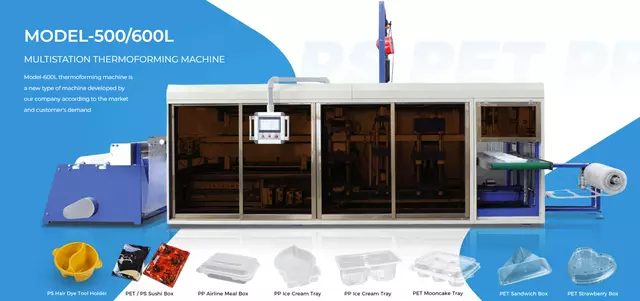
Thermoplastics are the go-to materials for automatic thermoforming machines due to their ability to soften when heated and return to a solid state upon cooling. They are versatile, easy to mold, and recyclable, making them perfect for a wide variety of applications. Below are some of the most commonly used thermoplastics in the thermoforming process:
Material | Common Uses | Advantages |
ABS (Acrylonitrile Butadiene Styrene) | Automotive parts, packaging, consumer goods | Impact-resistant, durable, and easy to machine |
HIPS (High Impact Polystyrene) | Food packaging, disposable products | Cost-effective, easy to process, and recyclable |
PETG (Polyethylene Terephthalate Glycol) | Medical devices, clear packaging | Transparent, strong, and easy to thermoform |
PVC (Polyvinyl Chloride) | Signage, medical components | Versatile, durable, and available in rigid or flexible forms |
Each of these materials has distinct properties that make them suited for specific applications. For example, ABS is known for its high durability and impact resistance, making it ideal for automotive parts and packaging that require strength. On the other hand, HIPS is commonly used in food packaging due to its cost-effectiveness and ability to maintain the product's integrity.
As sustainability becomes a growing concern in manufacturing, biodegradable plastics are gaining popularity. These materials can work seamlessly with automatic thermoforming machines while offering eco-friendly alternatives to traditional plastics.
Material | Common Uses | Advantages |
PLA (Polylactic Acid) | Food packaging, disposable cutlery | Made from renewable resources, biodegradable |
PET (Polyethylene Terephthalate) | Beverage and food containers | Recyclable, strong, and commonly used for packaging |
PLA, derived from renewable resources like corn starch or sugarcane, is a popular choice for food packaging and disposable items. It provides an eco-friendly alternative to petroleum-based plastics and is biodegradable. Similarly, PET is widely used for beverage and food containers, offering high strength and recyclability, which aligns with sustainability goals.
Beyond the popular thermoplastics, there are other materials that work well with automatic thermoforming machines, depending on the application’s requirements.
Material | Common Uses | Advantages |
Polycarbonate (PC) | Medical devices, eyewear lenses | Strong, transparent, high impact resistance |
Polypropylene (PP) | Automotive, packaging, textiles | Lightweight, chemical-resistant, durable |
Nylon | Automotive, consumer goods | Strong, abrasion-resistant, and flexible |
For instance, polycarbonate (PC) is often used in medical devices and eyewear lenses due to its high impact resistance and transparency. Polypropylene (PP) is lightweight, durable, and commonly used in automotive parts and packaging. Nylon is valued for its strength and wear resistance, making it ideal for products that require durability and flexibility.
The material used in automatic thermoforming machines directly impacts the process in several ways, including temperature control, pressure application, and molding speed. Understanding how each material reacts under certain conditions is crucial for achieving the best results.
● Thermal Properties: Some materials, such as polycarbonate and polypropylene, require higher temperatures to form properly. If the temperature is too low, these materials may not form properly, while excessive heat can cause warping or burning.
● Forming Speed: Materials like HIPS and PP have a faster cooling rate compared to others like ABS, meaning the forming process for HIPS can be quicker. This difference impacts the production speed and efficiency.
● Molding Pressure: Some materials, like PVC and PET, require higher molding pressures to achieve optimal results, while others, such as HIPS, can be formed at lower pressures. This factor can affect both the cost and the complexity of the thermoforming process.
When selecting a material for your automatic thermoforming machine, several factors should be taken into account to ensure you’re making the best choice for your specific application.
Factor | Considerations |
Product Requirements | Consider whether the product needs to be transparent, durable, or flexible. |
Production Volume | High-volume production may require more cost-effective and easily formable materials like HIPS. |
Environmental Impact | Eco-friendly materials like PLA may be more suitable for sustainability-focused brands. |
Material Cost | Budget constraints may influence your choice—HIPS and PVC are often more cost-effective than polycarbonate. |
● Packaging Industry: HIPS and PET are commonly used for food packaging due to their cost-effectiveness and recyclability.
● Automotive Industry: ABS and PP are preferred for their durability and ability to withstand high temperatures.
● Medical Industry: PETG and polycarbonate are ideal for making clear, durable, and high-quality medical packaging and trays.
● Consumer Goods: Nylon and PP are commonly used for items requiring strength, flexibility, and durability.
Selecting the correct material offers multiple benefits, including:
● Improved Product Quality: Using the right material ensures the final product meets the necessary standards for strength, flexibility, and appearance.
● Cost Efficiency: Choosing the appropriate material can lower production costs by reducing waste and optimizing production speed.
● Sustainability: Eco-friendly materials help companies meet sustainability goals and appeal to environmentally conscious consumers.
Choosing the wrong material for the job can lead to production issues and cost overruns. Common mistakes include:
● Not testing the material first: Always test new materials in production to ensure they meet the necessary requirements.
● Underestimating the material properties: Failing to understand how temperature, pressure, and forming speed affect certain materials can lead to defects.
● Not considering long-term production needs: Choosing a material without considering future production volumes or environmental impact can limit growth opportunities.
Q: Can all materials be used with automatic thermoforming machines?
A: Not all materials are compatible. Thermoplastics like ABS, HIPS, and PET are ideal, but each material requires specific conditions such as temperature and pressure.
Q: How do I know if a material is suitable for thermoforming?
A: Consider the material’s flexibility, strength, and temperature tolerance. Testing the material in your machine is the best way to ensure compatibility.
Q: Are biodegradable materials compatible with automatic thermoforming machines?
A: Yes, materials like PLA are compatible, offering eco-friendly options for packaging and consumer goods.
Automatic thermoforming machines offer manufacturers the ability to create high-quality products with greater efficiency and flexibility. However, selecting the right material is crucial for achieving optimal results. From ABS and HIPS to PLA and PET, each material has unique advantages and requirements, and choosing the right one for your application can greatly impact both product quality and production costs.
By understanding the properties of different materials and how they interact with thermoforming processes, manufacturers can make informed decisions that streamline production, reduce waste, and increase sustainability. Whether you're in packaging, automotive, medical, or consumer goods, selecting the right material for your automatic thermoforming machine will ensure that your production processes are efficient, cost-effective, and high-quality.


