
Thermoforming is a game-changer in manufacturing. Have you ever wondered how plastic packaging, automotive parts, or medical trays are made so efficiently?
In this article, we dive deep into the world of thermoforming, explaining its processes, benefits, and various applications. You'll learn how this versatile method can boost your production and reduce costs across industries.
Thermoforming is a popular manufacturing process that involves heating a thermoplastic sheet and shaping it over a mold to create parts. The process starts by heating a flat plastic sheet until it becomes soft and pliable. Once heated, the sheet is stretched or pressed against a mold. The material cools and solidifies, holding the shape of the mold. This method is versatile and can be used with a variety of materials like Polypropylene (PP), Polyvinyl Chloride (PVC), and Polyethylene Terephthalate (PET).
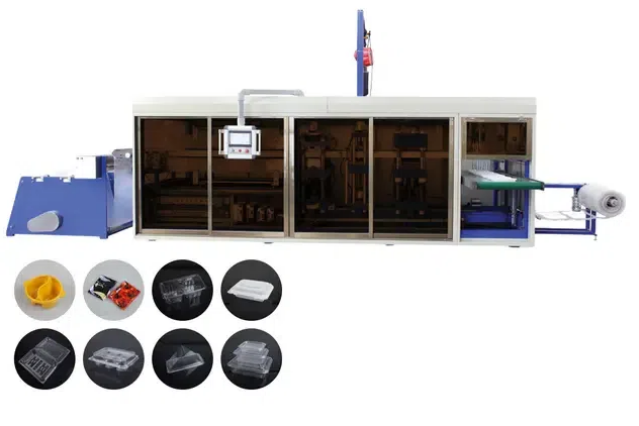
Common items made through this process include packaging materials like trays and containers, as well as more intricate products like automotive parts and medical equipment.
Materials Used in Thermoforming:
● PP (Polypropylene): Lightweight, chemical resistant, commonly used in packaging.
● PVC (Polyvinyl Chloride): Flexible or rigid, used for medical trays and pipes.
● PET (Polyethylene Terephthalate): Strong, transparent, used in food packaging and beverage bottles.
Thermoforming is particularly favored because it provides rapid production and cost-effective solutions for both high-volume manufacturing and prototyping.
The thermoforming process follows a series of steps that ensure the creation of high-quality, precision parts. Here's a simplified breakdown of how it works:
1. Heating: The plastic sheet is heated to a pliable temperature, typically using infrared or radiant heat. The goal is to get the material soft enough to stretch but not too soft to lose form.
2. Molding: Once the plastic is heated, it is either stretched or pressed onto a mold. This can be done using vacuum or pressure methods, depending on the specific thermoforming process being used.
3. Cooling: After the plastic conforms to the mold, it is cooled down quickly to solidify and hold the shape.
4. Trimming: Any excess plastic around the part is trimmed off using a cutting tool, creating a finished, clean product.
Mingdu Machinery offers advanced thermoforming machines that automate this process with precision. Their machines combine heating, forming, and trimming into a synchronized system, allowing for fast and efficient production.
Here’s how Mingdu’s multistation thermoforming machines enhance the process:
Feature | Benefit |
Multi-Station Automation | Combines forming, cutting, and stacking into a single cycle, reducing labor costs and improving throughput. |
Servo-Assisted Mechanisms | Ensures high precision in material feeding and part forming. |
Automatic Mold Changeover | Quick mold installation for easy transitions between different product runs. |
There are several thermoforming processes used in manufacturing, each suited to different types of products and production needs. The primary methods include:
● Vacuum forming: This is the most common thermoforming technique, where a heated plastic sheet is placed over a mold and air is sucked out, drawing the sheet into the mold. It's widely used due to its simplicity and cost-effectiveness.
● Pressure forming: Similar to vacuum forming, but it uses compressed air to push the plastic sheet into the mold, offering greater detail and uniformity.
● Matched-die thermoforming: This technique uses two molds to form the plastic sheet, ensuring uniform thickness and precision, ideal for complex parts that require high accuracy.
Each method has its own strengths, depending on the product's design complexity and the material used. Here’s a brief comparison of the processes:
Process | Key Feature | Best for |
Vacuum Forming | Single mold, uses vacuum to form the plastic. | Simple, cost-effective applications. |
Pressure Forming | Uses compressed air for better detail and uniformity. | Complex designs and higher precision. |
Matched-Die Forming | Two molds ensure uniform thickness and accuracy. | High-precision and intricate parts. |
Vacuum thermoforming is the simplest and most cost-effective method of forming plastic sheets. In this process, a heated plastic sheet is placed over a mold, and a vacuum is used to pull the sheet tightly over the mold. This method is fast, but it can sometimes result in non-uniform wall thickness due to how the plastic is stretched.
● Advantages of Vacuum Thermoforming:Cost-effective: Ideal for low to medium volume production.
○ Simplicity: Quick setup and easy to operate.
○ Suitable for large sheets: Can handle larger parts or simpler shapes without requiring complicated tooling.
However, due to the vacuum’s action, the material tends to form thicker areas at the top of the mold (where the sheet touches first) and thinner areas at the bottom. This can be a challenge when precise material distribution is crucial, such as in high-precision applications.
Matched-die thermoforming involves two molds—one on top and one on the bottom—that press the heated plastic sheet together, creating a detailed part with uniform wall thickness. This method is more precise compared to vacuum forming and is preferred for more intricate designs that require higher accuracy.
● Key Benefits of Matched-Die Thermoforming:Uniform wall thickness: Ensures consistency in the final part, especially important for structural integrity.
○ Complex shapes: Allows for sharper edges, detailed patterns, and intricate features that vacuum forming can’t achieve.
○ Higher precision: Ideal for applications that demand high accuracy and tight tolerances.
When it comes to choosing thermoforming equipment, there are several types of machines designed to handle different production needs. Whether you are a small business or a large-scale manufacturer, the right equipment will ensure that your production runs efficiently and meets your product requirements. Below are the main types of thermoforming equipment:
● Industrial Thermoforming Machines: These are high-capacity machines used for large-scale production runs. They are capable of handling thick sheets of plastic and can produce high-volume parts with complex designs.
● General Thermoforming Machines: Ideal for mid-range production volumes, these machines provide a balance of efficiency and flexibility. They offer stable performance, making them suitable for various industries like consumer goods and medical packaging.
● Thin-Gauge Thermoforming Machines: Designed for lightweight, fast production, these machines handle thin plastic sheets, typically ranging from 0.05mm to 2.5mm in thickness. These are commonly used for packaging and simple parts that require speed and precision.
Here's a quick overview of the key machine types:
Machine Type | Best For | Key Feature |
Industrial Thermoforming | Large-scale, high-volume production | High capacity, precise control for thick sheets |
General Thermoforming | Mid-range production and flexibility | Versatile, reliable performance for different industries |
Thin-Gauge Thermoforming | Packaging, lightweight components | Fast, cost-effective production with thin sheets |
Selecting the right thermoforming equipment involves a few critical considerations to ensure that your production process is optimized for efficiency and cost-effectiveness. Here are some key factors to take into account when choosing the appropriate machine for your needs:
● Production Volume: If your business requires high-volume production, investing in industrial thermoforming machines is essential. These machines can handle larger production runs and more complex parts.
● Material Compatibility: Different machines are designed to process specific materials, such as PP, PVC, or PET. Make sure the machine you choose can handle the material type that best suits your products.
● Tooling Needs: If your product designs require frequent mold changes, look for machines that offer easy mold changeover, such as Mingdu's multistation thermoforming machines, which integrate multiple processes into one cycle, reducing downtime and improving efficiency.
Mingdu Machinery’s multistation thermoforming machines are a great choice for businesses in need of high-volume production, particularly for packaging industries. These machines combine forming, cutting, and stacking into a single automated cycle, reducing labor costs and speeding up production. They also feature quick mold changeover capabilities, which make them suitable for industries that need to frequently switch between different product designs.
Consideration | Importance | Mingdu Solution |
Production Volume | Determines machine capacity | Mingdu's industrial machines handle large volumes efficiently |
Material Compatibility | Ensures machine can process specific materials | Mingdu offers machines for various materials like PP, PVC, PET |
Tooling Flexibility | Essential for quick mold changeover | Mingdu's multistation machines offer fast and easy mold switching |
When designing parts for thermoforming, several factors must be considered to ensure the final product meets both functional and aesthetic requirements. These key factors include:
● Part Complexity: More intricate designs often require advanced tooling and precise control over the thermoforming process. For example, sharp angles and detailed features need special attention to ensure they are accurately formed without defects.
● Material Selection: The material you choose plays a crucial role in how the plastic sheet behaves during the heating, forming, and cooling stages. For instance, PP offers flexibility for lightweight parts, while PVC provides rigidity for structural components.
● Mold Features: The design of the mold significantly impacts the forming process. Molds with draft angles (sloped sides) are easier to remove from the finished part, while those with intricate features like undercuts may require more advanced tooling and handling.
Mingdu’s customizable machine configurations are ideal for businesses looking to meet unique part designs and material needs. Their machines can be easily adjusted to accommodate various mold features and provide precise temperature control, ensuring that the plastic sheet forms according to the specific design.
Here's a quick look at factors to keep in mind when designing thermoformed parts:
Factor | Consideration | Impact on Part Design |
Part Complexity | Detailed features require precision tools. | Complex designs need specialized tooling to avoid defects. |
Material Selection | Choose the right material (e.g., PP, PVC, PET). | Affects flexibility, strength, and formability of parts. |
Mold Features | Incorporate draft angles, undercuts, and texture. | Determines ease of part release and mold complexity. |
The tooling used in thermoforming directly affects the quality and precision of the final product. Tooling refers to the molds and equipment that shape the heated plastic sheet into the desired form. The choice of tooling can influence the following aspects of the manufacturing process:
● Male vs. Female Molds:
○ Male molds are convex, meaning they protrude outward, and the heated plastic sheet is pressed over the mold. This method is simpler and typically less expensive.
○ Female molds, on the other hand, are concave, and the plastic is pulled into the mold. This method can create more complex shapes but requires more precision in mold design.
● Machined vs. Cast Aluminum Tooling:
○ Machined aluminum tooling is made by precisely cutting a block of aluminum, providing high accuracy and durability, making it suitable for high-precision applications.
○ Cast aluminum tooling is molded from molten aluminum and is typically less expensive, but it may not offer the same level of precision as machined tooling.
Mingdu’s tooling options ensure high precision and consistency. They offer machined aluminum molds for projects requiring high accuracy and female molds for parts with complex features and sharp angles. These tooling choices allow manufacturers to produce detailed and high-quality parts efficiently.
Here's how tooling choices impact your thermoforming project:
Tooling Type | Feature | Best for |
Male Molds | Simple, convex shape; less expensive. | High-volume, simple parts without intricate details. |
Female Molds | Concave shape; allows for more complex designs. | Parts requiring precise shapes, sharper corners, and undercuts. |
Machined Aluminum | High-precision, durable tooling. | High-precision applications, detailed components. |
Cast Aluminum | Cost-effective, less precise. | Low-cost, low-precision parts. |
Thermoforming offers a number of advantages compared to traditional manufacturing methods such as injection molding and blow molding. These benefits make it an attractive choice for a variety of industries, including packaging, automotive, and consumer goods. Here are some of the key reasons why businesses choose thermoforming:
● Cost-effectiveness: Thermoforming typically involves lower tooling and equipment costs compared to other methods, making it an affordable solution for both small and large production runs.
● Quick Prototyping: The process is perfect for creating prototypes quickly, allowing businesses to test designs before committing to large-scale production.
● Material Variety: Thermoforming supports a wide range of thermoplastic materials such as PP, PVC, and PET, each offering specific benefits depending on the application (e.g., durability, flexibility, clarity).
● Design Flexibility: Thermoforming can handle both simple and complex part designs, offering the flexibility to create intricate shapes, smooth curves, and sharp angles.
Mingdu Machinery plays a pivotal role in maximizing these benefits with their advanced thermoforming machines. Whether you need high-quality food packaging, medical trays, or consumer goods, Mingdu’s machines streamline the thermoforming process, offering precision and high throughput while keeping costs low.
Benefit | Description |
Cost-effectiveness | Lower tooling and production costs compared to other methods. |
Quick Prototyping | Allows rapid testing of designs before full-scale production. |
Material Variety | Wide range of materials to choose from, including PP, PVC, and PET. |
Design Flexibility | Can produce both simple and complex designs with ease. |
One of the most attractive features of thermoforming is its ability to produce high-quality parts with short production cycles. This is especially useful for industries that need fast turnarounds and large volumes of parts.
● Shorter Production Cycles: Compared to other methods like injection molding, thermoforming is faster, meaning you can produce parts in less time.
● Excellent Surface Finish: Thermoformed parts often have a smoother surface finish, which is essential for applications like packaging and consumer goods.
● Versatility for Complex Shapes: Unlike other processes, thermoforming can create parts with intricate details, sharp angles, and smooth curves.
Mingdu’s multistation thermoforming machines take these benefits even further by automating multiple processes, such as forming, cutting, and stacking, into a single seamless operation. This reduces labor costs and increases overall production efficiency.
Key Benefit | Mingdu’s Solution |
Shorter Production Cycles | Multistation machines combine multiple processes, reducing cycle time. |
Surface Finish | Precise temperature control ensures consistent and high-quality finishes. |
Complex Shapes | Capable of producing parts with sharp angles and intricate designs. |
Thermoforming is used in a variety of industries due to its cost-effectiveness, speed, and versatility. Some key applications include:
● Packaging: Thermoforming is commonly used for producing food containers, blister packs, and other packaging solutions.
● Automotive: Parts like door panels, dashboards, and trim components are made using thermoforming for efficiency and precision.
● Medical: Sterile trays, surgical packaging, and device housings are produced to meet industry standards for quality and safety.
● Consumer Goods: Items like cups, cosmetic packaging, and blister packs benefit from the durability and design flexibility of thermoforming.
● Appliances: Components such as refrigerator liners, oven parts, and dishwasher trays are made for their high-volume production and design complexity.
The packaging industry relies heavily on thermoforming for fast, cost-effective production. Common packaging products include:
● Blister Packs: Made from PP, PS, and PET, offering durability and product visibility.
● Clamshells: Used for food and retail, providing secure packaging with transparency.
● Trays: Common for food packaging, providing strength and convenience.
Mingdu’s thin-gauge thermoforming machines excel in packaging applications, offering fast throughput and precise forming with materials like PLA, PET, and PVC.
Packaging Type | Material | Advantage |
Blister Packs | PP, PS, PET | Lightweight, cost-effective, precise. |
Clamshells | PP, PS | Durable, clear, and secure. |
Trays | PP, PET | Strong, ideal for food storage. |
Thermoforming is used in medical manufacturing for parts that require precision and sterility, such as:
● Sterile Trays: Used to organize and store surgical instruments.
● Medical Device Housing: Protective cases for medical devices, ensuring safety and functionality.
Mingdu’s machines ensure fast production cycles while maintaining high quality and precision, making them ideal for medical applications.
Medical Product | Use | Thermoforming Advantage |
Sterile Trays | Organizing surgical instruments | High precision, sterility control. |
Device Housing | Protective casing for medical devices | Durable, lightweight, and precise. |
Thermoforming is a versatile manufacturing process that provides significant benefits across various industries. This method allows for cost-effective production, quick prototyping, and excellent design flexibility.
Mingdu Machinery offers advanced thermoforming machines that deliver precision and high efficiency. Their multistation machines streamline production while reducing labor costs, making them ideal for high-volume applications like food packaging, medical trays, and consumer goods.
A: Thermoforming is a process where a plastic sheet is heated, molded over a form, and then cooled to create parts. It's used in packaging, automotive, and medical industries.
A: The primary types are vacuum forming, pressure forming, and matched-die forming. Each has different capabilities, from simple, cost-effective parts to more intricate and precise designs.
A: Common materials include PP (Polypropylene), PVC (Polyvinyl Chloride), and PET (Polyethylene Terephthalate), each chosen based on the product's needs, like flexibility, strength, or transparency.
A: Thermoforming requires simpler molds and less expensive tooling than other methods like injection molding, making it ideal for low to medium volume production with quick turnaround.
A: Thermoforming is used for packaging products like trays, blister packs, and clamshells. It provides durability, cost-efficiency, and the ability to create complex, transparent packaging quickly.


