
Views: 0 Author: Site Editor Publish Time: 2026-04-30 Origin: Site
Are you looking for ways to boost your manufacturing efficiency? Thermoforming might be the solution. This process is essential in many industries, transforming plastic sheets into durable products. In this post, we’ll discuss how thermoforming machines can streamline production, cut costs, and increase output. You’ll learn how efficiency improvements in thermoforming can benefit your business.

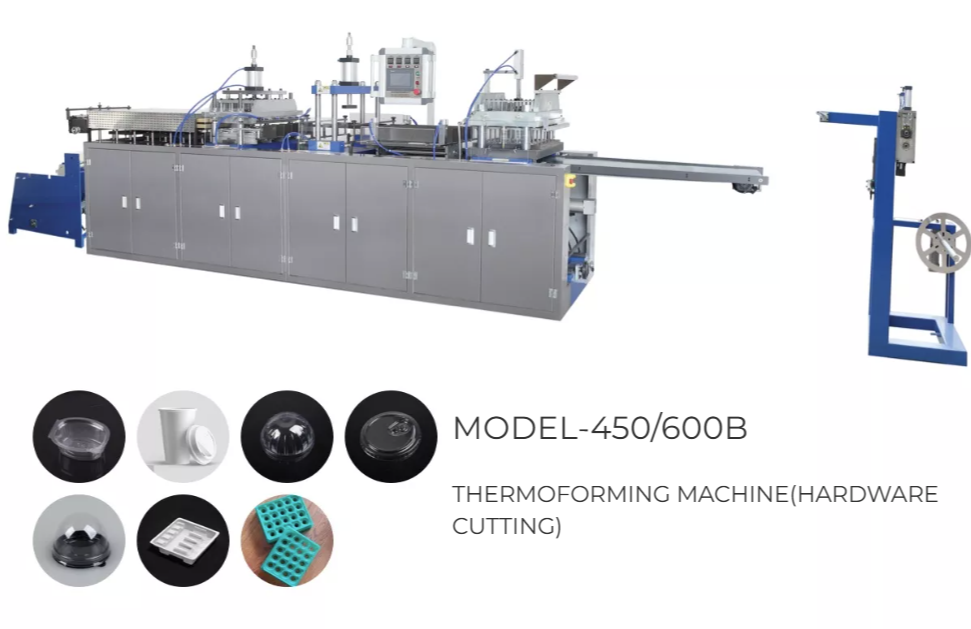
A thermoforming machine is a type of equipment used to shape plastic sheets into specific forms using heat and pressure. The process involves heating a plastic sheet until it becomes pliable, then molding it over a die or mold. After the sheet has been formed into the desired shape, it is cooled and trimmed to produce a finished product.
The key components of a thermoforming machine include:
Heating Element: Warms the plastic sheet to a specific temperature for easy molding.
Forming Station: Uses pressure or vacuum to shape the heated sheet over a mold.
Cooling System: Cools the formed plastic to solidify its shape.
Trimming Unit: Removes excess material from the finished product.
Control Panel: Allows operators to set parameters such as temperature and cycle time.
Thermoforming machines come in three main types: manual, semi-automatic, and automatic.
Manual Thermoforming Machines: Operators must manually load and remove the plastic sheet, adjust settings, and oversee the process. These machines are best for low-volume production.
Semi-Automatic Thermoforming Machines: A mix of manual and automatic processes. Operators load the plastic and monitor the machine, but many tasks are automated, increasing efficiency.
Automatic Thermoforming Machines: Fully automated with minimal human intervention. These machines are used for large-scale production and offer the highest efficiency, consistency, and speed.
Automation plays a significant role in improving efficiency. Automated thermoforming machines reduce human error, increase production speeds, and allow for continuous operation without frequent manual input.
Heating: A plastic sheet is loaded into the machine and heated to a specific temperature. This makes it flexible enough for molding.
Molding: The heated plastic is then either vacuum-formed or pressure-formed over a mold. The mold shapes the plastic into the desired design.
Cooling: Once formed, the plastic is quickly cooled to solidify the shape.
Trimming: The excess material is trimmed away to finalize the product.
Each step contributes to the overall efficiency by streamlining production times and minimizing errors.
Modern thermoforming machines focus on energy efficiency. For example, regenerative drives are used to recapture energy from braking and feed it back into the system. Additionally, advanced heating elements, such as infrared ceramic heaters, require less energy to heat plastic sheets compared to traditional methods. These innovations reduce overall energy consumption and help businesses lower operational costs.
One of the main ways thermoforming machines improve efficiency is through automation. Automated systems perform tasks such as material loading, molding, and trimming without human intervention. This reduces the number of workers needed, cuts down on labor costs, and improves consistency.
For instance, automated machines can work 24/7 without breaks, ensuring high production rates and reduced downtime. Automated systems also speed up the process by removing manual adjustments and minimizing human error.
Thermoforming machines significantly reduce cycle times compared to traditional manufacturing methods. Traditional molding processes can take minutes to complete a single product, while automated thermoforming machines can reduce this time to seconds or less.
By accelerating the process, manufacturers can produce more products in less time, increasing output without additional labor costs. Industries such as food packaging, where fast turnaround is crucial, benefit significantly from these faster cycle times.
Thermoforming machines are equipped with advanced sensors and control systems that maintain precise temperature, pressure, and cycle timing. These features ensure that each product meets the same high standards, reducing defects and the need for rework.
Inconsistent product quality can lead to increased scrap rates, wasted materials, and customer dissatisfaction. By maintaining tight tolerances, thermoforming machines improve the quality and consistency of the final product, leading to better customer satisfaction and reduced waste.
Modern thermoforming machines are designed to optimize material usage. For example, the vacuum-forming process pulls the heated plastic tightly over the mold, minimizing scrap. Additionally, twin-sheet forming techniques create hollow parts, reducing the material needed to produce strong, durable products.
Reducing material waste not only cuts production costs but also contributes to sustainability. By using advanced techniques to maximize material use, manufacturers can produce more products while reducing environmental impact.
Energy consumption is a significant concern in manufacturing, and thermoforming machines address this by optimizing energy use without compromising performance. Innovations such as energy-efficient heating elements, regenerative drives, and more precise temperature control help reduce the energy needed to operate the machines.
These energy-saving features not only lower costs but also make the manufacturing process more sustainable. Companies focused on reducing their carbon footprint can benefit from the eco-friendly attributes of modern thermoforming machines.
The integration of smart technology, such as the Internet of Things (IoT) and artificial intelligence (AI), is further improving efficiency. These machines can monitor performance in real-time, predict maintenance needs, and adjust settings automatically to optimize production.
For example, IoT-enabled machines can track temperature variations and adjust heating elements accordingly to maintain consistent results. This leads to reduced scrap rates, improved efficiency, and fewer machine breakdowns.
Thermoforming machines are highly adaptable. Manufacturers can adjust the settings, such as mold pressure, temperature, and cycle time, to meet specific production requirements. This customization allows for more flexibility in production, whether making simple products or more complex designs.
Having the ability to quickly change settings reduces downtime and ensures that the machine can meet varying production demands without the need for additional equipment.
By reducing labor costs, material waste, and energy consumption, thermoforming machines provide an excellent return on investment. Their ability to produce high-quality products quickly also means manufacturers can meet customer demands more efficiently, without increasing costs.
Thermoforming machines are ideal for scaling production. As demand increases, these machines can operate continuously without the need for major adjustments or additional labor, making them a great option for high-volume production.
The precision and consistency of thermoforming machines ensure high-quality products with excellent durability. Manufacturers can produce products that meet specific design requirements, from packaging to automotive components, with superior quality.
Automated thermoforming machines with smart diagnostics reduce downtime. They can detect issues early and self-adjust to prevent disruptions. This ensures smooth, uninterrupted production, boosting overall efficiency.
Thermoforming machines improve efficiency by automating processes, reducing labor costs, and minimizing material waste. They offer faster production times, increased precision, and energy savings. These machines help businesses scale production while maintaining quality.
If you're considering upgrading, a thermoforming machine can enhance your production efficiency, reduce costs, and meet growing demands effectively.
A: Thermoforming machines significantly improve production efficiency by reducing cycle times, enhancing precision, and minimizing material waste, which leads to cost savings.
A: By automating key processes like molding, trimming, and cooling, thermoforming machines reduce the need for manual labor, improving efficiency and consistency.
A: Yes, many thermoforming machines can be customized to meet specific requirements, such as adjusting temperature, pressure, and mold size for different products.
A: Thermoforming machines improve energy efficiency by using regenerative drives, optimizing heating elements, and incorporating advanced sensors that reduce energy consumption during production.
A: Thermoforming machines are widely used in industries such as food packaging, automotive, medical devices, and consumer goods, due to their versatility and efficiency.


