
Views: 0 Author: Site Editor Publish Time: 2025-06-09 Origin: Site
The packaging industry is currently experiencing a rapid evolution driven by technological advancements and growing market demands. Automation has become an essential trend, transforming how manufacturers operate and compete globally. The shift toward smart manufacturing is fueled by the need to increase productivity, reduce errors, and meet ever-tighter deadlines.
Labor costs and workforce shortages are significant challenges pushing manufacturers to adopt automated solutions. Traditional manual labor, especially in repetitive and precision-sensitive tasks such as cup rim curling, is becoming less viable. Although investing in automated equipment requires upfront capital, the long-term benefits in operational cost savings, consistent quality, and faster turnaround times create a strong business case. With automated cup curling, companies can stay competitive and respond quickly to changing customer demands without compromising on product quality.
Furthermore, automation aligns with global trends in sustainability and efficiency. By optimizing processes and reducing waste, automated systems support manufacturers in meeting regulatory requirements and consumer expectations for environmentally friendly production.
Despite its widespread use in the past, manual cup curling presents several limitations that affect modern production lines:
Inconsistency in Product Finish: Human operators inevitably introduce variability. Differences in pressure, curling angle, or heat application can result in uneven rims, which compromise the cup’s structural integrity and visual appeal. This inconsistency risks customer dissatisfaction and increases the likelihood of rejected products.
Bottlenecks in High-Speed Lines: Manual curling cannot match the speed of automated systems. When production volumes increase, manual operations slow down the entire packaging line, creating bottlenecks and reducing overall output.
Greater Risk of Defects: Manual methods are more prone to errors such as incomplete curls, sharp edges, or damaged cup rims. These defects not only waste materials but also pose safety hazards and increase the risk of spills, affecting brand reputation and customer trust.
Increased Labor Dependency: Reliance on skilled operators for curling tasks adds complexity to workforce management, especially with labor shortages or high turnover rates. Training new employees to meet quality standards can be time-consuming and costly.
Automated cup curling machines represent a sophisticated blend of mechanical precision and smart control technology designed to streamline the rim finishing process.
The process starts with cups fed automatically into the curling machine via conveyor belts or robotic arms. The machine uses heated rollers or curling tools that apply controlled heat and pressure to the cup rims. This softens the plastic or paper material just enough to mold a smooth, rounded edge without deforming or weakening the cup body.
The curling operation is highly repeatable, ensuring each cup meets precise dimensional and quality specifications. Automated systems typically feature multi-station designs that allow for simultaneous heating, curling, and cooling phases to optimize speed and quality.
Modern automated curling machines are equipped with advanced sensors that monitor critical parameters such as temperature, pressure, curling angle, and speed. These sensors provide real-time feedback to a digital control system that dynamically adjusts machine settings, compensating for variations in cup materials or environmental conditions.
Such closed-loop control enhances precision and reduces scrap rates. Operators can fine-tune settings via user-friendly interfaces, making it easy to switch between different cup sizes or materials without manual recalibration.
Automated cup curling machines are designed to integrate seamlessly with upstream forming equipment and downstream packaging systems. This integration enables continuous production with minimal manual handling, reducing labor costs and the risk of contamination.
Communication protocols allow synchronized operation, ensuring that curling matches the output speed of forming machines, thereby preventing backups or idle time. This end-to-end automation helps manufacturers achieve higher throughput and maintain steady production flow.
The benefits of adopting automated cup curling extend well beyond speed.
Time Savings: Automated machines can curl thousands of cups per hour with consistent quality, dramatically increasing production capacity compared to manual processes.
Resource Optimization: Precision curling reduces material waste caused by defective rims. Optimized heating cycles and energy-efficient motors further reduce operational costs and environmental impact.
Reduced Labor Costs: Automation minimizes the need for manual labor in curling operations, freeing staff for more complex tasks and decreasing expenses related to hiring, training, and turnover.
Less Downtime and Maintenance: Many machines come with predictive maintenance features, alerting operators to potential issues before breakdowns occur. This proactive approach helps avoid costly unplanned downtime and extends equipment lifespan.
Improved Workplace Safety: Automated curling reduces repetitive strain injuries and hazards associated with manual handling of hot materials, creating a safer working environment.
Product quality and consumer safety are critical in food and beverage packaging, where the cup rim is often the point of contact with consumers.
Uniform Curl Depth and Shape: Automated curling ensures every rim is shaped to exact standards, providing a consistent user experience whether the cup is used for hot coffee or cold beverages.
Reduced Sharp Edges or Cup Failures: The precise heating and pressure controls eliminate rough or sharp edges that could cause injury or leakage. This reliability reduces returns and warranty claims.
Enhanced Consumer Safety Perception: Consistent, well-formed rims enhance the tactile and visual appeal of cups, which positively influences brand perception and customer loyalty.
Compliance with Food Safety Standards: Automated systems can be calibrated to meet stringent hygiene and safety regulations, ensuring your packaging complies with international food safety certifications.
Automation is not reserved only for large-scale manufacturers. Small and medium-sized enterprises (SMEs) can also reap significant benefits from automated curling technology.
Compact Design Options: Many suppliers offer smaller footprint machines designed for space-constrained environments without sacrificing curling quality or speed.
Return on Investment: While initial costs may seem high, SMEs benefit from reduced labor expenses, improved product quality, and higher production rates that lead to faster payback periods.
Scalability for Growth: Automated systems enable small businesses to meet growing demand without needing frequent manual scaling or extensive workforce expansion.
Flexibility: Machines designed with easy-to-use interfaces and adjustable settings allow small producers to switch product lines or cup sizes efficiently.
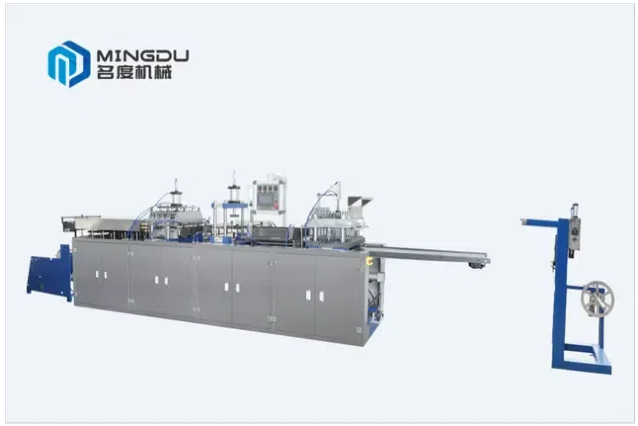
As packaging manufacturers face increasing pressures from market demands, labor challenges, and quality expectations, automated cup curling emerges as a vital solution. This technology not only boosts factory efficiency and lowers production costs but also elevates product quality and consumer safety—critical factors in the competitive packaging industry.
Wenzhou Mingdu Machinery, with over 15 years of experience in automatic plastic forming machines, offers advanced cup curling machines engineered for speed, precision, and reliability. Their high-speed, energy-efficient equipment integrates easily into existing lines and supports a wide range of cup materials including PP, PET, and PS.
If you want to future-proof your production, enhance packaging quality, and reduce operational bottlenecks, automated cup curling technology is the smart investment. Contact us today to learn how Mingdu's cup curling machines can transform your manufacturing process and help you stay ahead in the market.


