
Views: 0 Author: Site Editor Publish Time: 2025-06-16 Origin: Site
Designers in the plastic manufacturing industry constantly face a common dilemma: how to transform bold, complex product ideas into reality without compromising function, manufacturability, or cost-efficiency. Traditional forming techniques often impose limitations that force engineers to simplify their visions. However, twin sheet thermoforming unlocks new levels of freedom in structural design, enabling sophisticated shapes, internal features, and ergonomic innovations—all while keeping manufacturing practical and scalable.
As customization becomes an expectation rather than an option across industries, understanding the design potential of twin sheet thermoforming is crucial for companies seeking a competitive edge.
Innovative product designs often require complex internal geometries or multi-functional structures. However, conventional forming methods like injection or blow molding may not easily accommodate such intricacies without driving up mold cost or increasing part complexity. Designers are frequently forced to trade off structural ideas to maintain process feasibility.
Today’s market demands parts that do more—components that serve multiple functions, minimize weight, reduce the number of joints, and fit seamlessly into final assemblies. Yet, integrating such features into a single moldable part is often restricted by tooling limitations or design constraints of traditional techniques.
Processes like injection molding are excellent for high-volume, high-precision parts—but when it comes to lightweight hollow structures, integrated cavities, or dual-textured surfaces, their capabilities can fall short. Designers are often left modifying their ideas to match the process, rather than selecting a process that fits the idea.
Twin sheet thermoforming opens a powerful toolkit for designers looking to overcome these constraints. By using two heated plastic sheets simultaneously formed over molds and then fused together, the process creates a hollow structure with dual-surface detail, internal space, and robust strength.
This forming technique enables the inclusion of internal chambers, air passages, or wire conduits—ideal for applications needing thermal insulation, cable routing, or fluid flow. Unlike blow molding, which limits internal geometry control, twin sheet thermoforming can create defined internal pathways and customized profiles.
Twin sheet technology allows designers to specify different surface finishes or wall thicknesses on each side of a product. For example, the interior may feature a matte texture for grip while the exterior remains glossy for visual appeal. This dual customization boosts both form and function.
With clever mold design, inserts for fasteners, hinge points, and even mounting bosses can be molded directly into the structure. This reduces the need for secondary assembly steps and enables functional integration that saves time, materials, and costs.
One of the most valuable advantages of twin sheet thermoforming is the ability to produce strong, hollow panels that can support significant loads without added material weight. These parts are ideal for automotive panels, equipment housings, or heavy-duty shipping trays.
Enclosing air between the two sheets acts as natural insulation. This makes twin sheet products perfect for coolers, medical transport containers, or any application requiring thermal protection. It also offers acoustic dampening in vehicle or industrial applications.
Complex contours and human-centric curves are easier to achieve with twin sheet thermoforming than with rigid injection molds. Designers can develop ergonomically optimized handles, curves, and control surfaces that enhance user comfort and product usability.
With twin sheet forming, you can consolidate parts that would otherwise require fastening, welding, or adhesive bonding. A handle with an integrated hollow grip or a container with molded-in drainage channels can be formed in one step—faster and stronger.
The fusion of two sheets under pressure results in robust welds that outperform glued or mechanically joined seams. For applications requiring watertight or airtight seals, twin sheet thermoforming delivers higher integrity and consistent results.
Simplified product architecture leads to faster assembly, fewer quality control steps, and streamlined logistics. By combining strength, function, and shape in one forming process, manufacturers can achieve both production efficiency and product excellence.
Due to the nature of thermoforming, extremely deep or sharp features may not form cleanly. Designers must consider draw ratios and radius guidelines to prevent material thinning or distortion. Collaboration with your thermoforming supplier during the design phase is essential to avoid costly redesigns.
While more affordable than injection molding, tooling for twin sheet forming still requires upfront investment, especially for large parts or intricate forms. This makes the method ideal for mid- to high-volume applications, or where per-unit savings offset the initial tool cost.
Like all thermoplastics, shrinkage occurs during cooling. Twin sheet forming requires close control of sheet alignment, thickness, and thermal consistency to meet tight tolerances. Proper design for manufacturability (DFM) and mold planning help mitigate these risks.
At Wenzhou Mingdu Machinery, we don’t just supply equipment—we support your design journey. Our engineering team works with clients to ensure parts are optimized for thermoforming, helping reduce cost, improve quality, and accelerate development.
Need to test your idea before full-scale launch? Our machines and process expertise enable rapid prototyping, helping customers validate design, function, and material performance in real-world settings.
Twin sheet thermoforming is more than a manufacturing method—it’s a platform for product innovation. Whether you’re developing sustainable packaging, lightweight transport solutions, or custom enclosures, we provide the tools and technical guidance to bring your ideas to life.
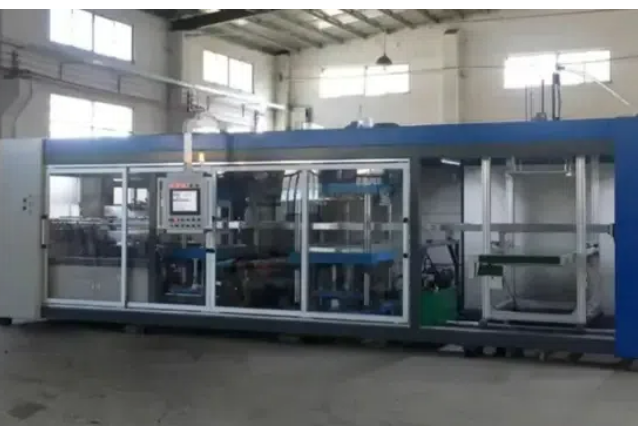
At Wenzhou Mingdu Machinery, we bring over 15 years of experience in plastic forming technology. Our automatic twin sheet thermoforming solutions help designers overcome limitations, reduce production steps, and unlock the full creative potential of thermoplastic materials.
Looking to solve complex design challenges with smart manufacturing? Contact us today to discuss your project and explore how our advanced thermoforming systems can support your goals.


