
Views: 0 Author: Site Editor Publish Time: 2025-05-30 Origin: Site
Have you ever wondered how plastic packaging, car parts, and medical equipment are made? The process behind these items is often thermoforming.
A thermoforming machine plays a crucial role in shaping plastic into various forms. This process involves heating plastic sheets and molding them into specific shapes.
In this post, you'll learn how thermoforming machines work, their importance across industries, and how they shape modern manufacturing.
Thermoforming is a plastic shaping process where a thermoplastic sheet is heated and formed into a specific shape using molds. This process can create both simple and complex designs, depending on the technique used.
Heating: The plastic sheet is heated to a pliable state.
Forming: The heated sheet is stretched or pressed over a mold.
Cooling: The shaped plastic cools and solidifies, retaining its molded shape.
Injection Molding: In injection molding, molten plastic is injected into a mold, creating more detailed parts with tighter tolerances.
Extrusion: Extrusion forces plastic through a mold to create long, continuous shapes like pipes or sheets, whereas thermoforming shapes individual sheets into parts.
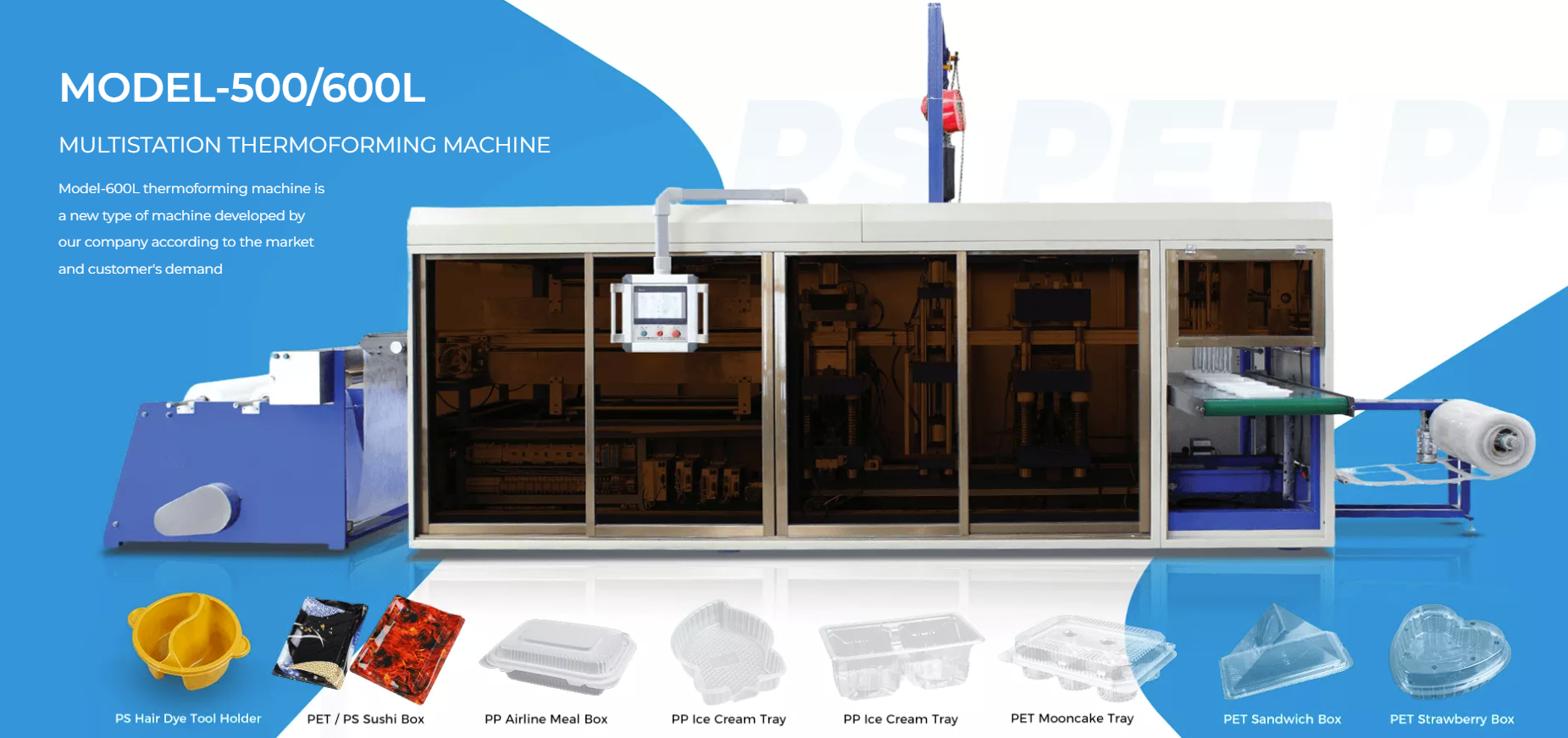
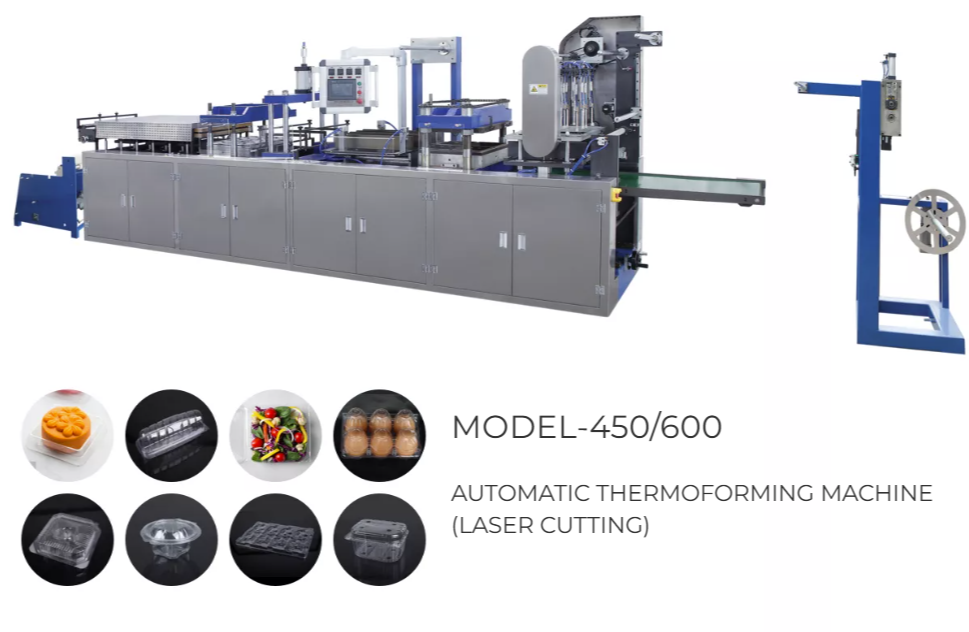
A thermoforming machine is the heart of the thermoforming process, designed to heat and shape plastic sheets. Here’s an overview of how it works:
Heating: The plastic sheet is heated until it becomes soft and flexible.
Molding: The heated sheet is formed over a mold using vacuum or pressure forming methods.
Cooling: The formed plastic is cooled to solidify its shape.
Trimming: Excess plastic is cut away to create the final product.
After the plastic has been molded, it’s removed from the machine, and any trimming or finishing work is done to ensure the product is ready for use.
Methods: Radiant heaters, convection ovens, and infrared heating systems are used to heat the plastic sheet evenly.
Temperature Control: Maintaining the right temperature is essential to achieve the desired shape without compromising the material’s strength.
Vacuum and Pressure Forming: Vacuum forming uses suction to pull the plastic sheet over a mold, while pressure forming applies air pressure to achieve a more detailed shape.
Cooling Techniques: Cooling is often done with air or water. Consistent cooling ensures that the plastic maintains its shape and avoids warping or defects.
Trimming Tools: After molding, the excess plastic around the edges is trimmed away using automated or manual tools.
Importance of Precision: Accurate trimming ensures that the final product meets design specifications.
Vacuum forming is a simple yet cost-effective technique where a heated plastic sheet is sucked onto a mold, commonly used for packaging and automotive parts.
In pressure forming, both vacuum and pressure are applied, allowing for more detailed and intricate shapes. It’s often used for higher precision applications.
These machines use a plug or mechanical assistance to push the plastic into deeper molds, creating more intricate details and finer surface finishes.
Multi-station thermoformers use several workstations to handle different stages of the process (heating, molding, cooling) simultaneously, optimizing production for large-scale manufacturing.
To begin the thermoforming process, the plastic sheet is heated to a specific temperature. This temperature varies depending on the material being used, such as ABS, PVC, or PET.
After heating, the plastic is placed over a mold. A vacuum or pressure forms the plastic into the mold’s shape. This process is crucial for ensuring precision in the final product.
Once the plastic is molded, it’s cooled quickly to solidify. Different cooling methods are used depending on the material and shape of the part.
After cooling, excess plastic is trimmed off. This ensures the final product has clean edges and matches the exact dimensions required.
While injection molding uses molten plastic injected into a mold, thermoforming uses a heated sheet that is shaped. Injection molding allows for higher precision and more complex shapes, but thermoforming is quicker and cost-effective for simpler designs.
Extrusion shapes plastic by forcing it through a mold, creating continuous products. In contrast, thermoforming creates discrete, molded parts, ideal for packaging or single-use items.
Thermoforming machines are widely used in industries such as:
Packaging: For items like food containers, blister packs, and clamshells.
Automotive: For components like dashboards and door panels.
Medical: For sterile packaging and disposable medical items.
Consumer Goods: For everyday items such as plastic cups and trays.
Cost-Effectiveness: Thermoforming is ideal for low-volume production with less expensive molds compared to other methods.
Flexibility: Capable of creating a wide range of shapes, from simple to moderately complex designs.
Speed: Faster production cycles compared to injection molding.
Material Limitations: Not all plastics can be thermoformed effectively.
Shape Complexity: Extremely intricate designs may not be suitable for thermoforming and may require injection molding instead.
Environmental Concerns: Waste disposal and recycling of thermoformed plastics are ongoing challenges.
As industries aim to reduce waste, thermoforming has shown promise by allowing for the recycling of plastic materials. Advances in eco-friendly materials and energy-efficient machines are making thermoforming more sustainable for the future.
Thermoforming machines play a vital role in modern manufacturing. They offer versatility and cost-effectiveness, benefiting industries like packaging and automotive.
As technology advances, thermoforming continues to evolve, with innovations in sustainability and efficiency.
Explore thermoforming solutions for your business and learn how these machines can optimize your production processes.
A: Common materials include ABS, PVC, PET, and polycarbonate. The choice depends on the required characteristics, such as strength, clarity, or flexibility, and the specific application, like packaging or automotive parts.
A: Thermoforming is best for simpler shapes. For highly intricate designs, injection molding or other methods may be more suitable, as they offer higher precision.
A: The process duration varies. Heating, forming, and cooling usually take several minutes. Time depends on material type, complexity, and machine speed.
A: Thermoforming is eco-friendly when using recyclable materials. Manufacturers focus on reducing waste and enhancing recycling methods to improve sustainability.
A: The cost ranges from $1,000 for desktop models to over $10,000 for industrial machines. Factors include machine size, functionality, and production volume.
A: Vacuum forming uses suction to mold plastic, ideal for simple shapes. Pressure forming uses air pressure for more detailed designs, offering better surface finishes and precision.


