
Views: 0 Author: Site Editor Publish Time: 2025-06-17 Origin: Site
As sustainability increasingly drives innovation in manufacturing, companies are looking for plastic forming methods that align with environmental goals without compromising performance. Twin sheet thermoforming emerges as a standout technology in this green transformation. It offers efficient resource use, reduced energy consumption, and versatility in processing recycled and eco-friendly materials. Understanding the environmental benefits of twin sheet thermoforming is key for businesses aiming to integrate sustainability into product design and manufacturing.
Plastic forming processes, responsible for shaping raw polymers into functional products, significantly impact environmental sustainability through several factors:
Manufacturing plastics involves substantial energy use, from melting raw materials to shaping and cooling final products. Different forming techniques vary widely in their energy efficiency. Processes with lower energy requirements reduce greenhouse gas emissions and operating costs, contributing to greener manufacturing.
Sustainable manufacturing prioritizes the reuse of materials and the ability to recycle end products. Plastic forming technologies that allow easy incorporation of recycled resins or produce recyclable parts support circular economy principles. Reducing virgin plastic usage helps conserve natural resources and cuts environmental pollution.
Sustainability is not just about production but encompasses the entire product lifecycle — from raw material extraction to manufacturing, use, and disposal. Lightweight yet durable products extend lifespan and lower transportation emissions, while design for disassembly facilitates recycling.
Plastic forming methods thus play a foundational role in achieving sustainability goals by influencing energy use, material efficiency, and product longevity.
Twin sheet thermoforming offers distinct advantages in reducing environmental impact during manufacturing:
Twin sheet thermoforming can effectively process a variety of recycled thermoplastics, such as post-consumer HDPE or PP. The gentle heating and forming conditions preserve material integrity better than some high-temperature processes, allowing higher recycled content without sacrificing quality.
Compared with subtractive manufacturing methods, thermoforming is largely additive and uses just enough material to form the product’s shape. Twin sheet thermoforming’s ability to create hollow, double-wall parts further reduces material usage compared to solid components or thicker single-sheet parts, minimizing scrap.
Twin sheet thermoforming generally consumes less energy than injection molding due to lower processing temperatures and simpler mold cycles. This translates into reduced carbon emissions per part and lower operational costs for manufacturers aiming to green their operations.
One of the most significant contributions of twin sheet thermoforming to sustainability is carbon footprint reduction throughout the product lifecycle.
The hollow double-wall structures created by twin sheet thermoforming provide high strength-to-weight ratios. Lighter products require less material and reduce the weight burden in transportation, resulting in lower fuel consumption and emissions across supply chains.
By enabling lightweight, yet structurally sound parts, twin sheet thermoforming helps optimize packaging and shipping efficiency. Lower weight means less energy used in transport, which is a major contributor to a product’s overall carbon footprint.
Twin sheet thermoforming supports efficient medium to large batch production with relatively low tooling costs. This flexibility helps reduce waste from overproduction and allows better inventory management, contributing indirectly to carbon footprint minimization.
Twin sheet thermoforming is compatible with an expanding range of sustainable plastic materials, enhancing its green manufacturing credentials.
Commonly recycled plastics such as high-density polyethylene (HDPE), polypropylene (PP), and polyethylene terephthalate glycol (PETG) can be thermoformed successfully. Utilizing these recycled resins reduces reliance on virgin plastics and diverts waste from landfills.
Emerging bioplastics, made from renewable resources like corn starch or sugarcane, are increasingly suitable for thermoforming processes. Twin sheet thermoforming machinery can be adapted to handle these materials, supporting innovation in biodegradable and compostable packaging and products.
Global regulatory environments are tightening requirements on plastic waste and encouraging the use of recycled and bio-based materials. Twin sheet thermoforming manufacturers who can work with such eco-friendly resins position themselves well for future compliance and market demand.
Integrating sustainability into product design does involve tradeoffs, but with careful engineering, performance and green goals can coexist.
Using recycled materials may slightly affect mechanical properties or surface finish, but advances in material science and process optimization help mitigate these impacts. Engineers can compensate through design adjustments, such as adding ribs or optimizing wall thickness with twin sheet thermoforming.
The hollow double-wall design inherent to twin sheet thermoforming improves strength and impact resistance, offsetting potential compromises from recycled resins. This ensures that sustainable products maintain durability and safety standards.
By designing parts with longevity in mind, companies reduce the frequency of replacements and associated waste. Twin sheet thermoformed products’ robustness contributes to longer service lives, aligning with circular economy principles.
Environmental, social, and governance (ESG) strategies increasingly influence corporate sustainability commitments and investor decisions. Twin sheet thermoforming can be a strategic component of such initiatives.
Adopting twin sheet thermoforming supports targets for reducing carbon emissions, lowering plastic waste, and increasing recycled content in products. It allows manufacturers to demonstrate tangible environmental responsibility in their supply chains.
Lower energy consumption and reduced material use associated with twin sheet thermoforming may qualify for carbon credits or sustainability certifications, providing financial incentives and enhancing brand value.
Manufacturers committed to sustainability should explore twin sheet thermoforming as a versatile, cost-effective technology that advances eco-friendly product design. It delivers measurable benefits across energy efficiency, material conservation, and product lifecycle impact.
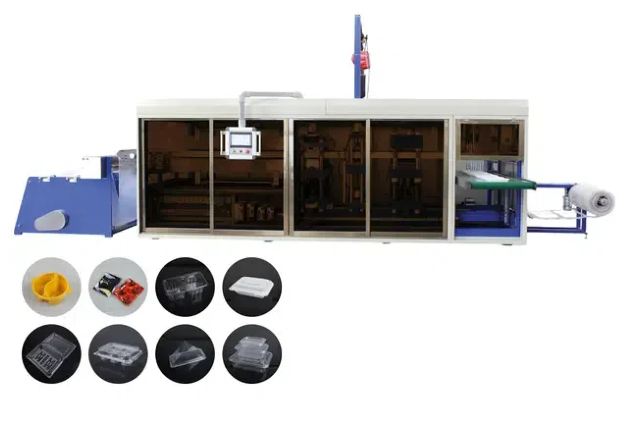
For over 15 years, Wenzhou Mingdu Machinery has been dedicated to advancing automatic plastic forming machines that support sustainable manufacturing trends. Our twin sheet thermoforming equipment is engineered for energy-efficient operation and compatibility with recycled and bio-based materials, helping manufacturers meet evolving environmental standards.
Contact us today to learn how Mingdu’s innovative thermoforming solutions can help your business achieve its sustainability goals while delivering high-quality, durable products.


