
Views: 0 Author: Site Editor Publish Time: 2025-06-18 Origin: Site
Choosing the right plastic forming method is a critical decision in product manufacturing. The method impacts not only the cost and timeline but also the final product’s performance and durability. Among the various techniques available today, twin sheet thermoforming stands out for its ability to create strong, lightweight, hollow parts. Understanding how it compares to more traditional methods like injection molding, blow molding, and vacuum forming can help manufacturers make informed choices that optimize quality and efficiency.
Selecting the appropriate plastic forming process is fundamental for achieving manufacturing success. The choice influences:
Cost Efficiency: Different methods involve varying tooling investments, cycle times, and material usage, which collectively determine the production cost.
Lead Time: Time-to-market can be affected by the complexity of tooling and process setup.
Product Performance: Structural strength, precision, surface finish, and functionality all depend on the forming technique.
Design Flexibility: Some processes allow more intricate shapes or multi-material integration than others.
By carefully evaluating the options, companies can reduce waste, accelerate development, and deliver products that meet or exceed customer expectations.
Injection molding is widely regarded as the go-to method for producing complex plastic parts with high precision, especially in large volumes. However, twin sheet thermoforming offers unique benefits in specific scenarios.
Injection molding requires high-precision steel molds with intricate cooling channels and complex runner systems. The upfront tooling cost is substantial, often making it prohibitive for low-to-medium volume production or prototyping. In contrast, twin sheet thermoforming molds are typically made of aluminum or less costly materials, resulting in lower initial investment and shorter lead times for tooling.
The twin sheet process is mechanically simpler, relying on heating, forming, and fusion steps without the need for complex injection pressures or extensive cooling setups.
Injection molding produces solid or hollow parts by injecting molten plastic into a mold cavity. While capable of intricate internal geometries, producing large hollow parts often requires complex mold designs with cores or multiple components, increasing complexity and cost.
Twin sheet thermoforming naturally creates hollow, double-wall structures by fusing two formed sheets. This enables lightweight yet robust parts ideal for applications like automotive panels or containers where structural integrity and weight savings are priorities.
Prototyping with injection molding can be time-consuming due to mold fabrication demands. Conversely, twin sheet thermoforming can adapt faster to design changes with quicker and more affordable mold adjustments. This flexibility allows for faster iterations during product development phases.
Blow molding is another common method for hollow plastic parts, especially containers and tanks. Although it shares some similarities with twin sheet thermoforming, distinct differences affect application suitability.
Blow molded parts usually have single-wall construction, which can limit their strength and stiffness under load. Twin sheet thermoforming’s fused double walls provide superior rigidity and impact resistance, making parts more durable in demanding environments.
Twin sheet thermoforming molds can achieve tighter tolerances and more detailed surface finishes compared to blow molding. This is crucial when parts require precise dimensions or intricate features integrated into the walls.
Blow molding is best suited for hollow parts with simple, symmetrical shapes like bottles or tanks. It struggles with complex geometries or parts requiring multi-layer constructions or integrated ribs. Twin sheet thermoforming, however, supports greater design complexity and multi-functionality in a single step.
Vacuum forming is a cost-effective method for shaping single sheets of plastic, commonly used for packaging, trays, or simple panels. However, twin sheet thermoforming offers enhanced capabilities for certain applications.
Vacuum forming produces single-wall parts, which may be less structurally sound for load-bearing or impact-prone uses. Twin sheet thermoforming creates double-wall hollow parts, enhancing strength without adding weight.
Twin sheet thermoforming allows for the incorporation of functional features such as internal ribs, channels, or hinges during the molding process. Vacuum forming usually requires secondary operations to add such details.
When parts must withstand mechanical stress or support heavy loads, twin sheet thermoformed components outperform vacuum formed ones due to their superior wall thickness distribution and hollow structure.
Injection Molding: Highest tooling cost, longer lead time.
Twin Sheet Thermoforming: Moderate tooling cost, faster mold production.
Blow Molding: Similar or slightly higher tooling cost than twin sheet, but simpler mold design.
Vacuum Forming: Lowest tooling cost, fastest setup.
Injection Molding: Best for high-volume runs (thousands to millions).
Twin Sheet Thermoforming: Ideal for medium to large volumes where hollow parts are needed.
Blow Molding: Good for high volumes of simple hollow parts.
Vacuum Forming: Suitable for low to medium volume or custom jobs.
Twin sheet thermoforming machines are generally easier to maintain and modify compared to injection molding presses. Their modular tooling allows quicker mold changes and scalability for evolving production needs.
When choosing between twin sheet thermoforming, injection molding, blow molding, or vacuum forming, consider the following checklist:
Does your product require a hollow, double-wall structure for strength and weight savings?
Is tooling cost a significant factor for your production volume and timeline?
How complex is your design, and does it require integrated features like ribs or channels?
What mechanical properties and surface finishes does your application demand?
Are fast prototyping and mold adjustments critical for your development?
If your answers align with needing strong, lightweight hollow parts and moderate tooling investment, twin sheet thermoforming is often the optimal choice.
For projects requiring ultra-high precision, very complex internal geometries, or extremely high volumes, injection molding might be more suitable. For simple hollow containers or bottles, blow molding remains competitive. Vacuum forming works well for straightforward, single-wall components and quick-turn prototypes.
For tailored advice and detailed evaluation based on your project’s specifications, consult with experienced machinery providers specializing in twin sheet thermoforming. They can help identify the best solution to balance performance, cost, and production efficiency.
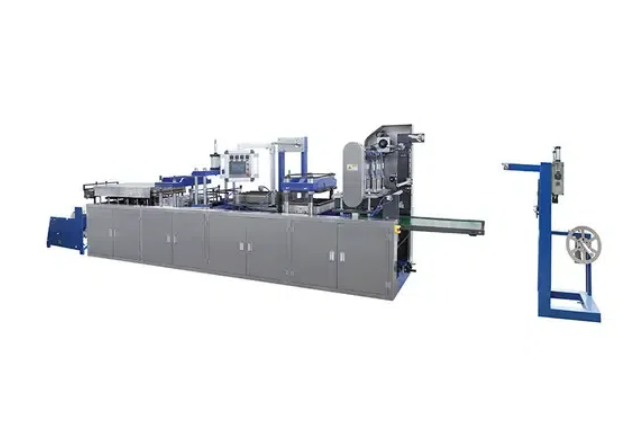
Wenzhou Mingdu Machinery brings over 15 years of expertise in developing advanced twin sheet thermoforming machines that deliver stability, precision, and versatile mold interchangeability. Our equipment supports a wide range of applications, enabling manufacturers to leverage the unique benefits of twin sheet thermoforming over traditional forming methods.
Contact us to discuss your project needs and explore how our automatic plastic forming machines can optimize your production workflow and product quality.


