
Views: 0 Author: Site Editor Publish Time: 2026-09-18 Origin: Site
Product designers constantly face a frustrating dilemma when scaling hardware from prototype to production. You want injection-molded aesthetics and crisp tactile branding on low-to-mid volume enclosures. However, running small batches rarely justifies astronomical steel tooling costs. Bridging this gap requires a manufacturing method capable of delivering premium quality without draining your capital.
Standard vacuum forming simply lacks the power to capture intricate surface details. It often leaves outer shells looking generic and soft. This is where pressure thermoforming emerges as the definitive solution. It provides the exact surface topography required for high-end medical devices and consumer electronics. You achieve this without the prohibitive upfront investment associated with injection molding.
We will explore how this technology works and why it outperforms traditional alternatives. You will gain a clear decision-making framework to evaluate equipment, design rules, and scalability. This guide gives engineers and procurement teams everything they need to confidently plan their next mid-volume manufacturing run.
Many hardware teams struggle when designing medical-grade or consumer-facing outer shells. Standard vacuum forming relies solely on atmospheric suction. This often results in soft radii and washed-out surface features. You cannot achieve sharp corners or crisp louvers using vacuum suction alone. The atmospheric pressure simply cannot force the polymer deep enough into the mold corners. Consequently, designers often compromise on aesthetics just to keep production costs manageable.
Teams turn to this advanced process to solve the detail deficit. The cost-to-detail ratio improves dramatically when you apply positive air pressure. The equipment introduces 20 to 100 PSI of compressed air over the heated plastic sheet. This added force pushes the material deep into intricate mold cavities. It captures exact geometric details on the tool side. A well-designed shell easily matches the visual fidelity of heavily machined or injection-molded parts. Tooling costs remain low because molds utilize cast or machined aluminum instead of hardened tool steel.
Typical applications span multiple demanding industries. You will frequently see this method used for MRI machine covers, analytical device housings, and self-service kiosks. Any decorative plastic enclosure requiring raised logos or complex surface topography benefits immensely. Medical equipment manufacturers favor it heavily. They can achieve seamless, easy-to-clean textured surfaces quickly. The business case becomes undeniable when annual volumes sit between 250 and 5,000 units.
Best Practice: Always specify critical cosmetic surfaces early in the design phase. Communicate these visual standards clearly. Your manufacturing partner can then orient the tool so the critical faces receive the highest pressure and finest texture replication.
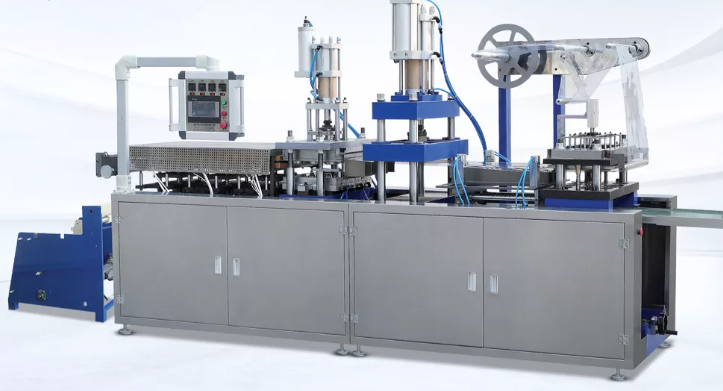
The physics behind textured plastic forming differentiate it entirely from basic vacuum methods. Vacuum forming pulls heated plastic over a mold using negative pressure. The result remains functional but visually flat. Pressure processes combine negative suction with high-pressure air applied from above. This dual-action force mimics the cavity-packing pressure of injection molding. The plastic perfectly replicates the microscopic topography of the mold surface.
You can achieve highly sophisticated surface finishes using this method. Manufacturers regularly replicate heavy stippling, fine matte textures, and even complex wood grains. They chemically etch or bead-blast these patterns directly into the aluminum mold. Doing so eliminates the need for expensive post-process painting. In-mold texturing significantly lowers secondary operation expenses. The finished part emerges from the machine looking completely ready for final assembly. Using pre-colored, extruded thermoplastic sheets further enhances durability. Unlike paint, inherent material color never chips or scratches off.
Embossed branding and lettering require special attention during design. You can form crisp, readable raised or recessed text directly into the plastic shell. Designers must follow specific geometric guidelines to succeed. Raised text should feature slight drafts to prevent tearing. Recessed logos typically form cleaner edges under high pressure. Both techniques give products a premium, branded feel. You completely avoid using cheap adhesive labels or secondary screen printing.
Common Mistake: Avoid placing heavy textures on zero-draft vertical walls. As the plastic cools and shrinks against the tool, heavy textures act like sandpaper. This causes severe scuffing during part ejection.
Choosing the right manufacturing partner means auditing their equipment closely. An industrial-grade embossed plastic panel machine must possess highly specific capabilities. Not all thermoformers can handle the stringent demands of high-detail cosmetic work. If the machinery lacks precise controls, your final parts will suffer from inconsistent wall thicknesses.
Heating uniformity stands as the most critical evaluation factor. The machine must feature advanced zoned heating controls. Ceramic or halogen heaters must apply precise temperatures across different areas of the plastic sheet. If heating remains uneven, you risk severe material webbing. Tearing easily occurs over highly detailed embossed areas if the plastic stays too cold. Zoned control allows operators to direct extra heat to areas requiring deep draws.
Pressure thresholds directly dictate material compatibility. You must verify the equipment can sustain the necessary PSI. Different thermoplastics require distinct pressure curves. Standard ABS might flow perfectly well at lower pressures. However, highly rigid materials demand sustained, high-PSI forming environments to capture micro-textures.
Finally, you must consider the trimming process. High-detail parts usually feature complex perimeters and internal cutouts. The forming machine alone cannot produce a finished edge.
Look for these core equipment capabilities when vetting a partner:
Successfully leveraging this process requires strict adherence to design guidelines. Managing wall thinning represents the biggest engineering challenge. As heated plastic stretches into deep mold cavities, it naturally thins out. Deeply embossed features pull material from surrounding areas. You must calculate material stretch ratios carefully. Excessive thinning severely impacts the structural integrity of the final panel.
Draft angles and undercuts require careful planning. Engineers often ask if zero-degree drafts are possible. They are achievable, but they complicate the tooling. You must utilize articulated or collapsible molds to achieve zero draft. These specialized mechanisms retract before the part ejects. For heavily textured surfaces, standard fixed molds require a minimum draft angle. A draft of 2 to 3 degrees prevents mold lock.
Material selection dictates how the plastic behaves under pressure. Highly rigid materials resist flow. They require optimized mold temperatures and maximum pressure. Standard High-Impact Polystyrene (HIPS) flows much easier but lacks impact durability. We recommend testing your chosen polymer before committing to a final tool design.
Follow these specific design review steps before cutting your mold:
Thermoplastic Behavior Under High Pressure
| Material Type | Flow Characteristic | Detail Replication | Recommended Draft (Textured) |
|---|---|---|---|
| High-Impact Polystyrene (HIPS) | Excellent / Easy Flow | Good | 1.5 to 2 Degrees |
| Standard ABS | Very Good | Excellent | 2 to 3 Degrees |
| PC/ABS Blends | Moderate / Stiff | Very Good (Requires High PSI) | 3+ Degrees |
| Kydex / Flame Retardant PVC | Challenging / Rigid | Excellent | 3+ Degrees |
Cost efficiency makes pressure forming for embossed plastic panels highly attractive for mid-volume hardware. Tooling investments differ drastically from injection molding. We utilize cast or machined aluminum molds for this process. We equip these tools with internal temperature control channels. They cost significantly less than P20 steel injection molds. Aluminum machines much faster, which keeps upfront capital requirements low.
Lead time reductions offer another massive advantage. You can move from an approved design to initial production in just 4 to 8 weeks. Injection molding typically requires 16 to 24 weeks just to cut the steel tool. This speed-to-market allows agile hardware companies to launch products faster. You can iterate quicker based on early market feedback.
However, you must know exactly when to pivot to other methods. We rely on transparent shortlisting criteria to guide clients. If your annual production crosses the 10,000-unit threshold, consider transitioning. Injection molding eventually becomes cheaper per unit at very high volumes. Additionally, if your design requires intricate internal mounting bosses, pressure forming might struggle. The process produces incredible outer surfaces but cannot easily form complex inner geometries. Keep internal structural components separate from aesthetic outer shells for the best results.
Pressure forming offers a definitive competitive advantage for mid-volume hardware requiring premium aesthetics. You completely avoid the massive tooling penalty associated with steel injection molds. The process expertly replicates complex surface details, deep undercuts, and crisp branding. It bridges the gap between rapid prototyping and mass manufacturing perfectly.
To move forward successfully, take the following next steps:
A: Yes, by chemically etching or bead-blasting the aluminum mold, pressure forming replicates textures identical to injection-molded finishes on the tool side of the part. The high PSI forces the heated thermoplastic to capture even microscopic mold details perfectly.
A: Typically, raised features should not exceed a 1:1 depth-to-width ratio to avoid severe wall thinning, though custom plug assists can push this boundary. Designing lettering with slight drafts also prevents material tearing during the forming cycle.
A: Often no. With custom color-matched plastics and in-mold texturing, secondary painting is usually eliminated, though CNC routing for cutouts is standard. This greatly reduces your overall manufacturing timeline and eliminates problems like paint chipping or peeling.


