
Views: 0 Author: Site Editor Publish Time: 2026-09-16 Origin: Site
Investing in a PET thermoforming machine requires balancing high-speed production demands against the strict optical clarity requirements of modern retail and food packaging. Manufacturers face constant pressure to deliver flawless, transparent containers. Standard thermoformers often struggle to manage PET’s specific thermal properties. This mismatch leads to material haze, inconsistent wall thickness, or unacceptably high scrap rates. You need specialized equipment to handle these narrow processing windows effectively.
This guide provides a clear framework for evaluating technical specifications, operational costs, and supplier capabilities. We will help you ensure your equipment investment delivers verifiable operational returns. You will learn how to assess independent heating zones, evaluate modern automation, and mitigate factory integration risks. By following these industry standards, you can establish a highly efficient and reliable production line.
Polyethylene terephthalate (PET) behaves quite differently than polypropylene (PP) or polystyrene (PS). It has a notoriously narrow processing window. If you heat it too much, it crystallizes rapidly. This crystallization turns the plastic cloudy and brittle. If you heat it too little, it fails to stretch properly. You must master this exact temperature balance for successful transparent plastic thermoforming. Standard machines simply lack the finesse required to keep the material in its optimal amorphous state.
To evaluate a machine properly, you must first define clear success criteria for the end product. A successful container forming process achieves three non-negotiable benchmarks:
You cannot achieve these benchmarks without proper material handling before the plastic even enters the mold. PET naturally absorbs moisture from the ambient environment. You must integrate automated sheet feeding and dedicated material drying systems. If you fail to dry the sheet, trapped moisture turns to steam during heating. This creates micro-bubbles and completely ruins optical transparency. Therefore, evaluate the entire material handling ecosystem alongside the primary forming equipment.
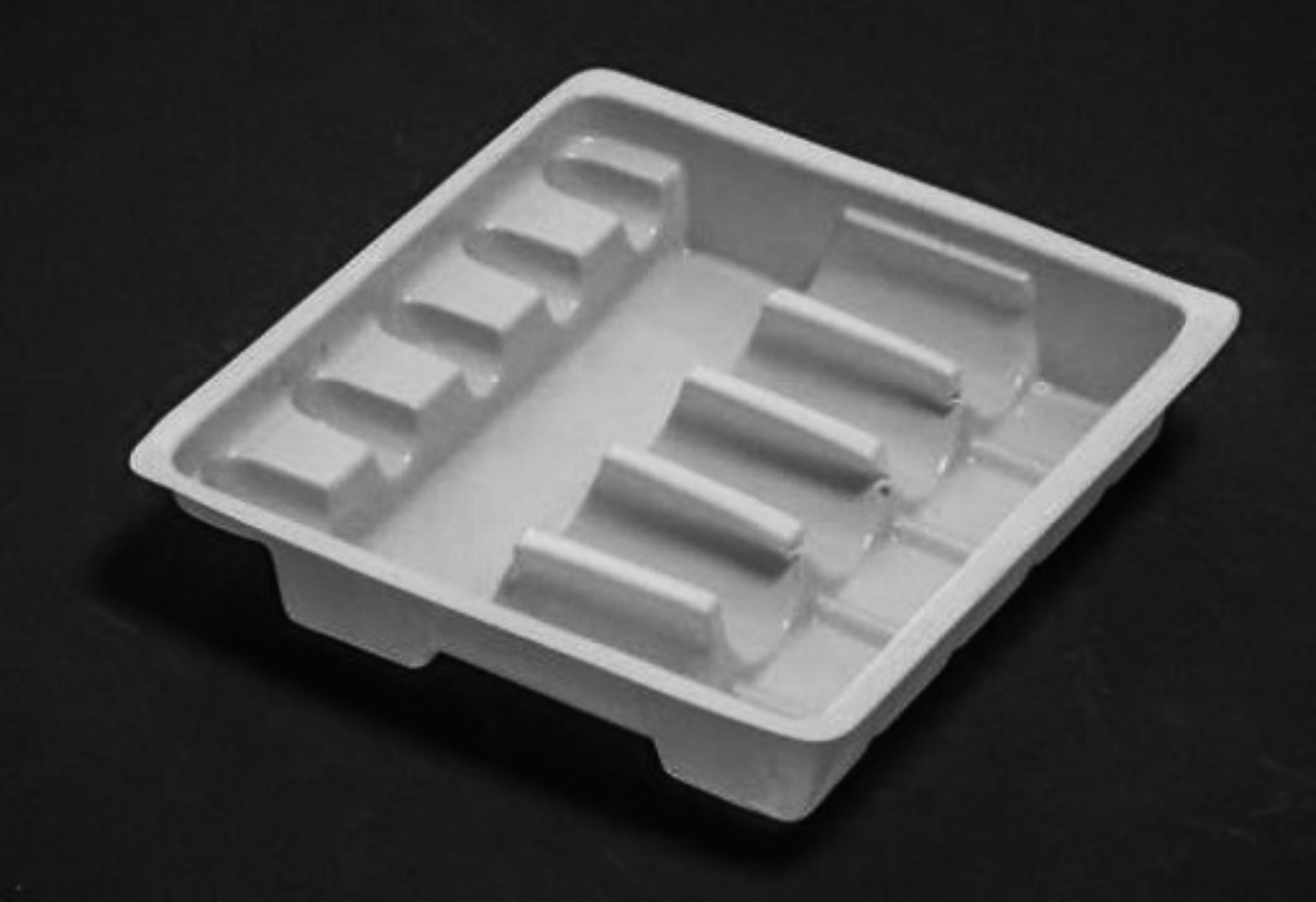
You must prioritize thermal precision above all other features. The ideal clear PET packaging machine utilizes top and bottom heater banks. These banks should feature high-quality ceramic or halogen heating elements. Halogen elements react faster to temperature adjustments, while ceramic provides highly stable, radiant heat. Both types require sophisticated PID (Proportional-Integral-Derivative) controllers.
Independent temperature control zones are absolutely essential. An advanced machine divides the heating tunnel into dozens of small, independently managed grid sections. This allows operators to create a customized thermal profile across the entire sheet. It prevents localized overheating near the center while ensuring the edges receive enough energy. Without this precise zoning, you risk material degradation and subsequent clouding.
Legacy machines rely heavily on pneumatic cylinders to drive the forming and cutting stations. Air-driven systems suffer from delayed reaction times and inconsistent pressure. They also consume vast amounts of expensive compressed air. Modern facilities now demand servo-driven technology.
Servo-motors offer significant operational advantages over traditional pneumatics. Consider these key benefits:
Heating the plastic correctly is only half the battle. You must cool it almost instantly once it touches the mold. Rapid cooling locks in the material's amorphous state. This specific molecular state keeps the plastic clear. If the mold stays too warm, the material cools slowly and begins to crystallize, resulting in a milky appearance.
Because of this, you must evaluate the machine's chilling capabilities. Look for oversized cooling channels within the mold design. High-capacity water chilling systems must integrate directly into the machine's primary control loop. You want the system to alert operators immediately if the water flow rate drops or the temperature rises above the setpoint.
Capital expenditure only tells a small part of the story. True profitability relies on minimizing daily operational costs. You must evaluate how efficiently the equipment converts raw power and plastic sheet into sellable inventory.
Buyers often fixate on the maximum cycles per minute (CPM) advertised by the manufacturer. However, high speed holds zero value if the yield is unusable. You must benchmark the expected throughput against realistic operational scrap rates. A machine running at 35 CPM with a 2% scrap rate is far more profitable than one running at 45 CPM with a 15% scrap rate. Evaluate the consistency of the PET thermoforming machine for clear packaging during sustained runs, not just a five-minute demonstration.
Energy costs eat directly into your profit margins. You must benchmark the exact power draw (measured in kW/h) of the equipment. Look for regenerative servo systems. These systems capture kinetic energy during braking phases and feed it back into the power grid. Additionally, inspect the heating tunnels. High-quality machines use heavy industrial insulation around the oven. This prevents radiant heat loss, reduces the load on your factory air conditioning, and drastically cuts power consumption.
Production demands fluctuate rapidly. Faster changeovers dictate the profitability of short-run production batches. Evaluate the machine's mold-change mechanics carefully. Ask how many operators are required to perform a complete tooling swap. Modern equipment uses quick-release locking mechanisms and automated mold lifting tables. This reduces a four-hour mechanical chore down to a standard 45-minute process.
Equipment ROI Comparison Matrix
| System Feature | Legacy Equipment | Modern Servo-Driven Equipment |
|---|---|---|
| Drive Mechanism | Pneumatic Cylinders | Multi-Axis Servo Motors |
| Energy Efficiency | High (Continuous compressor load) | Low (Power drawn only on movement) |
| Average Changeover | 3 - 5 Hours | 45 - 90 Minutes |
| Clarity Control | Inconsistent cooling | Integrated chiller management |
Purchasing the hardware is merely the first step. You must successfully integrate it into your existing factory workflow. Poor planning during this phase leads to extensive delays and budget overruns.
Assess the physical footprint carefully. You need enough clearance around the machine for operators to load heavy plastic rolls safely. You also need dedicated forklift lanes. Beyond floor space, audit your utility capabilities. Ensure your facility provides stable three-phase industrial power. Check your pneumatic air supply. Even servo-driven machines require clean, completely dry, oil-free compressed air for ejection valves. Oil or moisture in the air lines will ruin the clarity of the PET container forming process.
Do not underestimate the reality of the learning curve. Transitioning from older machinery to advanced equipment overwhelms inexperienced operators. This makes intuitive PLC (Programmable Logic Controller) touchscreens absolutely non-negotiable. Look for interfaces that feature robust recipe memory. Operators should be able to load pre-saved heating profiles and cycle speeds with two taps. This minimizes human error and reduces startup waste during shift changes.
The forming process creates a bottleneck if you manually handle the output. You must consider downstream integration from day one. Sync the thermoformer with automatic robotic stackers and counting conveyors. Furthermore, plan for inline granulators. These machines instantly grind the leftover skeleton web—the plastic mesh remaining after the containers are cut out. Immediate recycling keeps the factory floor clean and prepares the scrap for immediate reuse.
The reliability of your manufacturing partner dictates your long-term success. A high-quality machine will eventually need maintenance. You must evaluate the business behind the equipment just as rigorously as the steel and wires.
Never base a purchasing decision solely on generalized spec sheets. Demand actual cycle-time demonstrations using your exact material grade. Ask the supplier to run a sustained test. Measure the clarity, wall thickness, and scrap rate yourself. If a supplier hesitates to provide physical proof of performance, view this as a major red flag.
Machines break down. When they do, every hour of downtime costs thousands of dollars. Evaluate the supplier's average response time for technical support. Do they offer remote diagnostic capabilities via secure network connections? Ensure they maintain a domestic warehouse for critical spare parts. Waiting three weeks for a proprietary servo drive to ship internationally is unacceptable. A reliable PET packaging supplier provides guaranteed service level agreements and dispatches local technicians promptly.
Ensure the equipment meets strict regional safety and hygiene standards. Look for CE, ISO, and OSHA compliance marks. Because you are producing retail and food containers, the machine design must support sanitary environments. Avoid machines with exposed grease points directly over the forming area. Look for stainless steel washdown components and fully enclosed safety interlocks to protect your workforce.
Choosing the correct equipment fundamentally determines your production success. The right machine perfectly aligns precise multi-zone thermal control with energy-efficient operation. You must abandon outdated pneumatic designs in favor of advanced servo-driven architecture. This ensures you maintain the rigid, crystal-clear quality that modern consumers demand while keeping utility expenses manageable.
Your next step requires gathering specific operational data. Map out your exact container dimensions, daily production volume goals, and material thickness requirements. Document your factory's current power and utility constraints. Gather this information before you request a customized tooling and machine quote. This preparation prevents costly mismatches during installation.
Do not leave your next major investment to chance. We encourage you to schedule a technical consultation or request a live machine demonstration with a specialized engineering team today.
A: Haze occurs when PET begins to crystallize. This happens if you overheat the material in the oven or if the mold cooling is excessively slow. Precise temperature control and rapid chilling are necessary to lock the plastic in its clear, amorphous state.
A: Yes, modern machines are versatile. However, you must adapt the heater profiles, cutting force, and tooling design. PP requires higher temperatures, while PLA has a much lower melt point and behaves differently during the cutting phase.
A: Modern servo-driven models typically reduce energy consumption by 20% to 40% compared to older pneumatic-heavy models. This is largely due to eliminating constant compressed air usage and implementing regenerative braking technologies.
A: Standard lead times generally range from 60 to 120 days. This timeframe varies based on specific machine customizations, mold complexity, and the necessary factory acceptance testing prior to shipment.


