
Views: 0 Author: Site Editor Publish Time: 2026-09-13 Origin: Site
Cosmetic brands face a constant battle on the production floor. They demand flawless clarity and complex geometries for their luxury packaging. High-volume production lines, however, often threaten these strict aesthetic standards. Standard thermoforming equipment usually struggles to meet the exact tolerances required by the cosmetics industry. Operators frequently encounter material hazing, unsightly webbing, or uneven wall thicknesses during production. These subtle manufacturing flaws ultimately ruin the premium unboxing experience for consumers.
This guide provides a procurement-focused evaluation framework. We detail essential structural capabilities and advanced material handling techniques. You will learn how to evaluate equipment based on thermal precision, forming mechanics, and tooling agility. By understanding these mechanical nuances, buyers can ensure consistent quality across high-speed production runs. Selecting the right thermoforming machine for cosmetic packaging eliminates common production bottlenecks and protects brand integrity.
Cosmetic containers require significantly higher visual standards than standard food or industrial packaging. A blister pack for hardware can tolerate minor surface scratches or slight clouding. Cosmetic inner trays and compacts cannot. Luxury buyers inspect packaging closely. Any visual defect signals a lower-quality product inside. Standard thermoformers often drag materials across metal guides, causing micro-scratches. Specialized equipment minimizes material contact before forming. We must prioritize machines offering advanced web handling to maintain pristine surface conditions. Perfect transparency remains non-negotiable for high-end retail displays.
Many manufacturers run clear PET on machines designed for opaque polystyrene. This mismatch leads to rapid mold cooling issues. It ultimately introduces cloudiness into the final cosmetic tray.
Precision defines cosmetic packaging success. Inner trays must friction-fit primary containers perfectly. Heavy glass perfume bottles and delicate serum tubes require exact holding forces. If the tray fits too loosely, the primary container will rattle and break during transit. If the fit is too tight, the consumer will struggle to remove the product, ruining the unboxing experience. Standard machines often produce inconsistent wall thicknesses. This variability alters the internal dimensions of the tray cavities. An advanced cosmetic packaging thermoformer utilizes precise plug assists to distribute plastic evenly into every corner of the mold.
The cosmetics industry continues shifting toward sustainable packaging materials. Brands now heavily specify RPET (Recycled Polyethylene Terephthalate) and PLA (Polylactic Acid). These eco-friendly materials present notorious forming challenges. RPET contains varying molecular structures depending on its recycled source. This variation makes the material highly sensitive to temperature fluctuations. Improper heating causes crystallization, turning clear plastic milky white. PLA becomes extremely brittle if cooled improperly. You need highly precise thermal profiling to process these sustainable films successfully. Standard machines lack the granular temperature controls required for modern sustainable packaging.
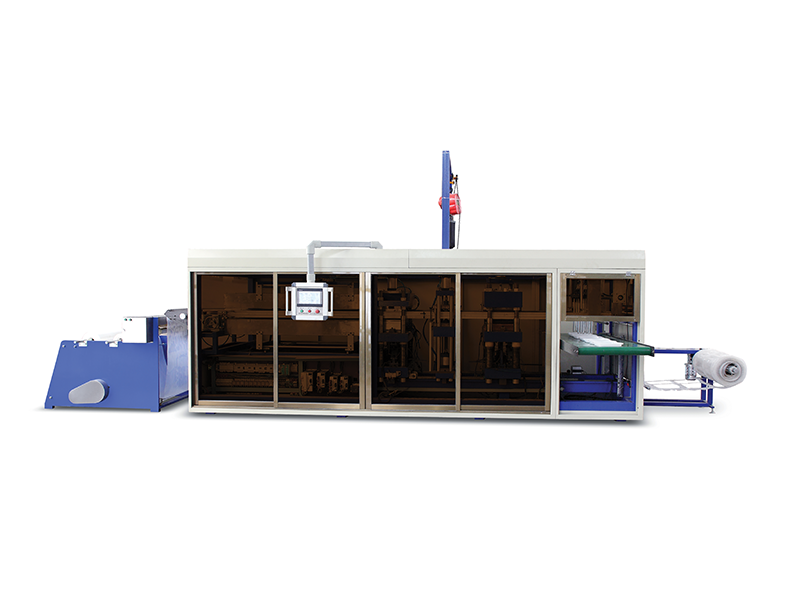
High-volume inline machines handle massive production runs efficiently. We see these systems dominate the production of inner holding trays, box inserts, and mass-market cosmetic sets. A robust plastic cosmetic tray machine features continuous roll-fed processing. Raw plastic film unrolls, heats, forms, and cuts in one seamless sequence. These machines feature integrated stacking systems. Automated stacking prevents manual handling, which reduces contamination risks. If your production schedule demands millions of identical cosmetic inserts monthly, inline roll-fed systems offer the highest output efficiency.
Retail environments rely heavily on blister packs for visibility and security. These systems suit retail display packaging, lip balm blisters, and hanging brush displays. You must choose between Form-Fill-Seal (FFS) and form-only architectures. FFS machines integrate forming with automatic product loading and sealing stations. They handle varying flange widths seamlessly. They also accommodate specialized blister card backing. Form-only machines simply produce the empty blister shells for later fulfillment. Investing in integrated cosmetic blister packaging streamlines the entire supply chain by reducing intermediate storage needs.
Permanent retail displays require different machinery altogether. Heavy-gauge formers handle thick sheets of acrylic or PETG. These machines excel at producing thick-walled display stands and premium Point of Sale (POS) cosmetic displays. Unlike roll-fed machines, cut-sheet formers process individual, pre-cut plastic sheets. They offer massive deep draw capabilities. This allows manufacturers to create large, structural display bases for department store makeup counters. They operate at slower cycle times but deliver unmatched structural rigidity.
Equipment Comparison for Cosmetic Applications
| Machine Category | Best Suited For | Material Feed Type | Key Production Advantage |
|---|---|---|---|
| Inline Tray Machine | Inner inserts, gift set trays | Continuous Roll-Fed | High-speed automated stacking |
| Blister Packaging System | Lip balms, hanging retail items | Roll-Fed with Sealing | Tamper-evident retail integration |
| Heavy-Gauge Former | POS counter displays, thick stands | Individual Cut-Sheet | Deep draw structural integrity |
Heating technology dictates the final clarity of your cosmetic trays. You must evaluate the oven architecture carefully. Look for quartz or ceramic heaters offering multi-zone control. Multi-zone heating allows operators to assign different temperatures to specific areas of the plastic sheet. This prevents material burning in the center while ensuring adequate heat at the edges. Precise thermal control eliminates "hazing" in clear plastics. When evaluating machines, ask vendors about their heat penetration consistency. Uneven heating inevitably leads to warping and rejected cosmetic batches.
The cosmetics sector demands sharp, crisp lines that mimic expensive injection molding. Traditional vacuum forming relies solely on atmospheric pressure to push plastic into a mold. This limits detailing capabilities. Pressure forming introduces compressed air (often combined with vacuum) to force the material into every crevice of the tool. You require pressure forming for sharp logos, tight corners, and intricate textures. When specifying a custom cosmetic packaging machine, ensure it supports high-pressure air forming. This capability differentiates premium luxury packaging from standard commodity trays.
Machine actuation impacts repeatability directly. Older equipment relies heavily on pneumatic cylinders to move platens and plug assists. Air pressure fluctuates, causing unpredictable speeds. Servo-motor controls provide absolute positional accuracy. They offer consistent plug-assist speeds. This consistency reduces web-to-web variability. Servos allow you to program precise deceleration profiles before the plug hits the plastic. This gentle interaction prevents webbing and material waste. We strongly advocate for all-electric, servo-driven platforms for cosmetic applications due to their superior control.
Always utilize syntactic foam plug assists rather than raw aluminum. Syntactic foam minimizes heat transfer from the plastic, preventing localized chilling and subsequent material thinning during deep draws.
Edge quality matters in cosmetics. Post-mold trimming moves the formed plastic to a separate cutting station. The material shrinks as it cools during this transfer, compromising registration accuracy. In-mold cutting integrates the steel rule die directly into the forming tool. The machine cuts the tray while the plastic remains securely clamped. This method yields significantly tighter tolerances. More importantly, in-mold cutting reduces "angel hair" (fine plastic dust). Angel hair contaminates cleanroom or semi-cleanroom cosmetic environments, leading to costly quality control failures.
Buyers often overlook tooling when budgeting for new equipment. The reality remains straightforward: a machine is only as good as its mold. High-end cosmetic finishes demand precision CNC-machined aluminum molds. Avoid cheap cast aluminum or epoxy molds for luxury cosmetics. You need dedicated water-cooling channels integrated throughout the tool. Rapid, controlled cooling locks the plastic structure in place, preserving clarity and dimension. Address these hidden costs early. High-quality temperature-controlled molds require significant upfront investment but pay dividends through reduced scrap rates.
Cosmetic brands update SKUs constantly. Seasonal promotions, holiday gift sets, and limited-edition runs dictate production schedules. Agility becomes your primary competitive advantage. Evaluate equipment based on Single-Minute Exchange of Dies (SMED) principles. Look for tool-less quick-change features. Modern equipment uses automated clamping systems to release molds instantly. Investigate the HMI (Human-Machine Interface). Recipe-saving HMIs allow operators to recall specific heating profiles and servo speeds instantly. Automated chain width adjustments save hours during material changeovers. Fast changeovers keep your equipment running and profitable.
Installing a new thermoformer requires careful facility planning. Cosmetic packaging often blurs the line with medical packaging, requiring clean-air environments. Ensure the machine footprint accommodates HEPA filter enclosures if ISO Class 7 or 8 compliance is necessary. Plan your electrical load routing carefully, as multi-zone quartz ovens draw significant amperage. Additionally, map out your chiller system requirements. Rapid mold cooling demands robust industrial chillers. Undersized chillers bottleneck machine speeds, completely negating the benefits of high-speed servo drives.
Your Request for Quotation (RFQ) must move beyond simple "cycles per minute" claims. Machine speed means nothing if half the output fails quality control. Request vendors to quote based on OEE (Overall Equipment Effectiveness). Force suppliers to provide specific scrap rate guarantees based on your specified materials. If you plan to run 100% post-consumer recycled PET, write that explicitly into the RFQ. Define the exact dimensional tolerances required for your glass bottle friction fits. Clear metrics protect your investment during commissioning.
Never buy thermoforming machinery based on marketing brochures or spec sheets alone. You must mandate a Factory Acceptance Test (FAT). Supply the vendor with your actual cosmetic product and your chosen sustainable film. Watch the machine run your specific tray design. Inspect the friction fit, the optical clarity, and the edge cut quality in person. A rigorous FAT exposes thermal control issues and mechanical vibrations before the equipment ships to your facility.
Cosmetic supply chains forgive very few delays. Assess the OEM support infrastructure thoroughly. Where are their technicians located? What is the guaranteed response time for emergency support? Spare parts availability represents a massive operational risk. Ask vendors about their inventory levels for critical spare parts like ceramic heaters, servo drives, and HMI panels. Establish a clear preventative maintenance schedule during the procurement phase. Reliable OEM partnerships ensure your production lines hit seasonal cosmetic deadlines consistently.
Standardizing on the right thermoforming architecture reduces long-term unit costs and dramatically elevates brand perception. The cosmetics sector requires flawless clarity, precise friction fits, and sustainable material handling capabilities. By focusing on multi-zone thermal control, servo-driven actuation, and agile changeover features, you future-proof your production floor against shifting retail demands.
Your next step requires internal analysis. Encourage your procurement and engineering teams to audit current scrap rates closely. Document your average SKU changeover times to identify existing bottlenecks. Compile accurate data on your most demanding sustainable materials. Use this operational audit to build a comprehensive RFQ before approaching OEMs for a custom machine build. Data-driven procurement guarantees successful machinery integration.
A: PET and RPET dominate the market due to their exceptional optical clarity and broad recyclability. However, processing these materials requires highly precise multi-zone heating. Inadequate temperature control causes the plastic to crystallize, resulting in severe clouding and a compromised luxury appearance.
A: Custom cosmetic machines feature advanced servo-driven plug-assist mechanisms. These allow for deep-draw custom shapes required to hold irregular items, like uniquely shaped perfume bottles. They also prioritize superior in-mold cutting technologies to produce exceptionally smooth, dust-free edges critical for retail presentation.
A: Yes. Many modern systems offer hybrid configurations designed for trapped blister packaging. This approach seals a minimal plastic blister between two pieces of recycled paperboard. It directly aligns with industry-wide plastic-reduction mandates while maintaining shelf visibility.
A: Tooling costs vary widely, but expect to invest heavily in CNC-machined aluminum molds with integrated water-cooling channels. While cheap cast molds exist, they negate the machine's precision and ruin clarity. Transparently budgeting for premium tooling ensures high-end, repeatable finishes.


