
Views: 0 Author: Site Editor Publish Time: 2025-06-02 Origin: Site
Automatic thermoforming machines are transforming manufacturing by boosting efficiency, cutting costs, and offering more production flexibility. These machines use heat to shape thermoplastic sheets into various products, streamlining processes and improving product quality.
In this article, we’ll highlight the key benefits of these machines and why investing in the right one can significantly enhance your operations.
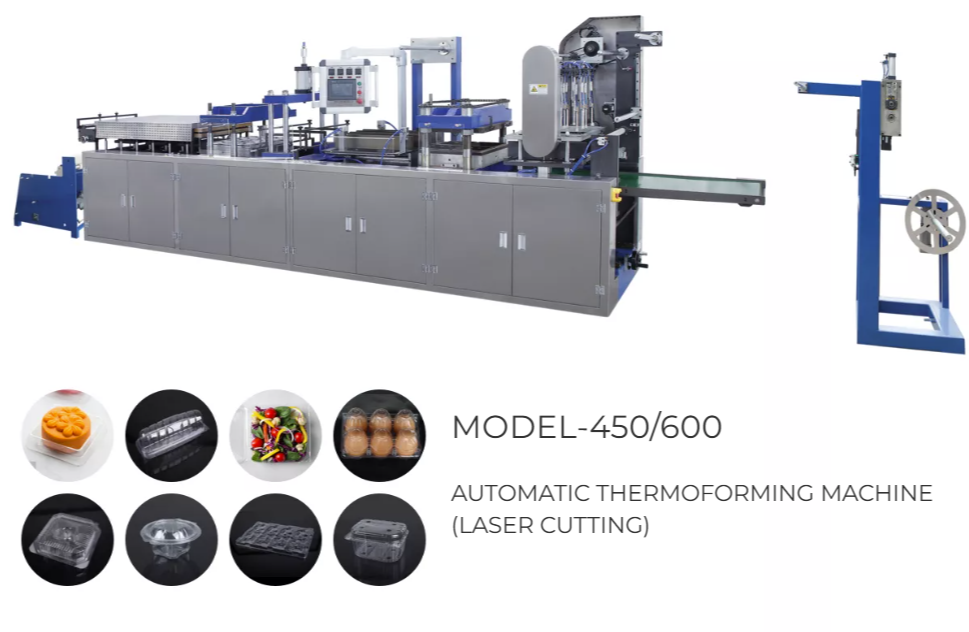
Thermoforming is a process where a thermoplastic sheet is heated and formed into a shape using molds. Traditionally, this process is manual, requiring skilled operators. In contrast, an automatic thermoforming machine automates the entire process, from heating to cooling and trimming, improving efficiency, reducing waste, and ensuring consistent quality. By integrating technology to control temperature, pressure, and molding, these machines offer faster production cycles and less human intervention, making them essential in industries such as packaging, automotive, and medical devices.
Automatic thermoforming machines bring a wealth of benefits to manufacturers, including enhanced efficiency, cost savings, and greater design flexibility. Below, we dive deeper into each key benefit, with the help of tables to illustrate how these machines optimize production processes and reduce operational costs.
One of the primary advantages of automatic thermoforming machines is the significant increase in production speed. By automating the heating, forming, and cooling processes, these machines streamline operations and reduce cycle times, resulting in faster production rates.
| Benefit | Explanation |
|---|---|
| Reduced Cycle Time | Automation shortens the time required to heat, form, and cool plastic sheets, leading to quicker turnaround. |
| Continuous Operation | Automatic machines can operate 24/7 with minimal downtime, meeting large-scale production demands. |
| Minimized Human Error | Automation ensures consistent performance, removing errors typically caused by human oversight. |
Example: In industries like packaging, where speed is critical, automatic thermoforming machines can meet high demands without sacrificing quality.
Automatic thermoforming machines help reduce labor costs by minimizing the need for manual oversight and human intervention throughout the production process.
| Factor | Explanation |
|---|---|
| Fewer Workers Required | Automation reduces the number of workers needed, allowing businesses to save on labor expenses. |
| Lower Training Costs | Less manual operation means fewer resources are required to train employees, lowering overall training costs. |
| Reduced Error Rates | With less human involvement, the chances of errors are significantly reduced, leading to fewer defects. |
Example: A packaging company could replace several workers with a single machine operator, reducing staffing requirements and improving overall cost efficiency.
Automatic thermoforming machines contribute to sustainability by reducing material waste and enabling the use of recycled materials. The precise control of material usage results in better resource management.
| Sustainability Factor | Impact |
|---|---|
| Material Efficiency | The machine uses only the necessary amount of material, minimizing scrap and waste. |
| Recyclable Materials | Many machines can work with recycled thermoplastics, supporting eco-friendly manufacturing practices. |
| Waste Reduction | Precise cutting and trimming processes ensure that minimal excess material is generated during production. |
Example: Using recycled PET for packaging production not only reduces waste but also enhances the company’s sustainability credentials.
Automatic thermoforming machines offer exceptional flexibility in design, allowing manufacturers to create intricate shapes, varying thicknesses, and even embossed textures.
| Design Feature | Explanation |
|---|---|
| Complex Shapes | Capable of producing detailed and complex shapes that are difficult to achieve with manual processes. |
| Varied Wall Thicknesses | Machines can form parts with different wall thicknesses, making them suitable for diverse product applications. |
| Customization | Offers a high degree of customization, including specific sizes, textures, and material options. |
Example: The automotive industry benefits from the ability to create complex interior parts with varying thicknesses, ensuring both functionality and aesthetics.
Precision is one of the major advantages of automatic thermoforming machines. These machines provide consistent quality by controlling the heating, forming, and cooling parameters with high accuracy.
| Quality Benefit | Explanation |
|---|---|
| Consistent Output | Automatic machines ensure that every product meets the same specifications, reducing variation in quality. |
| High-Precision Control | Temperature, pressure, and timing are accurately controlled, leading to uniform products with fewer defects. |
| Reduced Defects | With automation, there are fewer mistakes, leading to a higher percentage of defect-free products. |
Example: In medical device manufacturing, where precision is critical, automatic thermoforming machines guarantee high-quality, sterile packaging that meets regulatory standards.
While the upfront cost of an automatic thermoforming machine can be significant, the long-term savings in labor, material, and operational efficiency make these machines a cost-effective choice for large-scale production.
| Cost Factor | Impact |
|---|---|
| Lower Tooling Costs | Thermoforming tools are generally more affordable than injection molding tools, reducing initial setup costs. |
| Mass Production Capability | Machines handle large production runs efficiently, ensuring that costs per unit decrease with higher volumes. |
| Reduced Operating Costs | Fewer labor requirements, less material waste, and faster production times all contribute to lower overall costs. |
Example: A food packaging company investing in an automatic thermoforming machine can produce packaging at a lower cost per unit as production volumes increase.
Automatic thermoforming machines are incredibly versatile and can be used across a wide range of industries. Some of the most prominent sectors benefiting from this technology include:
Packaging: From food and beverage containers to electronics packaging, thermoforming machines are ideal for producing lightweight, durable, and customizable packaging solutions.
Automotive: These machines are used to create vehicle components such as interior panels, dashboards, and trim parts, where precision and material strength are crucial.
Medical Devices: Thermoforming machines produce sterilizable containers, trays, and enclosures for medical equipment, ensuring high hygiene standards and functionality.
Consumer Goods: Many consumer products, including household items, appliances, and toys, are produced using thermoforming machines due to their ability to handle intricate designs and large volumes.
When selecting an automatic thermoforming machine for your business, there are several factors to consider:
| Factor | Considerations |
|---|---|
| Product Specifications | Size, shape, and material requirements of your products. |
| Production Volume | Choose a machine that matches your volume needs—whether low, medium, or high production runs. |
| Material Compatibility | Ensure the machine can handle the types of thermoplastics required for your products. |
| Budget | Balance the initial investment with long-term savings in labor, material waste, and maintenance. |
| Maintenance and Support | Look for machines with easy-to-manage maintenance routines and strong customer support. |
Q: How does an automatic thermoforming machine improve production speed?
A: The machine automates heating, forming, and cooling, reducing cycle times and increasing throughput.
Q: Are automatic thermoforming machines suitable for small production runs?
A: Yes, they are versatile enough for both small and large production volumes, providing cost-effectiveness for low-volume runs.
Q: How does an automatic thermoforming machine work?
A: The machine heats a thermoplastic sheet until it becomes pliable, then forms it into a mold using vacuum, pressure, or a combination of both. After cooling, the formed product is trimmed and ejected.
Q: What maintenance is required for automatic thermoforming machines?
A: Routine maintenance includes checking and cleaning molds, ensuring proper temperature control, and monitoring for wear on components.
Investing in an automatic thermoforming machine is a game-changer for manufacturers aiming to enhance efficiency, reduce costs, and maintain high-quality standards. These machines boost production speed, save on labor, and offer improved precision and customization. Whether in packaging, automotive, medical, or consumer goods, using an automatic thermoforming machine can help streamline production and maintain competitiveness.
Embracing automation allows businesses to meet rising demand, improve sustainability, and cut operational costs. As manufacturing technology advances, the role of automatic thermoforming machines will become even more essential for driving innovation and success across industries.


