
Views: 0 Author: Site Editor Publish Time: 2026-02-03 Origin: Site
Have you ever wondered how plastic packaging is made? The thermoforming process is at the heart of creating products like food containers, automotive parts, and medical devices.
In this article, we'll dive into the various types of thermoforming methods and their applications.You'll learn how each process works, from vacuum forming to pressure forming, and how to choose the best method for your production needs.
Thermoforming is a versatile process that uses heat and pressure to shape plastic sheets into a variety of products. The plastic sheet is heated to its softening point, making it flexible enough to form intricate shapes. Once softened, the sheet is stretched over a mold, and pressure is applied to ensure it takes the desired form.
One of the key advantages of thermoforming is its flexibility. It can be used to produce both small, detailed components and large, bulkier parts, making it suitable for various applications across industries. From packaging to automotive parts, thermoforming allows manufacturers to efficiently produce high-quality products with diverse shapes and sizes.
Mingdu Machinery plays a significant role in this field, offering advanced thermoforming machines that integrate multiple stages of the process, ensuring high precision and efficiency. Their multistation thermoforming machines streamline production by combining forming, cutting, and stacking in a single workflow.
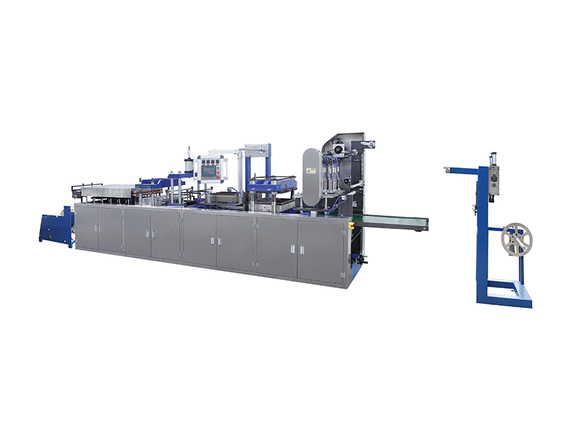
The thermoforming process typically involves several key steps:
1. Heating: The plastic sheet is heated until it reaches a soft, pliable state.
2. Forming: The heated sheet is stretched or pressed into a mold.
3. Cooling: The formed plastic is cooled rapidly to retain its shape.
4. Trimming: Excess material is trimmed away, leaving the final product shape.
Each step is critical to achieving high-quality parts. Mingdu Machinery incorporates advanced temperature control systems in their machines to ensure that the heating stage is precise, which is essential for achieving consistent results.
Key Features of Mingdu's Thermoforming Machines:
● Multistation Automation: Integrates heating, forming, cutting, and stacking in one synchronized process.
● Servo-Assisted Mechanisms: Improve consistency and reduce labor costs.
● Precision Control: Ensures uniform temperature distribution for stable, high-quality results.
This process is particularly beneficial in industries that require high-volume production with consistent results, such as food packaging, medical products, and consumer goods.
Step | Description |
Heating | The plastic sheet is softened by heat, preparing it for forming. |
Forming | The heated sheet is shaped using vacuum, pressure, or mechanical force. |
Cooling | The formed plastic is cooled to maintain its shape after molding. |
Trimming | Excess material is trimmed, and the final product is finished. |
Vacuum forming is one of the simplest and most commonly used thermoforming techniques. In this process, a plastic sheet is first heated until it becomes flexible, then placed over a mold. A vacuum is applied, pulling the sheet tightly against the mold to shape it.
Key Benefits:
● Cost-Effective: Ideal for high-volume production with low tooling costs.
● Simplicity: Easy to operate, making it an excellent choice for manufacturers looking for straightforward and efficient processes.
● Speed: Vacuum forming is fast, making it suitable for industries where time and efficiency are crucial.
Common Uses:
● Food Packaging: Often used to create trays and containers.
● Plastic Containers: Widely used for packaging solutions like blister packs.
● Automotive Parts: Vacuum forming is common for creating durable and lightweight parts in the automotive industry.
Mingdu Machinery offers vacuum forming machines that integrate advanced control systems to ensure precise and consistent results. These machines are especially suited for large-scale production, providing easy mold changeovers and enhanced production flexibility.
Feature | Description |
Cost-Effectiveness | Lower tooling and material costs make vacuum forming ideal for mass production. |
Simplicity | The process is straightforward, reducing operational complexity. |
Speed | Fast cycle times allow for quick turnaround on production. |
Pressure forming takes the concept of vacuum forming one step further by adding additional pressure to the process. After heating the plastic sheet, the vacuum pulls it against the mold, while a mechanical pressing tool applies pressure. This extra pressure helps form more intricate details and ensures that the material fills every part of the mold, even in areas with undercuts or complex contours.
Key Benefits:
● Enhanced Detail: The additional pressure ensures that even the most detailed parts retain their shape and accuracy.
● Precision: Pressure forming is perfect for creating sharp corners, textured surfaces, and deep contours that standard vacuum forming cannot achieve.
● Flexibility: Offers more versatility in creating complex designs compared to vacuum forming.
Common Uses:
● Parts with Sharp Corners: Ideal for items that require precision such as medical components and automotive parts.
● Undercuts and Textured Surfaces: Suitable for creating parts that demand high detail and surface texture.
● Detailed Molds: Used in industries like aerospace and consumer goods for parts that need detailed finishing.
Mingdu’s pressure thermoforming machines are engineered for high precision, making them perfect for applications requiring complex geometries and fine details. These machines provide consistent quality and flexibility, ensuring that manufacturers can produce parts with the highest standards.
Feature | Description |
Enhanced Detail | Pressure application creates detailed, intricate designs with high precision. |
Precision | Perfect for molds with sharp angles or complex shapes that require accuracy. |
Versatility | Capable of forming complex parts with varied textures and undercuts. |
When choosing a thermoforming method, cost is often one of the most important considerations. Different methods vary in terms of initial setup, operational costs, and the complexity of the design being produced.
● Vacuum Forming: This method is the most cost-efficient, especially for high-volume production with simpler designs. The tooling and setup costs are lower, making it ideal for large-scale production runs with less complex shapes.
● Pressure Forming: While more expensive due to the added pressure components, this method is necessary for intricate designs that demand higher precision, like parts with undercuts or detailed textures.
● Twin-Sheet Forming: This method involves higher costs due to the complexity of forming two sheets simultaneously. However, it offers superior durability and strength, especially for creating hollow items or products requiring double walls.
● Mingdu’s Efficiency: Mingdu’s multistation thermoforming machines enhance production efficiency by automating key stages of the process, reducing labor costs while ensuring high precision across a wide range of applications.
Thermoforming Method | Cost | Best for |
Vacuum Forming | Low initial cost, low operational cost | High-volume production, simple designs |
Pressure Forming | Higher cost, requires more setup | Intricate designs, high detail and precision |
Twin-Sheet Forming | High cost due to complexity | Durable, hollow parts, double-walled structures |
The efficiency of the thermoforming process significantly affects turnaround times and overall output. Let’s look at the key production aspects of each method.
● Vacuum Forming: Known for its speed and high efficiency, vacuum forming is well-suited for large-scale production runs with less intricate designs. The process is straightforward and quick, minimizing cycle times.
● Pressure Forming: Though slower compared to vacuum forming, pressure forming is essential for parts that require high detail. The added pressure ensures that the material adheres well to complex molds, but the process takes longer due to the precision required.
● Twin-Sheet Forming: This method is specialized for creating hollow or double-walled parts. It’s efficient for these applications, though the process may take longer due to the need to heat and form two sheets simultaneously.
● Mingdu’s Advanced Automation: Mingdu’s multistation thermoforming machines optimize production by integrating forming, cutting, and stacking in one synchronized process. This advanced automation ensures faster cycle times and more consistent results, enhancing overall production efficiency.
Thermoforming Method | Efficiency | Ideal for |
Vacuum Forming | Fast, high-efficiency | Large-scale, less intricate parts |
Pressure Forming | Slower, but necessary for detail | High-precision parts with complex shapes |
Twin-Sheet Forming | Specialized for hollow parts | Durable products, double-walled applications |
When choosing the right thermoforming process, several factors need to be considered to ensure the final product meets both quality standards and production requirements. Here's a look at some of the most important aspects:
● Material: The type of plastic material you use plays a significant role in selecting the appropriate thermoforming method. PP (Polypropylene), PVC (Polyvinyl Chloride), PET (Polyethylene Terephthalate), and PLA (Polylactic Acid) are common materials, each with unique properties like heat resistance, flexibility, and durability. For instance, PLA is ideal for eco-friendly packaging, while PVC works well for detailed and flexible parts.
● Complexity: The complexity of the part design will dictate which method is most suitable. Simpler, flat designs may do well with vacuum forming, while intricate shapes with undercuts or deep cavities require the more precise capabilities of pressure forming.
● Production Volume: The volume of products needed is another key consideration. For high-volume runs of simpler products, vacuum forming may be the most cost-effective. For smaller batches of highly detailed items, methods like pressure forming or twin-sheet forming are more appropriate.
● Mingdu’s Custom Solutions: Mingdu Machinery offers tailored thermoforming solutions, providing customizable machine configurations to meet the specific needs of different production environments. Whether it’s for small runs or large-scale manufacturing, Mingdu’s machines adapt to a wide variety of plastic materials and design complexities, ensuring optimal efficiency and precision.
Factor | Impact on Process Choice |
Material | Determines compatibility with forming methods and design flexibility |
Complexity | Affects the choice between simple vs. intricate forming processes |
Production Volume | High-volume, cost-efficient methods vs. small, detailed batch production |
Vacuum forming is ideal for manufacturers looking for a fast, cost-efficient method to produce products in high volumes. This method is best suited for relatively simple shapes where high detail is not as crucial.
It’s commonly used in industries like food packaging, consumer products, and automotive components. Vacuum forming is especially efficient when the design doesn’t require deep undercuts or intricate features.
Mingdu’s Vacuum Forming Machines:
● High-Quality Production: Mingdu Machinery’s vacuum forming machines ensure precision in every part, enabling large-scale production runs without compromising quality.
● Large-Scale Suitability: These machines are built for high-output manufacturing, ensuring that even large batches of products maintain consistent form and quality.
● Easy Mold Changeovers: The advanced design of Mingdu's vacuum forming machines allows for quick mold swaps, making it easier to switch between different products efficiently.
Benefit | Description |
Cost Efficiency | Ideal for large-scale, high-volume production |
Simplicity | Best for simple shapes and designs |
Speed | Fast cycle times, which contribute to faster overall production |
Pressure forming is a preferred method for creating parts that require more complex shapes, detailed textures, and fine features like undercuts, sharp corners, or intricate surface patterns. This process combines the benefits of vacuum forming with the additional use of pressure, which allows the material to adhere tightly to the mold, capturing even the finest details.
Pressure forming is ideal for applications that demand high precision and enhanced detail. It’s commonly used for products like medical device components, automotive parts with intricate designs, and consumer goods requiring detailed features.
Mingdu’s Pressure Forming Solutions:
● High Precision: Mingdu’s pressure thermoforming machines are designed to produce parts with excellent surface detail and complex geometries, making them ideal for precision applications.
● Flexibility: These machines offer flexibility, accommodating various types of plastic materials while maintaining the required level of detail in every part.
● Versatile Applications: From medical components to high-end consumer products, Mingdu’s pressure forming machines ensure high-quality, durable parts.
Feature | Impact on Production |
Complex Designs | Capable of forming intricate and detailed shapes |
High Precision | Ideal for parts requiring sharp corners, undercuts, or textures |
Flexibility | Handles different materials and design requirements |
Twin-sheet forming is the ideal solution for creating hollow parts or products with double walls, offering extra strength and insulation properties. In this process, two plastic sheets are heated and formed simultaneously, then pressed together to create a single product with a hollow core.
This technique is especially useful for lightweight products that still require strength and durability, such as industrial containers, ducting, and insulated parts used in construction or automotive industries. Twin-sheet forming ensures that parts are not only strong but also have improved thermal insulation or structural integrity.
Mingdu’s Twin-Sheet Forming Machines:
● Durability: Mingdu’s twin-sheet forming machines are built for the production of robust, durable parts that can withstand heavy-duty applications.
● Efficiency: These machines ensure fast production of hollow, double-walled parts without compromising quality.
● Customization: Mingdu offers customizable configurations, ensuring that the twin-sheet forming process meets the specific needs of industrial and commercial use.
Benefit | Application |
Durability | Ideal for producing robust, heavy-duty parts |
Insulation | Perfect for applications requiring thermal properties |
Strength | Provides parts with double walls for added strength |
In this article, we explored the different types of thermoforming processes, including vacuum forming, pressure forming, and twin-sheet forming. Each method has its unique applications, from cost-effective vacuum forming to high-precision pressure forming for complex designs.
Mingdu Machinery offers tailored thermoforming solutions, such as multistation thermoforming machines, that provide high precision, flexibility, and efficiency.
A: The main types of thermoforming are vacuum forming, pressure forming, and twin-sheet forming, each with its advantages for different applications.
A: Vacuum forming is a simple process where a heated plastic sheet is pulled onto a mold using a vacuum. It’s ideal for high-volume production of less complex parts.
A: Pressure forming adds extra pressure to vacuum forming, allowing for more detailed parts with sharp corners, textures, and undercuts.
A: Twin-sheet forming is used for producing hollow, double-walled parts with enhanced strength and insulation, often used in automotive or industrial applications.
A: Pressure forming is best for high-precision parts, offering fine details and complex geometries compared to other methods like vacuum forming.


