
Views: 0 Author: Site Editor Publish Time: 2025-05-09 Origin: Site
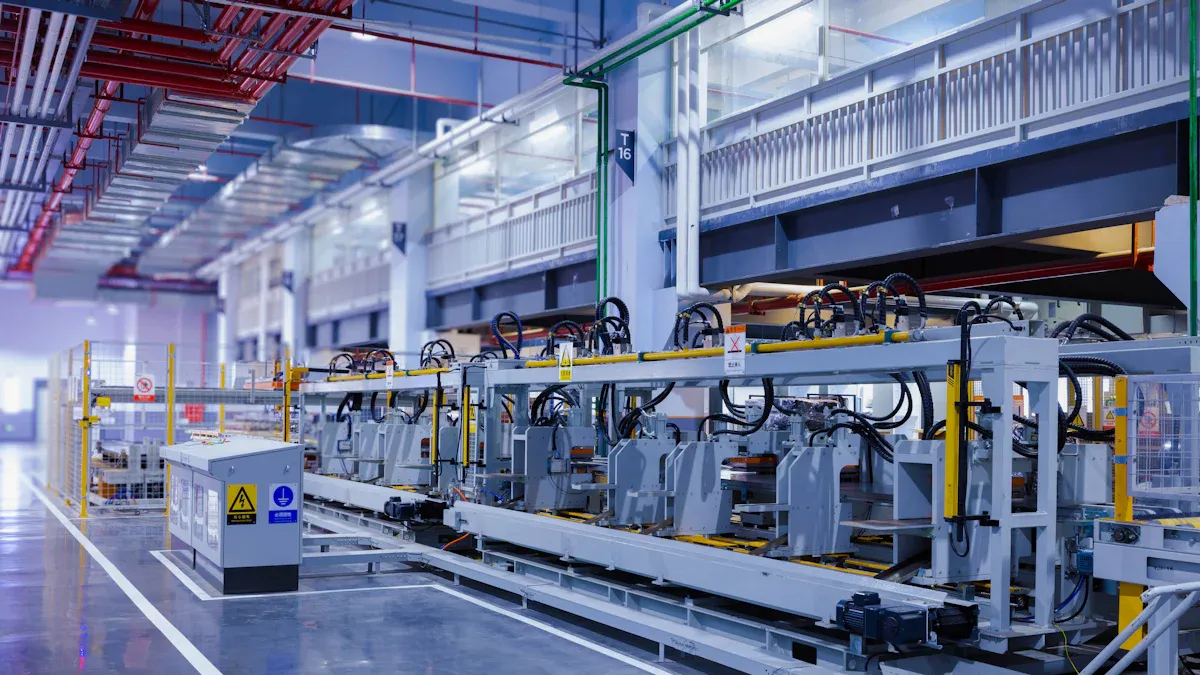
A thermoforming machine heats plastic sheets. It shapes them into useful products by forming them over molds. A Thin-Gauge Thermoforming Machine is important for making light, disposable packaging. Thin-gauge machines now make almost 35% of lightweight packaging. They work fast and help you use about 25% less material. Picking the right machine helps you make better products and save money.
The global thermoforming packaging machines market was USD 1.04 billion in 2023.
Experts think the market will grow to USD 1.56 billion by 2032. This shows people want efficient and earth-friendly solutions.
Thermoforming machines warm up plastic sheets. They help make many products. These machines are important for fast packaging.
Thin gauge thermoforming uses less plastic. It works quickly. This is good for things like food trays and cups.
Picking the right thermoforming machine can save money. It can make products better. You should check what you need to make first.
Automation in thermoforming machines helps them work faster. It lowers mistakes. This gives steady and good results.
Keeping thermoforming machines in good shape is very important. It helps them last longer. It makes sure they work well every day.
A thermoforming machine shapes plastic sheets into many things. It heats the plastic until it gets soft. Then, the machine pushes the soft sheet over a mold. This makes the plastic take a new shape. Thin gauge thermoforming machines use thin plastic sheets. These machines help make light packaging, like food trays and blister packs.
A thermoforming machine has different parts. Each part does something important. Here is a table that shows the main parts and what they do:
Component/Function | Description |
|---|---|
Roll Changing | Lets you change the plastic roll so work does not stop. |
Infeed/Outfeed Conveyors | Move plastic sheets in and out of the machine. |
Heating Elements | Heat the plastic sheet to make it soft. |
Process Control | Make sure the process is correct and the quality is good. |
Mechanical Pressing | Push the soft plastic into the mold. |
Vacuum Control | Pull the plastic tight against the mold. |
Trimming and Cutting | Cut away extra plastic for a neat product. |
Inspection | Check the finished product to see if it is good. |
You can use many plastics in thermoforming. Some common ones are PS, PET, PP, PE, PVC, ABS, HIPS, PETG, polycarbonate, and acrylic.
Thermoforming is easy to understand. First, you heat a plastic sheet until it is soft. Next, you shape the sheet over a mold. You can use pressure, a vacuum, or both to shape it. After shaping, you cut off the extra plastic to finish the product.
Here are the main steps:
Heat the plastic sheet.
Shape the sheet over a mold.
Cut the finished part.
Thin gauge thermoforming is special because it uses less plastic and works fast. You can make many light items quickly. This process is not the same as injection molding or blow molding. Thermoforming costs less for molds and is good for simple shapes. Injection molding costs more and takes longer. Blow molding is best for making hollow things.
Here is a table to compare these ways:
Aspect | Thermoforming | Injection Molding | Blow Molding |
|---|---|---|---|
Cost | Mold costs are lower | Mold costs are higher | Costs are moderate |
Complexity | Good for simple shapes | Good for complex designs | Good for hollow items |
Speed | Works fast | Works slower | Works at medium speed |
Thin gauge thermoforming is a smart way to make packaging. It is fast, saves money, and makes less waste.
Thin gauge thermoforming shapes plastic sheets into light products. These products are easy to hold and use. The sheets are very thin. They are between 0.010 inches and 0.060 inches thick. Thin sheets help you make things quickly. You also save money because you use less plastic. This method is good for items you use once. You can recycle or throw them away after using them. Many industries use this process. It helps make simple shapes fast.
You pick thin gauge thermoforming for light packaging. Thin sheets work best with shallow molds. Deep molds do not work well with thin sheets. Thin sheets cannot stretch very far. You can choose from many types of plastic for this process. Some common plastics are:
PVC
PET
PETG
ABS
Polypropylene
High Impact Polystyrene (HIPS)
Polycarbonate
HDPE
Acrylic
You pick the plastic based on what you need. PETG is clear and strong. HIPS does not break easily. Polypropylene keeps out water. You match the plastic to the job for the best results.
Tip: Thin gauge thermoforming lets you make lots of items fast. You can make thousands in a short time and spend less money.
Thin gauge thermoforming is used in many places. The food industry uses it for trays, cups, and containers. You see these in stores and restaurants. It also makes flexible packaging for snacks and drinks.
Here are some common uses:
Food trays for ready meals
Disposable cups and bowls
Blister packs for medicine and small items
Clamshell containers for fruits and sandwiches
Semi-rigid containers for dairy products
You also find thin gauge thermoforming in medical packaging. Medical trays need to be clean and safe. Cleanrooms help keep germs away. Peel-seal packages are easy to open and stay clean inside. Custom trays hold medical tools in place. The process works with different ways to keep things sterile.
Application | Benefits |
|---|---|
Medical Device Trays | Keeps tools clean and follows safety rules. |
Cleanroom Manufacturing | Makes sure the area is clean for packaging. |
Peel-seal Compatibility | Easy to open and stays clean inside. |
Custom Compartments | Special spots for each medical tool. |
Sterilization Ready | Works with many ways to keep things safe. |
Thin-gauge thermoforming machines make these products. You get the same good quality every time. The machines work fast. Thin gauge thermoforming helps you meet many needs in packaging, food, and healthcare.
Inline roll-fed machines are the most used for thin gauge thermoforming. These machines pull a long roll of plastic into the machine. They can run very fast. This means you can make lots of products quickly.
Here are some main benefits of inline roll-fed machines:
You can make things up to 70% faster.
You get more parts every hour.
You pay less for each item because you make more at once.
You get the same quality for big groups of products.
You do not need as many workers because these machines use automation.
You use plastic better and make less trash.
You can change your product designs without much trouble.
You use less energy and spend less money to run the machine.
If you want to make food trays, cups, or blister packs fast, an inline roll-fed thin-gauge thermoforming machine is a good pick.
You can pick manual, semi-automatic, or fully automatic machines for thin gauge thermoforming. Each one is good for different jobs. The table below shows how they are different:
Type of Thermoforming Machine | Advantages |
|---|---|
Manual Thermoforming Machine | A person does each step. Good for small jobs and trying new ideas. |
Semi-Automatic Thermoforming Machine | Some steps are manual and some are automatic. Good for medium jobs. |
Fully Automatic Thermoforming Machine | Does all steps by itself. Best for making lots of products. |
If you want to make many things with less work, pick a fully automatic thin-gauge thermoforming machine. For small batches or testing, a manual machine might be better.
Some thermoforming machines have special parts for packaging. Some use stainless steel to keep food safe. Many have touch screens to change speed and settings. Strong vacuum pumps help shape the plastic well. You can change how deep the machine forms the plastic. These machines can use clear or printed films and let you switch die sets fast.
Here are some features you might find:
Feature | Description |
|---|---|
Material | Stainless steel keeps food safe |
Speed | You can change how fast it works with a touch screen |
Efficiency | European vacuum pump shapes plastic well |
Forming Depth | You can change the depth for different products |
Compatibility | Works with many kinds of film |
Changeover | You can switch die sets quickly |
Safety | Follows CE safety rules |
Applications | Packs meat, seafood, vegetables, and medical tools |
Some machines can be used in cleanrooms to keep medical packaging safe. You can change them for different tray sizes and shapes. If you need to make egg trays or fancy fruit boxes, you can use a four-station machine for harder jobs.
Tip: When you pick a thin-gauge thermoforming machine, choose features that fit your product and safety needs.
You want every item to look the same and work well. New thermoforming machines help you do this. They use special tools and tight rules. This gives you good parts each time. Thin gauge thermoforming uses sheets less than 0.060 inches thick. You can make light things fast and save money. Here are some reasons why being exact is important:
Every part has the same shape and size.
You waste less because fewer parts are bad.
Customers get products they can trust.
Modern machines let you make tricky shapes. You can count on each item to be good.
Automation makes your job easier and quicker. Thin-gauge thermoforming machines often have smart controls. These controls help you run the forming process. Two-axis systems stack and move parts for you. Cameras check each part to see if it is good. If a part is not right, the machine takes it out. Closed-loop systems change heat and force as needed. This keeps things steady and cuts down on mistakes.
Tip: Automated controls help you make more items with less work. You also get better quality and fewer problems.
You want to make more items in less time. Thin gauge thermoforming machines can form things in 3 to 10 seconds. Older machines might take 3 to 10 minutes for the same job. This big change means you can fill big orders fast. Fast forming also lowers your costs. You use less energy and need fewer workers. High-speed forming helps you stay ahead of others.
Safety matters in every factory. Thermoforming machines use strong materials to protect you from moving parts. They cover shafts and bearings so accidents do not happen. Shatterproof covers let you see inside and stay safe. Guards on motors and wires keep you from touching hot or live parts. Quick-release latches make cleaning and fixing easy. Chemical-resistant coatings help the machine last in tough places.
Safety Feature | Description |
|---|---|
Impact-Resistant Materials | Keeps you safe from flying pieces. |
Covered Shafts and Bearings | Stops hands from getting caught. |
Shatterproof Covers | Lets you watch safely. |
Guarded Motors | Keeps you away from hot or electric parts. |
Easy Access | Quick-release latches for safe cleaning and fixing. |
Durable Enclosures | Stands up to chemicals and sunlight for long life. |
You should always check that your machine follows safety rules. This keeps you and your team safe while you work.
First, think about what you want to make. Decide how many items you need each day. Some things are important to think about:
Material Thickness: Thick sheets make strong things. Thin sheets are good for bendy or throw-away items.
Cost Savings: Using just enough material saves money.
Design Complexity: Simple shapes use less plastic. Hard shapes may need thicker sheets.
Durability Requirements: Pick thick sheets for things that must last.
If you think about these things, you can pick the best thin-gauge thermoforming machine for your job.
You should look at machine details before buying. How fast and how the machine moves changes how many things you can make. The table below shows how speed settings change the process:
Speed Parameter | Typical Range (mm/s) | Impact on Cycle Time |
|---|---|---|
Approach Speed | 100 - 250 | This is how fast the sheet moves into place. Faster speeds help with deep molds. |
Bending Speed | 20 - 25 | Real speed might be lower than shown. This can change how well your process works. |
Return Speed | 100 - 200 | Very fast speeds can be unsafe and make products worse. |
Acceleration | N/A | Important for short moves. Faster acceleration means more cycles each hour. |
Check the sheet width, forming area, and heating system too. These things help you know if the machine is right for your work.
You want to get the most for your money. Look at the total cost, not just the price. Think about how much you save on plastic and workers. A faster machine lets you make more things and earn more. Figure out how long it takes to get your money back. This is called return on investment (ROI). A good ROI means you made a smart buy.
Tip: Pick a machine that gives you good cost, speed, and quality. This helps your business grow.
After you buy a thin gauge thermoforming machine, you need good help. Fast support keeps your work going. The table below shows what to look for in after-sales service:
Key Considerations | Description |
|---|---|
Technical Support | Get help with machine problems or questions. |
Service Response Time | Quick answers mean less waiting. |
Availability of Spare Parts | Easy to get parts keeps your machine running. |
Ask the seller about training, spare parts, and how fast they help. Good service means less worry and better results with your thermoforming machine.
You should try not to make expensive mistakes when picking a thermoforming machine. Many people in packaging make errors that slow work or waste money. Here are some mistakes you should watch out for:
Some people design for injection molding and then use thermoforming. You must change your designs for thermoforming. If you do not, you may have trouble with cups, plates, bowls, or strong containers.
Sometimes, buyers pick materials without thinking about the forming process. You might choose a material from a data sheet, but it may not work well for thermoforming. Always check if the material fits your process.
Some buyers only look at price when picking a supplier. If you focus just on price, you may get bad quality and pay more later. Look for good design choices and helpful service.
Some skip making prototypes. If you do not test with prototypes, you may need costly changes during production.
Tip: Careful planning and testing before full production can save you time and money.
You can get better results with thin-gauge thermoforming. Use thin sheets for things like cups, plates, and bowls. Thin sheets help you make products fast and use less plastic. You can make stronger containers by changing sheet thickness. Try different plastics to see what works best for you. PET and polypropylene are good for food packaging. Thermoforming lets you make custom shapes for your products.
Note: Always match sheet thickness to your product. Thin sheets work best with shallow molds.
Regular maintenance keeps your thermoforming machine working well. You should check important parts often. The table below shows what to do:
Component | Maintenance Task |
|---|---|
Heating Elements | Look for wear, rust, or damage. |
Molds | Check for cracks, sharp edges, or warping. |
Moving Parts | Lubricate roller screws, bearings, and chains. |
Hydraulic Systems | Check hoses, valves, and cylinders for leaks. |
Fasteners | Tighten bolts, nuts, and screws. |
You can stop breakdowns and keep your work steady by following these steps. Clean your machine after each shift. Change worn parts before they break. A well-cared-for thermoforming machine helps you make good packaging every day.
You get many benefits when you learn about thin-gauge thermoforming machines for light packaging.
Thin gauge thermoforming helps you save money and is good for making throw-away trays.
The thickness of the material changes how strong and shaped your product is.
Smart machines and green materials are making the market better.
If you use good steps, like planning early and using lean ways to make things, you can make better products and spend less. To find new information, you can look at resources like:
Resource | Description |
|---|---|
Thermoformed Plastic Market Report | Find out about new ideas, technology, and how the thin-gauge thermoforming market is growing. |
You should talk to sellers or watch machine demos to find out which one is best for you.
You can use plastics like PET, PVC, HIPS, polypropylene, and PETG. Each plastic has different strengths. Choose the one that fits your product needs.
You should pick machines with stainless steel parts and easy-to-clean surfaces. These features help you meet safety rules for food and medical packaging.
A modern machine can make thousands of items every hour. You can adjust the speed to match your production needs.
Yes, you can recycle many thin-gauge thermoformed products. Check the recycling code on the plastic to see if your local center accepts it.


