
Views: 0 Author: Site Editor Publish Time: 2026-09-13 Origin: Site
Manufacturing packaging for sensitive electronics demands uncompromising precision. You must balance strict dimensional tolerances, static protection, and high-volume production efficiency. Moving from initial prototypes to full-scale mass production introduces significant logistical challenges. Production managers and packaging engineers frequently struggle during the crucial decision stage. They must align complex material science with specific equipment capabilities. A mismatch here quickly leads to excessive scrap rates. It causes unexpected machine downtime and compromises delicate electronic components.
We designed this comprehensive guide to establish a clear evaluation framework. You will learn exactly how to select the right polymers for your production line. We will guide you through evaluating specific thermoforming equipment. You will understand how to produce reliable, compliant electronics packaging. By following this framework, you can scale operations smoothly without wasting valuable resources or sacrificing quality.
Electrostatic discharge (ESD) compliance forms the baseline for all electronics packaging. Electronic components suffer catastrophic damage from minor static shocks. You must distinguish between distinct polymer formulations. Anti-static plastics resist the initial build-up of friction charges. Static-dissipative materials slowly and safely drain electrical charges away from parts. Conductive materials actively and rapidly channel charges away. Each formulation behaves differently under heat. This directly affects the thermoforming process and dictates your equipment requirements.
Engineers rely on several common substrates for electronic component tray forming. Each material demands specific machine capabilities:
You must always factor in polymer shrink rates. Shrinkage occurs rapidly during the cooling phase. This physical change heavily dictates your mold design tolerances. It also determines your machine cooling requirements. Water-cooled tools manage shrinkage much better than air-cooled tools for high-volume production runs.
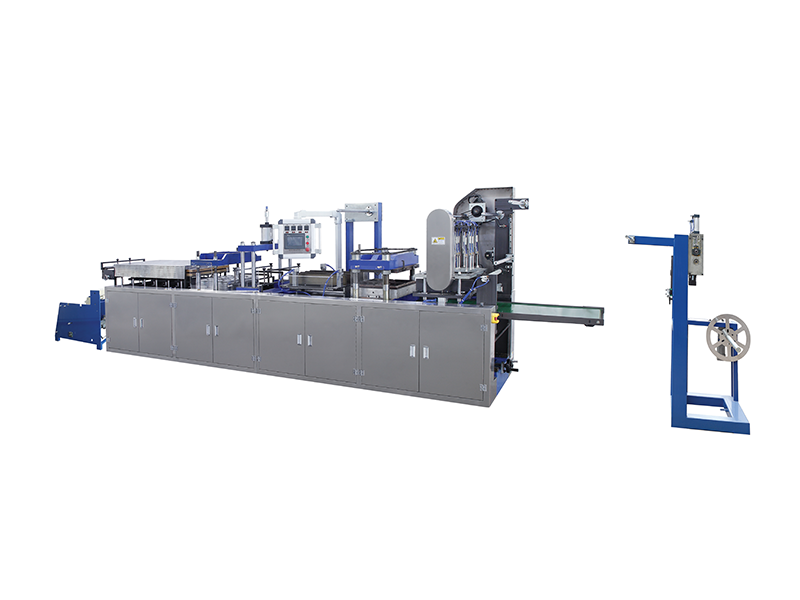
Heating system precision remains absolutely non-negotiable. Sheet sag ruins dimensional precision. Multi-zone infrared heaters utilize quartz or ceramic elements. They prevent uneven stretching across the sheet. These zones allow operators to apply targeted heat to specific mold areas. This guarantees uniform material distribution.
When evaluating a thermoforming machine for electronics trays, you must choose the right forming technology. Vacuum forming relies on atmospheric pressure. It works sufficiently well for standard shipping trays. These applications generally permit generous dimensional tolerances. Pressure forming becomes strictly necessary for high-precision applications. A protective insert tray requires sharp radii. It demands exact automation-handling tolerances. It also requires highly defined undercuts to secure components.
| Technical Feature | Vacuum Forming | Pressure Forming |
|---|---|---|
| Pressure Applied | 14.7 psi (Atmospheric) | Up to 100 psi (Positive Air) |
| Tolerance Precision | Generous / Loose | Highly Exact |
| Undercut Capability | Limited | Excellent |
| Primary Application | Basic Shipping Carriers | Robotic Automation Inserts |
Drive systems heavily dictate operational consistency. Pneumatic and hydraulic platens offer raw power. However, they often suffer from micro-delays and fluid leaks. Servo-driven platens deliver highly repeatable precision. Servo motors eliminate the risk of hydraulic fluid leaks. This drastically lowers cleanroom contamination risks.
You must match mold size and tonnage to your production goals. Align the machine's forming area with your expected multi-cavity tooling designs. Calculate the required clamping force before locking in your final machine specifications.
Scaling production requires integrating a thin plastic packaging machine into your existing workflow. You must evaluate roll-fed versus sheet-fed systems. Roll-fed continuous machines dominate high-volume operations. They excel at processing thin-gauge electronics packaging rapidly. Sheet-fed systems process precut plastic sheets. They perfectly handle thick-gauge, heavy-duty material handling trays.
Evaluate inline versus offline processing setups. Inline machines integrate punching, cutting, and stacking stations directly into the main frame. This minimizes manual handling. It heavily reduces ongoing labor expenses. Cleanroom integration demands automated stacking systems. Automated stacking significantly reduces human contact with the finished trays. ISO-certified cleanroom packaging environments require this strict level of contamination control.
Changeover agility determines your daily throughput capacity. High-mix, low-volume facilities need rapid transition capabilities. Look for quick-change tooling systems (QCS). Evaluate machines offering recipe-saving HMI controls. These interfaces allow operators to recall specific heat profiles instantly. This eliminates hours of trial-and-error calibration.
Manufacturing a custom electronics tray carries inherent production risks. Wall thickness inconsistency ranks highest among these dangers. Deep-draw corners frequently suffer from severe material thinning. You must specify plug-assist capabilities to mitigate this. Plug assists physically push the heated material down into the cavities. They do this right before the vacuum engages. This preserves uniform wall thickness throughout the tray.
Webbing and bridging drastically increase daily scrap rates. Improper heating profiles often cause this issue. Insufficient mold spacing also leads to plastic webbing between tight cavities. You must adjust your layout carefully. Leave adequate physical space between complex component pockets.
Contamination and static generation pose severe threats. The machine itself can generate dangerous static charges. Rapid sheet unrolling and mechanical cutting cause immense friction. You must install integrated ionizing bars. Static eliminators protect the delicate ESD coatings from degrading. They stop dust from sticking to the trays during the forming process.
Thermoforming draws massive amounts of electrical energy. You should acknowledge this high energy draw early. Evaluate the return on investment for energy-efficient heater banks. Regenerative servo drives capture and reuse braking energy. This modern technology lowers your daily operational expenses dramatically over time.
You should never buy a machine solely based on a specification sheet. Vendor engineering support matters equally. Assess the manufacturer's ability to assist with custom mold design. They should offer continuous process optimization support. They must provide more than just basic equipment delivery.
Consider parts availability and service SLAs carefully. Machine downtime destroys production profitability. Prioritize manufacturers offering localized parts distribution. Standard off-the-shelf PLCs beat proprietary control boards every single time. You can replace standard components locally without waiting for overseas shipments.
Define a strict Factory Acceptance Test (FAT). Never sign off on procurement without a successful dry run. Require the vendor to run your specific ESD-rated material. They must achieve the guaranteed cycle times listed in their proposal. Measure the resulting sample trays meticulously. Verify their dimensional stability. Test their static-dissipative performance independently before authorizing the final machine shipment.
Successfully manufacturing electronics trays requires a holistic production approach. You must treat the material, the mold, and the machine as a single ecosystem. Overlooking one element compromises the entire production run.
We recommend prioritizing equipment featuring servo-driven precision. Insist on multi-zone heating capabilities. These specific features provide the flexibility you need. They adapt easily to changing material formulations and complex tray designs.
Finalize your exact material specifications now. Determine your strict daily output requirements today. Complete these steps before requesting competitive bids or booking any machine demonstrations.
A: Yes, but it typically requires extensive retrofitting. Pneumatic and hydraulic systems must be replaced or heavily shielded. This prevents fluid leaks and airborne particle contamination. Servo-driven clean-air machines are heavily preferred. They easily meet rigorous ISO class standards without requiring expensive post-purchase modifications.
A: Surface coatings can easily degrade if overheated. The machine requires much tighter temperature bands. You must utilize highly precise heating control. Integrated static-elimination equipment is strictly mandatory. This actively prevents dust attraction during forming. It also protects the sensitive electronic components during later packaging stages.
A: Traditional machines typically take two to four hours for a complete changeover. Modern continuous systems utilize quick-release pneumatics. They also rely on saved HMI recipes. These advancements can reduce changeover times to just 30 to 45 minutes. This speed is a critical factor for facilities handling high-mix product lines.


