
Views: 0 Author: Site Editor Publish Time: 2026-09-14 Origin: Site
Industrial supply chains operate under incredibly high stakes today. Damaged components directly lead to costly production downtime. They compromise warranties and disrupt complex assembly lines. Traditional dunnage often fails to protect sensitive geometries during harsh, vibrating transits. You need engineered material handling solutions. We position thermoformed inserts as the ideal upgrade for securing heavy or sensitive parts. They do more than just wrap a product. They actively stabilize it to absorb shock and prevent friction. This guide serves as a technical and commercial resource. You will learn how to evaluate, specify, and integrate these advanced trays. We will explore manufacturing approaches, material selections, and line integration tactics. By the end, you will understand how to optimize your existing industrial operations effectively, reducing scrap and improving automation flows. Protect your supply chain by mastering these advanced material handling strategies today.
Industrial components carry significant value. Scrapping them due to shipping damage hurts your profitability. Evaluating thermoformed packaging for industrial parts reveals a clear advantage over traditional methods. Custom inserts mitigate transit risks effectively. They cradle parts securely within precise cavities. Corrugated boxes and loose-fill materials allow parts to shift constantly. This internal movement causes severe scratching and calibration failures. Thermoformed trays eliminate part migration completely. They isolate each component from its neighbor. This isolation drastically reduces your daily scrap rates.
Logistics operations rely heavily on volumetric weight pricing. Traditional wooden crates add unnecessary bulk to every shipment. Heavy injection-molded totes consume valuable pallet space. Thermoformed plastics offer an exceptionally lightweight alternative. They reduce overall freight weight without sacrificing strength. You can nest empty trays tightly together. This nesting capability allows you to ship more units per pallet. This optimization lowers your outbound logistics expenses significantly.
Modern manufacturing facilities strongly prefer closed-loop supply chains. Durable thermoformed trays excel in these sustainable environments. Automotive and aerospace facilities routinely return, wash, and reuse them. They work perfectly for internal Work-in-Progress (WIP) transit. Inter-plant shipments become highly efficient. This reusability cuts down on single-use packaging waste. You establish a cleaner, greener operational footprint. It also prevents cardboard dust from contaminating your sensitive assembly zones.
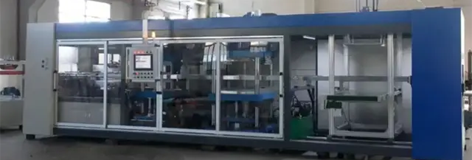
You must understand the basic mechanics behind these manufacturing processes. The plastic insert tray forming process begins with a flat thermoplastic sheet. Industrial ovens heat this sheet until it becomes highly pliable. The machine then stretches the hot plastic over a custom mold. Specialized cooling systems solidify the new shape rapidly. This core mechanism branches into two distinct production methods. Each method serves different industrial requirements.
Vacuum forming uses negative atmospheric pressure. The equipment pulls the heated sheet against the mold using a strong vacuum. It represents the most common thermoforming technique.
You should consider pressure forming for packaging when precision matters most. This method adds positive air pressure above the heated sheet. It forces the plastic tightly into the deepest mold cavities.
Polymer selection dictates the ultimate performance of your trays. You must match the plastic substrate to your specific application. Using the wrong material leads to catastrophic packaging failures.
We rely on High-Density Polyethylene (HDPE) and Acrylonitrile Butadiene Styrene (ABS) for extreme durability. They offer incredibly high impact resistance. We specify these polymers for heavy automotive drivetrains. Aerospace components also benefit from this rugged protection. They survive severe drops without shattering.
Polyethylene Terephthalate Glycol (PETG) provides excellent optical clarity. It features strong chemical resistance as well. You can easily inspect nested parts visually through the tray. It resists harsh cleaning solvents. Conductive and Static Dissipative (ESD) materials are entirely mandatory for electronic components. Sensitive PCB assemblies require static-safe environments. These specialized plastics prevent catastrophic electrical shorts during dry winter transits.
Certain industrial sectors demand strict adherence to regulatory standards. Cold-chain logistics present a unique challenge. Standard plastics become brittle at freezing temperatures. We must select specialized impact-modified resins. They resist embrittlement in deep-freeze conditions. Medical standards require rigorous cleanroom environments. ISO 11607 compliance is absolutely critical. Trays must withstand specific sterilization processes. They must survive gamma irradiation or ethylene oxide treatments without degrading.
| Material Type | Key Strength | Primary Industrial Application | Relative Cost |
|---|---|---|---|
| HDPE | Extreme impact and chemical resistance | Heavy machinery, automotive parts | Moderate |
| PETG | High clarity and sterilization ready | Medical devices, visual inspection trays | Moderate to High |
| ABS | Exceptional structural rigidity | Aerospace, heavy-duty WIP handling | High |
| ESD PETG | Static dissipation and charge bleeding | PCB assemblies, sensitive electronics | Premium |
Poorly designed packaging disrupts your entire workflow. It causes expensive jams. Robotic assembly lines stall easily when handling inconsistent trays. Integrating new inserts with an industrial parts packaging machine requires exact precision. Misaligned trays confuse optical sensors. Inconsistent dimensions crash robotic arms. You must prioritize compatibility during the initial design phase.
We utilize Design for Automation (DFA) principles heavily. Engineers must engineer trays for seamless mechanical handling. Dimensional tolerances require strict control. Trays must maintain perfect consistency from batch to batch. Warping is completely unacceptable. Warped trays jam automatic feed mechanisms instantly.
You must incorporate denesting lugs into your design. Stacked empty trays often stick together. This happens due to a strong vacuum effect between smooth plastic layers. Denesting lugs act as built-in physical spacers. These small features prevent the trays from sticking. Automated equipment can then pull single trays flawlessly.
Precise pocket registration matters immensely. Robotic end-of-arm tooling (EOAT) operates blindly based on programmed coordinates. Pockets must hold your parts in exact orientations. The plastic cavities cannot allow the parts to tilt. Precise registration ensures successful robotic pick-and-place actions every single time.
You must follow a structured approach to specify a custom protective tray. Skipping steps leads to costly redesigns and delayed launches.
Thermoformed inserts represent a highly strategic investment for your supply chain. They ensure strict product integrity during violent transit conditions. They boost automated operational efficiency drastically. Do not view them as a simple, disposable packaging line item. They are engineered material handling tools.
You should gather your 3D CAD files immediately. Document the exact weight and center of gravity for your parts. Calculate your projected annual volume estimates clearly. Prepare these essential details before you contact a forming manufacturer. Having this data accelerates the engineering phase.
Protect your valuable industrial components starting today. Request a comprehensive engineering consultation from a qualified partner. Ask for a customized tooling quote tailored to your specific robotic application. A proactive approach prevents disastrous shipping failures tomorrow.
A: Lead times generally span four to eight weeks. The timeline begins after you approve the final CAD design. Prototyping takes about two weeks. Once you physically approve the prototype fit, production tooling requires another three to five weeks. A formal first article inspection concludes the setup phase before mass production begins.
A: Yes, they easily support heavy metal components. Manufacturers use thick-gauge plastic sheets for these applications. They incorporate deep structural ribbing into the tray design. These geometric ribs add massive rigidity. This prevents the tray from bending, flexing, or cracking under concentrated weight during transit.
A: Custom tooling requires an initial machine setup. MOQs typically range from 1,000 to 5,000 units. For highly specialized, thick-gauge industrial trays, some manufacturers accommodate runs as low as 500 units. Higher production volumes drastically reduce your per-unit cost by absorbing the setup time faster.
A: Absolutely. Many facilities utilize recycled PET (RPET). They also process post-consumer or post-industrial regrind materials effectively. Incorporating recycled plastics maintains excellent structural integrity for most non-cleanroom applications. This approach supports your corporate sustainability initiatives while managing raw material costs highly effectively.


