
Views: 0 Author: Site Editor Publish Time: 2026-09-19 Origin: Site
Manufacturing leaders constantly face a frustrating gap between low-cost vacuum forming and expensive injection molding. Vacuum forming often lacks necessary crisp details for premium products. Meanwhile, injection molding requires prohibitive tooling costs for mid-volume production runs. You need parts exhibiting sharp edges, zero-draft profiles, and molded-in textures. You also need them without massive steel mold investments. A precision thermoforming process solves this exact issue. It delivers injection-molded aesthetic quality at a fraction of the initial tooling expense. This article provides a strict, vendor-neutral evaluation framework for selecting a pressure forming machine for industrial plastic parts. We will explore critical technical specifications, real-world implementation requirements, and return-on-investment timelines. You will learn exactly how to balance upfront costs, component quality, and production speed for your upcoming manufacturing projects.
Production volumes often dictate your manufacturing methods. Most companies struggle when demand falls into a specific middle tier. When you produce between 500 and 5,000 units annually, injection molding tooling amortization usually fails. You simply cannot spread a $60,000 steel mold cost across a small product batch effectively. A precision pressure thermoformer fills this exact production gap.
Feature-to-Outcome Mapping
Understanding how machine features translate to part quality helps justify the equipment investment. Consider these specific capabilities:
Speed to Market Advantage
Time often matters as much as capital. Standard steel injection molds typically require 12 to 16 weeks of lead time. In contrast, pressure forming utilizes aluminum tooling. Machined or cast aluminum molds usually take only 4 to 6 weeks to produce. You can launch new products faster and respond rapidly to market feedback.
Best Practice: Always audit your expected product lifecycle before selecting a process. If your design requires frequent iterative updates, cheaper aluminum tooling reduces your financial risk significantly.
Selecting the right manufacturing method requires objective comparisons. You must understand the specific physics and economic realities separating these techniques.
The primary difference lies in applied force. Standard vacuum forming relies entirely on atmospheric pressure, yielding roughly 14.7 PSI. This limited force restricts how well plastic conforms to intricate mold features. Pressure forming adds a sealed pressure box over the heated sheet. Equipment blasts 20 to 100 PSI of positive compressed air against the plastic.
This massive pressure differential impacts wall thickness distribution dramatically. High pressure forces material evenly across deep draws. It also perfects the cosmetic surface finish on the A-side (the visible side) of the part. Vacuum forming simply cannot replicate this level of fine detailing.
Injection molding pushes molten plastic into a closed cavity. This requires extremely high pressures and hardened steel molds to prevent flashing. Pressure forming molds only shape one side of the heated sheet. Therefore, they utilize temperature-controlled cast or machined aluminum.
Material limitations also exist. Pressure forming works exceptionally well for large, panel-like structures. Common applications include medical device housings, aerospace radomes, and interior mass-transit panels. Injection molding struggles economically with massive surface areas due to the required clamp tonnage.
| Feature | Standard Vacuum Forming | Pressure Forming | Injection Molding |
|---|---|---|---|
| Tooling Cost | Low (Wood, Epoxy, basic Aluminum) | Medium (Temperature-controlled Aluminum) | High (Hardened Steel) |
| Surface Detail | Basic / Soft radii | Excellent / Crisp radii & textures | Perfect / High precision |
| Ideal Volume | 100 - 1,000 units/year | 500 - 5,000 units/year | 10,000+ units/year |
| Lead Time | 2-4 Weeks | 4-6 Weeks | 12-16 Weeks |
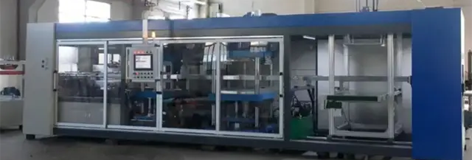
Not all thermoforming equipment offers identical capabilities. When evaluating an industrial plastic part machine, you must demand specific technical features to ensure production success.
Handling Complex Plastic Parts
Modern product designs rarely feature simple, flat geometries. They include undercuts, snaps, and complex mating surfaces. Your machine must support articulated mold components. Pneumatic cylinders inside the mold actuate side-actions to create undercuts. Furthermore, the machine must utilize programmable plug-assists. A mechanical plug pre-stretches the heated sheet into the mold cavity before air pressure activates. This critical step prevents material thinning in deep corners.
Advanced Texturing and Finishes
Painting plastic parts adds immense labor costs and environmental compliance headaches. High-end machines eliminate this secondary step entirely. Because the forming pressure pushes plastic so tightly against the mold, it picks up etched or bead-blasted textures flawlessly. The machine maintains mold-in textures perfectly, delivering a production-ready finish straight off the platen.
Structural Integrity
Deep-draw parts often suffer from weak, thin corners. Achieving uniform wall thickness requires intelligent control systems. Advanced machines feature multi-zone heating algorithms. Operators can create custom heat maps across the plastic sheet. You apply more heat to areas needing deeper draws and less heat to sections staying flat. This granular thermal control guarantees superior structural integrity.
Purchasing capital equipment requires a strict evaluation framework. Focus your auditing efforts on these four critical architectural pillars.
Heating technology dictates cycle times and part quality. Manufacturers generally offer quartz, ceramic, or halogen heaters.
You must also demand highly granular heating zones. Single-zone ovens cause massive scrap rates. Independent heater zones allow operators to manage variable sheet thicknesses effectively.
Pressure forming requires intense clamping forces. You must calculate the required tonnage based on your maximum platen area and desired forming pressure. For example, forming a part at 50 PSI over a 4-foot by 4-foot area (2,304 square inches) generates 115,200 pounds of separating force. This equals 57.6 tons.
If the machine frame lacks sufficient structural rigidity, platens will deflect under pressure. Platen deflection causes air leaks, pressure drops, and ruined parts. Heavy-duty steel weldments and oversized tie-bars represent non-negotiable features.
Consistent part quality relies heavily on automation. Look for robust Programmable Logic Controller (PLC) integrations. The system must offer digital recipe storage. Once an operator tunes a perfect cycle, they should save those parameters digitally for future runs.
Closed-loop temperature monitoring separates average machines from elite equipment. Infrared pyrometers read the actual plastic sheet temperature, not just the ambient oven air. The machine only advances the sheet when it reaches the exact target temperature. This automated oversight prevents thousands of dollars in scrap material.
High-pressure air inside heavy moving machinery creates significant safety risks. Review the equipment's compliance certifications thoroughly. Ensure the pressure vessel components hold ASME (or regional CE) certifications. The machine must feature redundant mechanical interlocks. Light curtains and designated operator safety zoning prevent accidental injury during automatic sheet loading and mold actuation.
Common Mistake: Underestimating required clamp tonnage. Buying a machine slightly under-spec for your largest mold leads to constant air leaks and poor surface detailing.
Capital equipment purchases only represent the first step. You must prepare your facility and workforce for real-world production demands. High-detail pressure forming introduces specific infrastructure requirements.
Tooling Investments
You cannot use cheap wood or epoxy tools for this process. The extreme forces will crush them instantly. High-detail work necessitates temperature-controlled cast or CNC-machined aluminum molds. These molds include internal water channels. Circulating liquid regulates the mold surface temperature, ensuring the plastic cools evenly and releases cleanly.
Air Supply Infrastructure
The machine consumes massive volumes of air instantaneously during the forming cycle. Your facility must provide high-volume, clean, dry compressed air. Investigate your existing CFM (Cubic Feet per Minute) and maximum PSI capacities. Undersized air compressors cause pressure drops mid-cycle, resulting in poorly formed radii. Furthermore, wet air lines cause moisture blemishes on the plastic surface.
Operator Expertise
Do not underestimate the learning curve. Tuning heat profiles, adjusting plug-assist speeds, and managing cooling timers require genuine skill. Even though modern machines offer automated digital recipes, initial setup still requires experienced oversight. Invest heavily in specialized operator training during the machine commissioning phase.
Secondary Operations
Pressure forming creates a completed 3D shape, but it leaves a perimeter flange. You cannot trim complex, multi-level parts effectively using manual tools or simple 2D routers. Factoring in the cost and floor space for a 5-axis CNC router proves essential. This secondary equipment trims parts accurately, cuts out internal windows, and guarantees repeatable final dimensions.
Precision pressure forming effectively bridges the manufacturing gap between low-volume cost-efficiency and premium aesthetic demands. It provides injection-molded detailing, structural integrity, and consolidated assemblies without crippling steel mold expenses.
To move forward, begin by auditing your current part volumes. Identify components falling within the 500 to 5,000 annual unit range. Next, assess your facility's existing compressed air infrastructure to ensure it meets high-volume CFM demands. Finally, request sample runs and material testing from leading equipment manufacturers.
Do not let high tooling costs stall your product development. We encourage you to engage directly with a thermoforming application engineer today. They will help you evaluate your designs, run custom cycle-time analyses, and successfully bring your complex plastic parts to market faster.
A: Most industrial machines process thermoplastic gauges ranging from 0.060" to 0.500". The exact limit depends heavily on your quartz heater capacity and the machine's maximum clamp tonnage. Thicker materials like 0.500" polycarbonate demand prolonged soaking heat and immense pressure to form crisp features successfully.
A: Yes. You can achieve severe undercuts by utilizing advanced tooling. Molds incorporate pneumatic articulated sections and collapsible side-actions. The machine actuates these moving mold parts just before the plastic cools, allowing the finished part to release smoothly without damage.
A: Changeovers typically take between 1 and 4 hours. The timeframe depends on tool size and complexity. Investing in machines featuring Quick-Mold-Change (QMC) systems, motorized platen adjustments, and automated clamping drastically reduces downtime between production runs.
A: This process excels with heavy-gauge industrial staples. Common materials include ABS, Polycarbonate, Kydex, and PC/ABS blends. Manufacturers also frequently process specialized flame-retardant plastics and pre-textured sheets designed for aviation and mass transit interiors.


