
Views: 0 Author: Site Editor Publish Time: 2026-09-17 Origin: Site
The agricultural equipment manufacturing sector is aggressively shifting toward advanced materials. Manufacturers increasingly demand lightweight, impact-resistant, and corrosion-proof components to enhance field performance. Modern tractors and harvesters rely heavily on these robust exterior components to survive harsh operating environments. However, transitioning to or scaling the production of large-format plastic parts requires immense capital investment. Buyers face the difficult task of evaluating heavy-duty machinery for their factory floors. You must find equipment capable of consistent thick-gauge forming without generating excessive scrap rates. Processing thick plastics demands precision heating and massive clamping forces. This guide provides procurement and engineering teams with a rigorous, decision-stage evaluation framework. We will help you specify and select the optimal thermoforming machine for agricultural panels. You will learn how to accurately align equipment capabilities with specific production volumes, material demands, and operational goals.
Many manufacturers struggle to choose the best manufacturing method for heavy equipment components. Upfront capital and tooling costs often dictate early procurement decisions. Injection molding demands expensive steel tools. These tools often cost hundreds of thousands of dollars to machine. They also require extended lead times, delaying product launches. In contrast, thermoforming uses highly cost-effective aluminum tools. You can deploy these molds much faster. This rapid deployment gets your agricultural equipment to market sooner. We see immense strategic value in minimizing initial tooling investments for bulky parts.
Production volumes play a critical role in your technology choice. You must define your volume sweet spot carefully before buying machinery. Thermoforming typically excels between 500 and 15,000 units annually. This range perfectly matches many specialized agricultural equipment production runs. If your volumes exceed 20,000 units, injection molding becomes more attractive. High-volume injection molding eventually drives down the per-part cost. However, it requires absorbing those massive upfront tooling expenses first.
Design flexibility matters just as much as volume. Tractors and harvesters require massive exterior components. Thermoforming easily accommodates these large surface areas. Producing huge farm equipment covers requires expansive machine platens. Thermoforming also allows for easier mid-production design iterations. Modifying an aluminum thermoforming mold remains simple and inexpensive. Modifying hardened steel injection molds costs a fortune and halts production.
You must size your forming equipment correctly from the start. Platen size dictates the maximum dimensions of your finished parts. Look closely at the machine's maximum draw depth. Many agricultural hoods require draw depths exceeding 24 inches. Deep-draw parts stretch the heated plastic severely. The machine must handle this without causing material webbing. Thinning corners represent another major production risk. Successful large plastic panel forming demands robust mechanical design and high-tonnage clamping capabilities.
Heating architecture dictates the ultimate quality of the part. Thick, heavy-gauge sheets require immense thermal energy. You cannot rely on bottom heat alone for thick materials. Top and bottom multi-zone heating systems are absolutely mandatory. We recommend halogen or quartz heaters for their rapid response times. They ensure uniform pliability across massive sheets of plastic. Precise heating zone control prevents localized overheating. It also stops the plastic sheet from sagging prematurely before the mold engages.
You must choose between vacuum and pressure capabilities. Standard vacuum forming pulls the heated sheet over the mold. Positive pressure forming pushes the sheet into the mold using compressed air. Both methods serve different agricultural applications.
Table 1: Vacuum Forming vs. Pressure Forming Capabilities
| Process Type | Core Mechanism | Best For | Visual Finish Quality |
|---|---|---|---|
| Vacuum Forming | Evacuates air to pull plastic over the mold. | Standard covers, interior cab panels, simple shapes. | Smooth, broad contours. Lower detail capture. |
| Pressure Forming | Uses up to 100 PSI of positive air pressure. | Exterior panels, complex louvers, sharp radii. | Injection-molded-like aesthetics, crisp textures. |
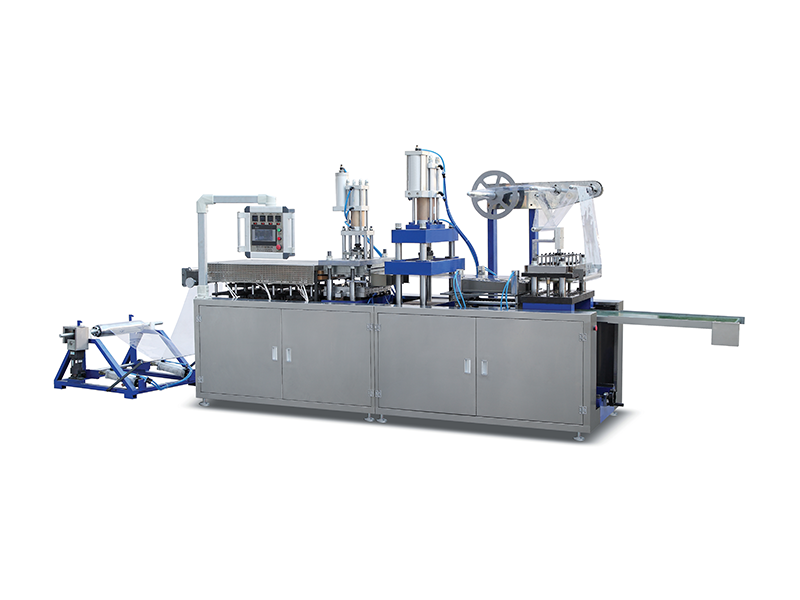
Handling heavy-gauge materials requires specific machine capabilities. Agricultural environments aggressively punish plastic components. You must ensure your equipment processes engineered resins properly. High-quality agricultural plastic panels must survive extreme UV exposure. They must also endure severe physical impacts from debris.
Cooling systems directly dictate your cycle times. Thick plastics hold immense thermal mass. High-velocity cooling fans are non-negotiable for large parts. You also need integrated water-cooled chillers to cool the aluminum mold itself. They stabilize thick-gauge parts rapidly. Fast cooling maintains cycle time efficiency. Slow cooling leads to part warpage and terrible production yields.
Sheet loading methods impact your daily production speed. Manual sheet loading works fine for low volumes. It also suits R&D and prototyping phases well. However, continuous production demands heavy-duty automation. Heavy-gauge sheets weigh too much for manual handling. Automated pneumatic sheet loaders eliminate heavy lifting entirely. They keep the thermoforming machine fed consistently, reducing operator fatigue and injury risks.
Trimming thick parts requires careful factory planning. Thin-gauge packaging uses simple inline steel rule dies. In contrast, industrial sheet thermoforming requires completely different approaches. You cannot punch heavy-gauge farm panels out of a continuous web. Complex agricultural panels need offline 5-axis CNC routing. Some high-volume plants use advanced robotic trimming cells. These secondary operations require precise, custom-built vacuum fixtures to hold the parts steady during cutting.
Integration introduces significant footprint risks. Large-format thermoformers consume massive amounts of floor space. You must plan your workflow meticulously. Consider the physical bottlenecks between the forming station and the trimming station. Downstream assembly and hardware insertion stations require space too. Forklifts need wide aisles to transport massive finished components safely.
Never skip the FAT process. Defining success metrics protects your capital investment. You must structure your FAT document clearly before signing any purchase orders. Require the machine vendor to prove specific cycle times. Material distribution represents the hardest metric to achieve consistently.
Follow these steps to structure a successful FAT:
Vendor trustworthiness makes a huge difference in your success. Demand transparent communication early in the sales process. Vendors should openly discuss potential cooling bottlenecks. Ask them for realistic scrap rates during the initial machine tuning phase. Ensure local service technicians are available in your region. Critical spare parts must be accessible quickly to prevent prolonged downtime.
Software and controls drive modern manufacturing factories. Assess the machine's Human-Machine Interface (HMI) carefully. Operators need intuitive screens for seamless recipe saving. Deep diagnostic capabilities reduce costly troubleshooting time. Ensure the control system offers robust ERP/MES integration. Industry 4.0 readiness is crucial for future data tracking and factory scaling.
Procuring a heavy-duty forming machine requires a calculated, engineering-first approach. Start by finalizing your part dimensions and target annual volumes. This data directly dictates the platen size and automation level required. Always match the machine's heating and draw capabilities directly to your toughest material. Demand rigorous FAT protocols before finalizing any equipment payments.
Take proactive next steps to ensure a smooth purchasing process. Advise your engineering team to prepare a highly detailed RFQ (Request for Quote). Include accurate 3D part CAD models. Provide transparent annual volume projections. Share specific material data sheets before engaging machine manufacturers. Clear requirements eliminate guesswork and protect your manufacturing timeline.
A: A heavy-duty machine typically handles sheet thicknesses ranging from 0.250" to 0.500" (6mm to 12mm). The exact capacity depends heavily on the machine’s mechanical clamping force and multi-zone heating efficiency.
A: Standard vacuum forming pulls plastic using suction. Pressure forming applies positive air pressure (up to 100 PSI) on the non-mold side. This forces thick sheets tightly against the mold, achieving sharper details, complex louvers, and injection-molded-like aesthetics.
A: Realistic cycle times range from 3 to 10 minutes per part. Variables include material thickness, heating efficiency, and cooling time. Integrated chillers and high-velocity fans significantly reduce the cooling phase.
A: Yes. Thermoformed plastics offer massive weight reduction, complete corrosion resistance, and excellent impact deflection. While they cannot replace structural load-bearing frames, they are ideal for exterior hoods, roofs, and side panels.


