
Views: 0 Author: Site Editor Publish Time: 2026-09-10 Origin: Site
Acquiring thermoforming equipment represents a high-stakes capital investment for your manufacturing floor. Discovering critical flaws after the machinery reaches your facility leads to post-shipment retrofits. These unexpected modifications severely damage your expected return on investment. The thermoforming machine factory acceptance test serves as your final, critical gatekeeping phase before taking ownership of the asset. It provides a formal opportunity to evaluate the equipment directly at the vendor's facility.
A rigorous assessment goes far beyond simply watching the machine cycle air. You must systematically validate mechanical, thermal, and software performance against your agreed-upon User Requirement Specifications (URS). You cannot rely on assumptions when commissioning heavy machinery. Read on to discover exactly what you need to inspect, measure, and verify to secure your production lines and hold vendors accountable.
You must strictly grade the factory acceptance test against your initial purchase order and URS. The manufacturer's standard testing protocol often masks bespoke integration flaws. Standard vendor checklists highlight general functionality but rarely address your unique production tolerances. We always advise engineering teams to bring their own validation documentation. This ensures you control the narrative of the inspection.
Consider the financial disparity of mitigation. Fixing a pneumatic routing error at the vendor's factory costs almost nothing. Re-routing those same air lines after installation requires flying out technicians. It stalls your entire facility. Identifying issues early preserves your launch schedule. It shifts the financial burden of corrections back to the manufacturer.
Thorough preparation guarantees a successful trip. Buyers face strict requirements prior to travel. You must ship your exact polymer rolls to the vendor well in advance. Provide your custom mold tooling early. Define acceptable tolerance thresholds in writing before booking flights. Clear communication removes ambiguity. Vendors cannot claim ignorance if they have your exact production materials on hand.
Structural integrity dictates long-term reliability. You must verify frame rigidity thoroughly. Watch for excessive vibration under maximum load conditions. Heavy vibration leads to premature bearing failure. Inspect the vacuum pump capacity rigorously. Trace the pneumatic line routing across the entire chassis. Look out for kink risks. Ensure proper sealing around all valves and manifolds.
Heating systems demand absolute precision. Validate your ceramic and quartz heater zone controls individually. Use industrial thermal imaging cameras. They confirm uniform temperature distribution across the heating matrix. You want to eliminate dead spots entirely. Uneven heating causes localized thinning in plastic parts. We recommend recording the thermal profiles for future reference.
Electrical cabinets often hide critical deviations. Ensure physical wiring matches the provided schematics perfectly. Verify all component sourcing directly. Did the vendor install agreed-upon brands like Siemens, Allen-Bradley, or Omron? Do not accept unauthorized substitute parts. Subpar electronics fail frequently under industrial conditions.
| System Category | Primary Inspection Target | Acceptance Standard |
|---|---|---|
| Structural Frame | Vibration and rigidity under load | Zero visible deflection; noise below 80dB |
| Pneumatics | Air lines, valves, and vacuum pumps | Consistent pressure; zero audible air leaks |
| Heating Matrix | Ceramic/Quartz zones | Uniform thermal signature; no dead zones |
| Control Cabinet | Wiring and PLC brands | Matches schematics; specified brands only |
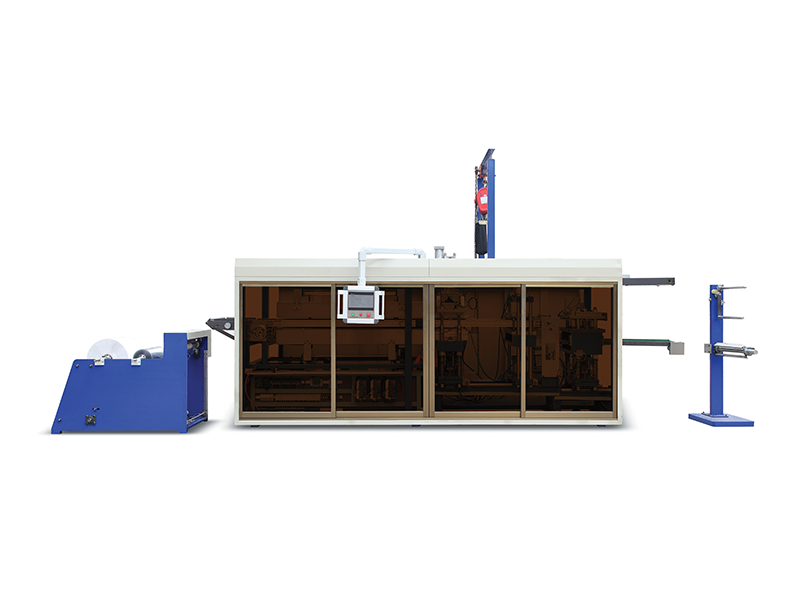
Stress-testing exposes hidden mechanical weaknesses. Run the machine at 100% of the quoted maximum cycle rate. Maintain this top speed for a sustained period. Do not accept a brief burst of speed as adequate proof. Sustained running heats up the oil, stresses the vacuum system, and reveals true pneumatic recovery times. Real-world production does not stop after ten cycles.
Quality output relies entirely on rigorous machine sample testing. Inspect formed samples carefully. Look closely for webbing in deep draws. Identify chilling marks caused by improper mold temperatures. Check for uneven material distribution. Measure corner thicknesses using digital calipers. You need to ensure consistent material drawing across every cavity. Reject samples showing significant variance.
Tooling changes directly impact daily uptime. Time a complete mold changeover process manually. Verify the vendor's marketing claims regarding quick-release systems. Measure actual setup downtime against their promised metrics. Complex changeovers eat into production schedules. If the vendor struggles to swap molds efficiently, your operators will struggle even more.
Operators interact with the machinery mostly through the Human-Machine Interface (HMI). Test recipe management extensively. Save, load, and adjust heating profiles. Modify timing sequences slightly to observe system responsiveness. Verify alarm logic actively. Artificially trigger faults on purpose. Drop main air pressure manually. Simulate a heater zone failure. See exactly how the control system responds and recovers.
Operator safety mechanisms are completely non-negotiable. Audit physical safety guards closely. Test all light curtains by interrupting the beam during a cycle. Test strategically placed E-stops around the perimeter. The machine must halt immediately. Residual motion after triggering an E-stop indicates dangerous kinetic flaws.
Compliance documentation protects your corporate liability. Review raw material certificates carefully. Check CE or UL electrical compliance labels on the cabinet. Demand calibration certificates for all critical sensors. Missing paperwork delays your internal safety approvals. Secure these documents before authorizing shipment.
You must understand the distinct boundary between testing phases. The FAT proves the machine works in isolation. The Site Acceptance Test (SAT) proves integration into your specific facility. Passing the factory test does not guarantee a seamless launch. It merely clears the first major hurdle in equipment procurement.
Watch for downstream integration constraints early. How will this specific unit hand off formed products? Consider your cutting, stacking, and automated packaging modules. Ensure the outfeed elevation matches your plastic forming line acceptance criteria. Misaligned conveyors require expensive custom transitions. Catching elevation mismatches now saves engineering headaches later.
Lock down all technical documentation before departure. Gather standard operating procedures (SOPs). Collect comprehensive maintenance manuals. Finalize critical spare parts lists before crating the machine. Waiting until delivery to request manuals leads to chaotic training sessions. Your maintenance team needs these documents to prepare their internal systems.
Stay vigilant during your thermoforming equipment inspection. Vendor reluctance signals deep underlying trouble. We consider optimized demonstrations a massive warning sign. If they refuse to use your provided material, investigate their reasoning. If they hesitate to run the machine at full capacity, pause the test immediately. Vendors manipulating test conditions usually try to hide inherent design limitations.
Watch out for rapid "Band-Aid" fixes. Temporary software bypasses hide flawed logic. On-the-fly mechanical adjustments made during the test indicate poor assembly. If a technician uses zip ties or jumper wires to clear a fault, reject the machine. You require permanent, root-cause resolutions. Temporary fixes will fail catastrophically during your third shift.
Manage your next steps and punch list strictly. Categorize failures clearly to avoid disputes.
| Failure Category | Definition | Required Action |
|---|---|---|
| Critical / Showstopper | Fails safety tests, cannot hit cycle speeds, or ruins material. | Halt testing. Require full redesign and formal re-test. |
| Major Defect | Software bugs, improper component brands, or minor leaks. | Withhold sign-off. Require video proof of repair before shipping. |
| Minor / Cosmetic | Scratched paint, missing labels, or incomplete manuals. | Note on punch list. Approve shipment conditionally. |
Structure conditional sign-offs defensively. Withhold final payment milestones until they resolve all critical punch-list items. Demand unedited video proof of the final fix. Never trust a verbal promise to "fix it before shipping."
A skeptical, evidence-backed factory test serves as your ultimate insurance policy for capital equipment procurement. Trusting vendor assurances without rigorous validation introduces unnecessary risk into your manufacturing environment. By systematically testing structural integrity, heating precision, and software logic, you protect your production targets.
A successful validation process builds vendor accountability from day one. It sets a robust foundation for decades of reliable production. Catching minor routing errors or software bugs now prevents weeks of downtime later. It shifts the burden of quality control back where it belongs.
Take proactive control of your next equipment purchase. Consult with your engineering team to customize these protocols for your specific applications. Implement a rigid checklist to guarantee a smooth transition from the vendor's floor to your facility.
A: You should send a cross-functional team. Recommend a mix of procurement managers, senior maintenance engineers, and lead operators. Operators catch usability issues, engineers verify mechanical integrity, and procurement enforces contract terms.
A: It typically takes 2 to 4 days. The exact duration depends heavily on machine complexity, automation integration, and the number of custom mold changeovers required for validation.
A: You formally document all deficiencies on the punch list. Withhold your signature and subsequent payment milestones. Schedule a formal re-test once the manufacturer provides evidence of root-cause corrections.
A: Yes. Testing with the exact custom tooling intended for production is non-negotiable. It provides the only accurate validation of the equipment's heating, forming, and cooling capabilities.


