
Views: 0 Author: Site Editor Publish Time: 2026-09-08 Origin: Site
Achieving clean, precise cuts at high speeds remains a persistent bottleneck in modern packaging production. Manufacturers frequently battle edge curling, plastic dust, or excessive scrap on the line. These frustrating issues ruin product presentation and compromise crucial seal integrity. Standard steel-rule die cutting simply falls down under strict tolerance demands. It wears out quickly and struggles to deliver perfect edges on rigid materials over long runs.
In contrast, matched metal hardware cutting provides surgical precision. It relies on robust male and female punch-and-die mechanics to shear plastic flawlessly. This method completely eliminates the typical frustrations of thin-wall trimming. The resulting parts stack perfectly and seal reliably every single time.
This article serves as your technical and commercial evaluation guide. We will help production managers specify the exact machinery for their operational needs. You will learn how to optimize your high-volume production lines. Ultimately, this knowledge ensures maximum output and superior packaging quality.
Hardware cutting ensures zero-clearance trimming, essential for rigid and semi-rigid thin plastics (PET, PP, PS) where edge quality dictates packaging seal integrity.
Upfront tooling costs for matched metal molds are higher, but they yield significantly lower cost-per-part at scale due to reduced downtime and longer tool life.
Evaluating an automatic mould cutting machine requires analyzing servo-driven platen accuracy, clamping tonnage, and tool changeover mechanisms.
Factory Acceptance Testing (FAT) and local aftermarket support are critical risk-mitigation factors when sourcing heavy-duty forming equipment.
Producing flawless packaging requires understanding material behavior during the trimming phase. Thin-gauge materials under 1.5mm often warp, fray, or splinter easily. High-cavitation molds exponentially worsen this specific issue. Standard steel-rule dies function by crushing the plastic against a flat anvil plate before cutting it. This brute-force action creates "angel hairs" or fine plastic dust. These microscopic flaws contaminate food packaging and ruin the critical seal area.
A precision hardware cutting thermoforming machine solves this problem mechanically. It abandons the crushing action entirely. Instead, it utilizes male and female punch-and-die components. These matched tools operate either directly in-mold or immediately post-mold. They shear the plastic cleanly rather than forcing it apart. The zero-clearance fit between the punch and die ensures a razor-sharp cut every cycle.
When evaluating the outcome against alternatives, dimensional stability stands out. Hardware cutting maintains perfect part registration across millions of cycles. Standard form-and-trim-in-line systems utilizing steel dies often drift out of alignment. Heat expansion and blade wear cause this gradual drift. By utilizing matched metal, you secure superior edge quality and eliminate thermal variations. This directly translates to drastically fewer rejected batches in your quality control department.
Common Mistake: Relying on standard steel-rule dies for brittle materials like recycled PET (rPET). The material often micro-cracks along the cut line, leading to unexpected package failures during transit.
Best Practice: Always specify zero-clearance punch-and-die setups for rigid plastics to ensure a clean, stress-free shear.
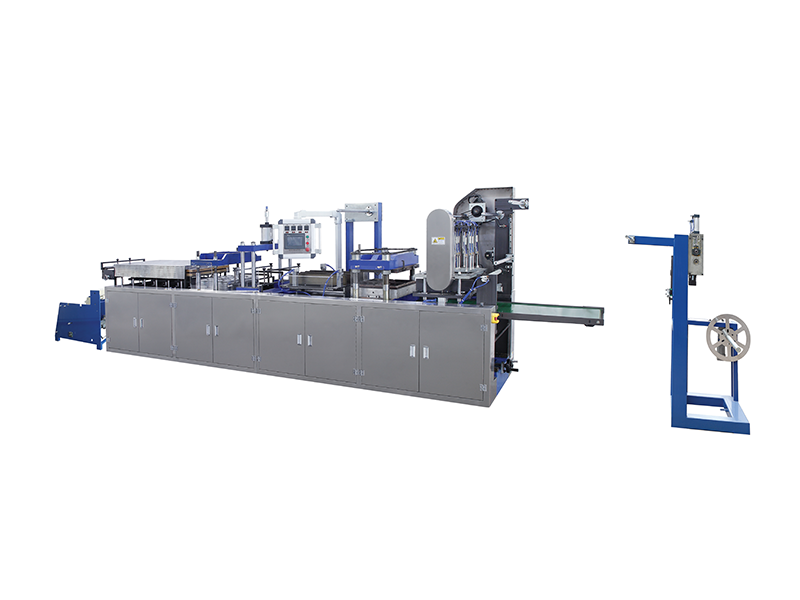
High clamping tonnage is absolutely essential for successful matched metal cutting. The process requires immense mechanical force to shear plastic cleanly across multiple cavities simultaneously. If the machine platen deflects even slightly, the punch misaligns from the die. This deflection damages expensive tooling instantly and causes catastrophic failure. You must prioritize heavy-duty cast frames when evaluating equipment. Reinforced steel structures absorb cutting shock effectively. Four-post tie-bar designs distribute the mechanical stress evenly. This rigid framework guarantees that the punch enters the die perfectly parallel every time.
Avoid older pneumatic systems for punch stations whenever possible. Air-driven cylinders simply lack repeatable accuracy under high loads. Servo-motor toggles outlast and outperform pneumatics entirely. They deliver micrometer-level cut accuracy cycle after cycle without pressure drops. Servos give you complete programmatic control over the kinetic speed profile. You can slow the punch a fraction of a second before impact. This critical deceleration prevents tool slamming. It extends mold life dramatically while reducing ambient factory noise.
Heavy matched-metal molds take significant time to swap. You cannot ignore this harsh operational reality. A modern hardware trim thermoformer must streamline this exchange process. Evaluate quick-change tooling features carefully before purchasing. Look for standardized mold bases featuring quick-release pneumatic clamps. Ensure your facility integrates overhead cranes to handle tool weights safely. Machine designs offering side-loading tool rails save hours of downtime. Operators can slide heavy tool sets into place smoothly instead of wrestling them overhead.
Transitioning to advanced cutting technology requires careful operational planning. You must align your facility capabilities with the new equipment demands.
A mold cutting thermoforming machine commands a higher initial capital expenditure. The matched-metal tooling itself is undeniably expensive to machine. However, the return on investment surfaces rapidly through continuous, uninterrupted operation. You can achieve multi-million cycle runs without ever stopping for blade changes. Cost-per-part drops significantly at this high scale. By eliminating daily machine stoppages, your overall production efficiency skyrockets.
Next, consider your available floor space and structural foundation. Large inline roll-fed systems consume massive physical footprints on the factory floor. Compact thermoformers offer tighter layouts but demand sturdy foundations. Hardware cutting stations generate intense downward impact vibrations during the shear phase. You will likely need reinforced concrete flooring to stabilize the machinery. Standard warehouse floors often crack under the continuous rhythmic tonnage of a high-speed press.
Do not underestimate the learning curve for your workforce. Your maintenance teams must adapt to entirely new technical routines. They will handle precision tool sharpening instead of simple blade swapping. They must master micrometer alignment tolerances. Servo calibration becomes a daily technical requirement rather than an occasional task. Comprehensive training for operators prevents catastrophic tooling collisions. A well-trained team ensures your expensive capital equipment runs smoothly and safely.
Achieving a fast return on investment depends on three major production factors: scrap reduction, operating speed, and automation compatibility.
Zero-clearance cutting drastically minimizes skeleton waste. You can nest part cavities much closer together on the material web. Thin-gauge plastic forming processes rely heavily on optimal web utilization. Narrowing the gap between cuts by just a few millimeters saves immense amounts of plastic. Over millions of parts, this saved material equals massive retained profit. You buy less raw resin and spend less energy regrinding the skeleton.
Machine speed dictates your maximum revenue potential. You must map out realistic cycles per minute (CPM) expectations. A fully optimized system runs exceptionally fast. You can expect 35 to 50 CPM on thin-gauge PET or PP. Speeds depend heavily on part depth, cooling capacity, and material thickness. Punch-and-die cutting rarely acts as the speed bottleneck. Usually, the plastic cooling time dictates the maximum cycle rate.
Precise edges vastly improve automated handling downstream. Flawless cuts prevent plastic containers from jamming inside the automated stacker. Counting mechanisms work flawlessly because parts nest perfectly without edge friction. Downstream robotic packaging reliability skyrockets when dimensional stability is perfect. You eliminate constant human intervention at the end of the line. Operators simply monitor the robots rather than manually unjamming tangled plastic cups.
Below is a comparative breakdown of cutting technologies. It highlights why hardware cutting dominates high-volume scenarios.
Thermoforming Cutting Technology Comparison
Feature | Standard Steel-Rule Die | Matched Metal / Hardware Cutting |
|---|---|---|
Edge Quality | Prone to angel hairs and rough edges | Perfectly clean, zero-clearance shear |
Tooling Lifespan | 100,000 to 300,000 cycles | 5,000,000+ cycles before sharpening |
Material Scrape | Requires wider web spacing between cavities | Allows ultra-tight cavity nesting |
Setup Time | Fast and relatively simple | Requires precise micrometer alignment |
Best Application | Short runs, prototyping, foam materials | High-volume rigid/semi-rigid packaging |
Procuring a heavy-duty thermoformer is a major strategic decision. You must evaluate potential manufacturers using a strict, uncompromising framework. This diligence prevents costly installation failures.
First, assess the vendor's internal manufacturing capability rigorously. Do they possess in-house machining capabilities for their heavy platens? You want an OEM who controls their own structural quality. Outsourced frames often suffer from microscopic misalignments. Check their software integration standards and HMI usability. Verify their spare parts availability locally before signing any purchasing contract. A machine waiting weeks for a proprietary servo drive destroys your delivery schedule.
Second, demand a comprehensive Factory Acceptance Test (FAT). Do not accept a machine based on a generic five-minute demonstration. Follow these specific steps during the FAT:
Bring your own specific material roll to the testing facility.
Run the machine at maximum rated speed for at least two continuous hours.
Verify the claimed tool changeover times personally using a stopwatch.
Inspect the edge quality of the 10,000th part to ensure no thermal drift occurred.
Test the emergency stop functions under full mechanical load.
Finally, prioritize compliance and safety features. Heavy platen machinery poses severe physical risks to operators. Ensure the automatic mould cutting machine carries authentic CE or UL certifications. Demand modern optical safety features. Infrared light curtains must protect all access points during operation. Mechanical safety locks must automatically engage during any maintenance procedure. Never compromise on operator safety to save on capital costs.
Shifting to advanced hardware cutting technology remains a highly strategic move. High-volume producers must prioritize perfect edge quality and seamless automated handling. Steel-rule dies simply cannot match the longevity and precision of matched metal tooling. While the initial investment runs higher, the operational savings justify the transition completely. You eliminate costly machine downtime, reduce raw material waste, and guarantee perfect seal integrity for your clients.
Your next steps require careful internal evaluation. Conduct a thorough tool-cost analysis using your own production data. Compare the cost of new tooling against your current scrap rates and blade replacement downtime. Gather this hard metric data first. Once you define your baseline costs, you can confidently request custom machine quotes from reputable vendors. Upgrading your line will secure your competitive edge in the demanding packaging market.
A: It typically ranges from 0.2mm to 1.5mm. Material type heavily impacts the required cutting force. Polypropylene (PP) stretches and requires sharper, tighter clearances. Polyethylene terephthalate (PET) is more brittle and snaps cleaner. Exceeding 1.5mm generally requires specialized heavy-duty hydraulic presses.
A: Hardware cutting molds often exceed 5 to 10 million cycles before requiring professional sharpening. This extreme longevity ensures uninterrupted high-volume runs. Conversely, standard steel-rule blades dull quickly. They typically need replacement every 100,000 to 300,000 cycles, causing frequent machine downtime.
A: Yes, many premium machines offer this specific flexibility. Certain models feature interchangeable cutting stations. You can switch between precision matched-metal tooling and standard steel-rule dies. This adaptability allows you to run high-volume premium parts and low-volume standard parts on the exact same line.
A: In-mold cutting trims the part inside the forming cavity before it cools completely. This method offers ultimate dimensional control and zero shrinkage drift. Post-mold hardware cutting moves the formed web to a separate trimming station. It allows for simpler tooling but requires incredibly precise web indexing.


