
Views: 0 Author: Site Editor Publish Time: 2026-09-17 Origin: Site
Producing durable, compliant equipment enclosures requires balancing upfront tooling costs, production speed, and part precision. Manufacturers face immense pressure to keep overhead low while maintaining high quality standards. For low-to-medium volume manufacturing, relying on injection molding often creates prohibitive tooling expenses and long lead times. Bringing thermoforming capabilities in-house or upgrading existing equipment offers a highly scalable alternative. You gain direct control over your supply chain and production schedules. Our guide provides engineering and procurement teams an objective framework for evaluating and shortlisting a thermoforming machine for equipment housings. We will explore machine specifications, material realities, and integration requirements. You will learn how to make an informed purchasing decision tailored specifically to your facility layout and production goals.
Outsourcing large-part manufacturing often results in supply chain bottlenecks. Vendors impose high minimum order quantities. They also suffer from slow iteration cycles. These delays hurt your competitive edge in fast-moving industrial markets. When you control the process locally, you dictate the timeline. You avoid costly shipping fees for bulky empty shells.
Let us frame the financial tradeoff between injection molding and thermoforming. Injection molding requires expensive steel tooling. These tools take months to machine and refine. Thermoforming uses affordable aluminum or epoxy molds. Investing in an industrial plastic thermoformer allows rapid prototyping. You can economically produce large, thick-walled parts. Injection molding such massive components would be financially disastrous for lower volumes. You break even much faster on short-to-medium production runs.
You must establish clear metrics to measure your success. Simply buying a machine guarantees nothing. You need measurable benchmarks. Consider these core success criteria before making your purchase:
Meeting these criteria ensures a robust return on your equipment investment. You transform your facility into an agile manufacturing hub.
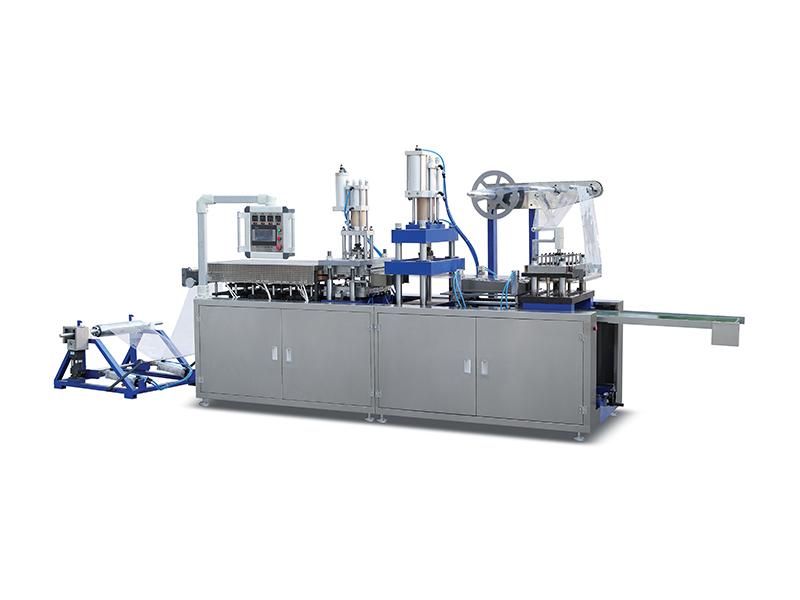
You must choose the right forming technology for your specific parts. The geometry dictates the equipment type. Successful protective enclosure forming relies on matching machine capabilities to aesthetic demands. We break down the two primary approaches used today.
Vacuum forming represents the most accessible entry point into heavy-gauge production. The machine heats a plastic sheet until pliable. A vacuum then pulls the material over a single-sided mold. It works exceptionally well for specific industrial applications.
Pressure forming takes the process a significant step further. It combines vacuum suction below the mold and positive air pressure above it. The machine forces the heated plastic tightly against the mold surface. You achieve incredible geometric detail.
Choosing the proper machine involves analyzing distinct technical specifications. You must align these specs with your desired production outcomes. A misaligned specification leads to scrap parts and wasted operational time.
Heating System Precision (Zoned Control)
Equipment housings often use flame-retardant materials. Common choices include UL 94 V-0 rated Kydex and tough Polycarbonate. These advanced plastics possess narrow processing windows. They demand highly precise heating. Standard broad-area heaters fail to deliver consistent results. You need a machine featuring zoned quartz or ceramic heaters. Zoned control allows operators to direct specific heat levels to different sheet areas. This prevents material webbing. It stops scorching on the edges. It mitigates uneven thinning during a deep mechanical draw.
Draw Depth & Platen Size
Your machine must physically accommodate your largest parts. Do not buy a machine based solely on current dimensions. Evaluate your future product roadmap. The machine must hold the maximum physical footprint of your planned products. Carefully evaluate the maximum depth of draw. A deep draw requires significant mechanical clearance. Ensure the pneumatic or servo platen drives handle the full stroke smoothly. They must operate without deflection. Platen deflection ruins part consistency across batches.
Gauge Capacity (Heavy-Gauge Focus)
Protective covers require thick, durable plastics. You are evaluating cut-sheet thermoforming equipment. Roll-fed inline machines process thin packaging materials and cannot handle these jobs. You need a heavy-duty system. Check the manufacturer's maximum gauge rating. Ensure the machine processes heavy-gauge materials up to at least 0.375 inches. Pushing a machine beyond its gauge capacity damages heating elements and stresses clamping frames.
Automation & Secondary Operations
Consider how the machine fits into your broader workflow. Manual loading works fine for small batch runs. High-volume continuous runs demand automated sheet loading. Assess integration capabilities immediately. Does the machine include integrated cooling fans or water mists? How easily does the formed part transition to secondary CNC routing? You will need to trim edges and cut precise holes. Seamless integration between forming and trimming saves countless labor hours.
Table 1: Specifications for Heavy-Gauge Thermoforming Machinery
| Specification Area | Standard Requirement | Advanced Feature Option |
|---|---|---|
| Heating Elements | Tubular or basic ceramic | Zoned quartz with PLC profiling |
| Material Gauge | Up to 0.125 inches | Up to 0.375+ inches (Heavy-gauge) |
| Platen Drive | Pneumatic cylinders | Precision servo motors |
| Cooling System | Ambient high-velocity fans | Integrated water misting and chilled molds |
Purchasing the hardware only solves part of the puzzle. Integrating the machinery into your facility presents distinct logistical challenges. You must proactively manage these implementation risks before delivery day.
Footprint & Utility Requirements
Heavy-gauge thermoformers consume massive floor space. You need room for the machine itself. You also need clearance for physical safety cages. Robust utility connections are mandatory. Pressure forming requires significant pneumatic air supplies. Ensure your shop compressors deliver consistent PSI without dropping line pressure. These machines draw immense power for heating. You will likely need new high-amperage electrical drops installed.
Operator Expertise & Training
Modern PLC interfaces simplify recipe management. They store heat profiles and timing cycles digitally. However, successful thermoforming remains a highly skilled trade. Observing material sag requires a trained eye. Adjusting heating profiles for ambient plant humidity takes intuition. Never underestimate the human element. Factor original equipment manufacturer (OEM) training into your purchase decision. A comprehensive support package ensures your team gets up to speed quickly.
Cooling Cycle Bottlenecks
Forming a plastic part happens in seconds. Cooling thick plastics takes significantly longer. Heat must escape the dense material before the part ejects safely. Undersized cooling systems create major workflow problems. Cheap machines often use inadequate ambient fans. This artificially bottlenecks your overall production rates. Invest in robust, integrated cooling mechanisms. Mist cooling or chilled molds drastically reduce these cycle times.
Material Handling
Moving raw material poses a serious logistical hurdle. You will handle heavy 4x8 foot sheets of thick plastic daily. Manual lifting invites severe workplace injuries. It also dramatically slows down the loading process. Your facility requires proper staging areas next to the oven. Invest in dedicated vacuum lifters or localized jib cranes. Safe, efficient material handling feeds the machine steadily.
Do not base your vendor choice on a glossy brochure. You need verifiable proof of capability. Treat the vendor selection process as a rigorous job interview for the machine. A systematic evaluation protects your capital investment.
Proof of Concept
Always demand a physical demonstration. Require vendors to run a test pull of a complex project. Provide them specific geometry data. Specify your exact material, such as flame-retardant ABS, PVC, or PC. A successful test pull proves the machine handles your specific material behavior. It validates the heating control and pressure capabilities. Instruct your engineers to measure wall thickness in the corners of the test part.
Compliance and Safety
Industrial machinery must actively protect your workforce. Verify all integrated machine safety features. Look for standard inclusions like light curtains and physical cage interlocks. Check the main electrical panels. They must carry proper CE or UL compliance ratings. Non-compliant machinery poses severe liability risks. It may also fail local municipal safety inspections.
Warranty and Long-Term Value
Look far beyond the initial sticker price. A cheap machine becomes incredibly expensive when it breaks down mid-production. Evaluate the broader support ecosystem. Check the availability of replacement heating elements. Ask about PLC software updates. Determine the availability of domestic or local service technicians. Discussing your requirements for an industrial equipment housing directly with the manufacturer clarifies their support capabilities. Strong after-sales service guarantees long-term operational uptime.
Selecting the correct forming equipment fundamentally transforms your manufacturing capabilities. It brings control, speed, and cost-efficiency back inside your facility. You reduce reliance on external suppliers.
Audit your current housing dimensions and projected volume requirements today. Reach out to your shortlisted manufacturers. Request a comprehensive cost-benefit analysis and a physical test run using your heavy-gauge sheet samples.
A: Most heavy-gauge, cut-sheet machines handle up to 0.500 inches (12.7mm) in thickness. However, standard equipment housings typically use 0.125-inch to 0.375-inch gauge sheets. Pushing beyond these limits requires specialized, high-capacity heating elements and heavy-duty clamping frames to prevent material slippage during the forming cycle.
A: Yes. With tight-tolerance pressure forming and precision 5-axis CNC trimming, thermoformed parts easily achieve high-performance ratings. You can integrate precise gaskets and mating surfaces into the design. These closely managed tolerances ensure the final parts pass rigorous IP65 and NEMA 4 environmental sealing requirements.
A: Thermoforming tooling generally costs 10% to 20% of the price of an equivalent steel injection mold. Thermoform molds use machined aluminum or cast epoxy instead of hardened steel. This massive cost reduction makes thermoforming highly economical for short-to-medium production runs of 100 to 5,000 units annually.


