
Views: 0 Author: Site Editor Publish Time: 2026-09-19 Origin: Site
Manufacturing white goods introduces intense engineering pressure. You face relentless demands to produce large-scale components rapidly. These interior components demand strict dimensional tolerances. You also need minimal scrap rates and rapid cycle times to stay competitive. Standard molding equipment simply struggles in this specialized environment. It frequently fails when handling the extreme deep-draw requirements of refrigerator and freezer interiors. Without highly specialized control, you risk unacceptable wall thinning, material tearing, and structural failure.
This guide delivers a strictly technical and commercial framework for navigating these challenges. You will discover exactly how to evaluate, specify, and source a reliable thermoforming machine for appliance liners. We explore diverse machine architectures, core component specifications, and realistic floor integration strategies. You will learn the exact criteria necessary to ensure profitable production. By understanding the intersection of material science and mechanical automation, you can select equipment capable of handling high-volume demands efficiently.
Deep-draw appliance liners present inherent engineering difficulties. You must transform flat plastic sheets into complex, deep 3D geometries. This extreme deformation often causes frustrating surface and structural defects. Corner webbing remains a frequent issue. Webbing occurs when material bunches up rather than stretching smoothly. You might also encounter uneven wall thickness or visible chilling marks. Chilling marks happen when heated plastic touches a cold mold surface prematurely. Overcoming these specific flaws requires immense mechanical control and thermal precision.
Material realities dictate your processing approach. High-impact polystyrene (HIPS) behaves differently than ABS during the heating and stretching phases. HIPS stretches easily and costs less. However, it demands highly precise temperature management to avoid sagging. ABS offers superior impact resistance and higher surface gloss. Conversely, it requires much more aggressive heating profiles to reach its forming temperature. Operators must adjust parameters carefully for each substrate.
You must define clear success criteria upfront. What defines a successful implementation for refrigerator liner forming? Consider these baseline metrics:
Proper alignment among these criteria ensures a continuous, highly profitable workflow.
You have two primary paths when selecting equipment. Each architecture serves distinct manufacturing volumes and product mixes.
Use this setup for low-to-medium volume runs. It excels in high-mix production environments. Common examples include specialized medical refrigerators, commercial display cases, or custom wine coolers. Single-station machines occupy a much smaller footprint. They also require significantly lower upfront capital expenditure.
However, these machines inherently limit your total throughput. Heating, forming, and cooling occur sequentially in the same space. This process loops slowly, extending overall cycle times. They offer incredible flexibility but sacrifice raw volume. Quick tool changes make them ideal for facilities handling dozens of different SKUs monthly.
High-volume consumer white goods demand multi-station systems. These massive setups enable continuous, overlapping flow. They handle loading, pre-heating, heating, forming, and unloading simultaneously across different stations. This overlapping process drastically increases throughput. You can produce thousands of appliance plastic parts daily.
The trade-off involves physical space and financial investment. You need significant floor space to accommodate index chains spanning 15 meters or more. They demand higher upfront capital. Despite this, the per-unit speed entirely justifies the expense for major appliance brands pushing massive annual volumes.
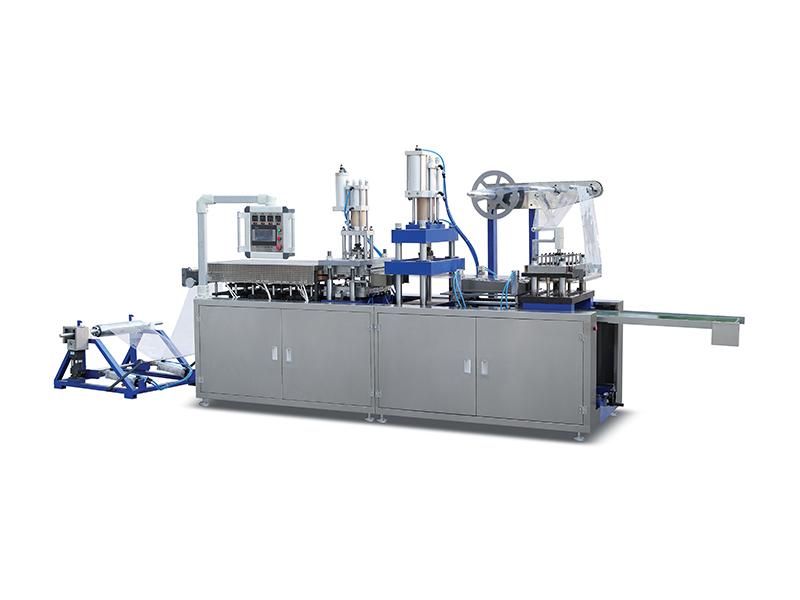
Choosing a large plastic liner machine requires evaluating highly specific engineering subsystems. You cannot rely on basic specifications.
You cannot rely on uniform heating for deep draws. You need individually controlled heating elements. Engineers typically choose between halogen, quartz, or ceramic heaters. Quartz provides rapid response times for fast indexing. Ceramic holds heat steadily over long periods, offering excellent infrared dispersion.
Zoned matrices let you create tailored heat profiles across the plastic sheet. You can heat the sheet's center intensely while keeping the edges cooler. This technique prevents material sagging before the plastic reaches the mold cavity. It ensures even stretching during the critical vacuum phase.
Table: Heating Element Comparison for Thermoforming
| Element Type | Response Time | Heat Retention | Best Use Case |
|---|---|---|---|
| Quartz (Medium Wave) | Very Fast | Low | Rapid cycle times, quick material changes |
| Ceramic (Long Wave) | Slow | High | Consistent, long-run production batches |
| Halogen (Short Wave) | Instant | Very Low | Deep penetration for thick HIPS sheets |
Deep cavities demand servo-driven plug assists. Motorized, programmable plugs distribute material evenly. They physically push the heated plastic deep into the cavity. They do this milliseconds before full vacuum activation. Modern manufacturers construct these plugs from syntactic foam to prevent premature chilling of the plastic.
This remains the sole method for achieving structural integrity. It prevents excessive thinning in the bottom corners of the liner. Pneumatic plugs lack the required precision and repeatability. Servo motors offer exact speed and depth control, allowing you to fine-tune the material distribution.
You must evaluate vacuum pump displacement carefully. We measure this in cubic meters per hour (m³/h). High capacities pull the heated sheet rapidly over complex mold geometries. A weak vacuum leaves soft corners and undefined ridges.
Furthermore, compressed air plays a crucial role. High-pressure forming snaps the cooling plastic tightly against the mold definition. This creates crisp interior corners and sharp channels for shelving. It closely mimics the structural detail typically reserved for injection molding.
Cooling dictates your overall cycle time. High-velocity air cooling removes surface heat instantly. Simultaneously, internal water channels within the aluminum molds pull heat from the backside.
This powerful combination locks in the molecular structure quickly. It expedites part ejection and drastically reduces warping. Efficient cooling systems prevent post-mold shrinkage, ensuring the liner fits perfectly into the metal appliance cabinet.
Buying the machine represents only step one. Floor integration poses significant logistical hurdles. Proper planning prevents installation delays.
Robust foundation planning is mandatory when installing multi-station vacuum forming for appliances. These machines weigh tens of thousands of kilograms. They generate dynamic loads and vibrations during operation. You must prepare reinforced concrete floors to isolate these vibrations. Ensure adequate clearance for sheet loading. You will likely use gantry cranes or automated guided vehicles (AGVs) to move massive plastic rolls. Plan safe extraction zones for finished parts. Cluttered aisles lead to severe safety hazards.
Real-world downtime heavily impacts your margins. Swapping massive aluminum molds takes considerable time. Mold weights can easily exceed 2,000 kilograms. You should look for quick-mold-change (QMC) systems. Standardized clamping frames reduce manual adjustments. Use proper die carts and overhead cranes to handle these heavy assets safely.
You must manage the transition from legacy analog controls. Modern PLC and HMI interfaces require digital literacy. Operators need comprehensive training to interpret thermal maps and adjust servo speeds. Safety remains equally critical. You must install reliable light curtains. Physical guarding around multi-station presses prevents catastrophic accidents. Interlocking doors must stop operations instantly upon breach.
Finding the right equipment partner determines your long-term success. You must evaluate vendor claims critically and verify their engineering data.
Avoid manufacturers making unrealistic promises. Claims of "zero scrap" or "instant setup" are inherently false. Focus on vendors providing clear utility consumption data. Measure this in kW/hr to understand your daily operational expenses. Request verifiable cycle-time simulations. Reputable builders will show you exact timing charts. They rely on concrete engineering data, not marketing fluff.
Ensure the equipment meets regional electrical standards. Verify CE, UL, or OSHA compliance strictly. Non-compliant machinery introduces unacceptable operational risk. It also risks voiding facility insurance policies and failing safety audits.
Follow these essential steps when evaluating potential partners:
Never skip the Factory Acceptance Test (FAT). Mandate a rigorous testing protocol in your procurement contract. Specify exactly what the vendor must prove. They must run your specific material gauge. They must use your exact mold design. They must prove cycle time limits and wall thickness tolerances. Do all this before releasing any final payment.
Sourcing the right equipment represents a delicate strategic balance. You must merge material science insights with mechanical automation capabilities. Precision thermal control dictates your overall success. Robotic plug assists ensure consistent part quality across deep-draw cavities. Do not underestimate tooling changeovers or the complexities of floor integration.
Advise your procurement teams to act methodically. Compile your 3D part CAD files first. Gather your exact material specifications and sheet dimensions. Finalize your target annual volumes. Use this data as your foundational baseline. Then, engage trusted machine builders for accurate, tailored quotes that align with your true production demands.
A: The typical draw depth generally ranges from 500mm to 800mm. Achieving this depth heavily depends on sheet thickness and material elongation properties. Precision plug-assist technology is also mandatory. It ensures uniform material distribution, preventing dangerous thinning at extreme depths.
A: Yes, one machine can handle both parts. However, this requires flexible clamping frames and modular heating zones. You will also need varying mold sizes. Tool changeover time remains the primary limiting factor for efficiency. High-mix operations must utilize quick-mold-change systems to stay profitable.
A: Thermoforming offers drastically lower tooling costs. It provides faster lead times for large, thin-walled parts. Injection molding large appliance liners requires massive steel molds and extremely high-tonnage presses. Vacuum forming utilizes heated sheets over aluminum tools, making it much more cost-effective for large-scale interiors.


