
Views: 0 Author: Site Editor Publish Time: 2025-10-13 Origin: Site
You want the cheapest vac formed materials for your next project. PETG, styrene, and PET top the list. These plastic sheets come in affordable prices and sizes. For example, PETG is often found in 48" x 96" sheets with thicknesses from .020" to .500". Check out the table below:
| Material | Thickness Range | Common Sheet Size |
|---|---|---|
| PETG | .020" - .500" | 48" x 96" |
PETG, styrene, and PET are the top three cheapest vac formed materials. Choose based on your project's needs and budget.
PETG is strong and clear, making it ideal for packaging and medical parts. It is easy to shape and has low outgassing.
Styrene is lightweight and easy to cut, perfect for models and props. It is affordable and great for DIY projects.
PETG stands out as one of the cheapest vac formed materials you can buy. You often see it in clear sheets, which makes it great for projects where you want to see through the plastic. PETG is popular because it is strong, easy to shape, and stays affordable even if you need large sheets. You can use it for packaging trays, medical parts, and even some optical uses.
Here’s a quick look at what makes PETG a top choice:
| Property | Description |
|---|---|
| Material Type | Clear Polyester |
| Strength | Excellent for packaging trays |
| Outgasing | Low, so it works well in clean environments |
| Common Uses | Medical, optics, packaging |
| Extra Features | Can have anti-static or de-nesting agents |
You get a lot of value for the cost. PETG sheets are easy to find online and from suppliers. They work well with almost any vacuum forming machine. If you want affordable plastic that is easy to handle, PETG is a smart pick.
Styrene is another favorite when you look for the cheapest vac formed materials. You might know it from model kits or signs. Styrene sheets are lightweight and easy to cut. You can paint them or glue them without much trouble. Many hobbyists and DIY fans use styrene because it is simple to work with and keeps your project affordable.
You can find styrene in many thicknesses and sizes. It is not as strong as PETG, but it is perfect for things like prototypes, display pieces, or props. If you want to keep your costs low and need a material that is easy to shape, styrene is a great choice.
Tip: Styrene is a go-to for quick, cheap vacuum formed materials when you do not need a lot of strength.
PET is one of the most affordable plastics for vacuum forming. You see it in food packaging, bottles, and trays. PET is light, clear, and easy to recycle. The main reason PET is so cheap comes from the way you make and use it. The molds for vacuum forming PET do not cost much. You do not need high pressure, so you save on tooling and energy.
Here are some reasons PET keeps your costs down:
Molds for PET are less expensive than those for other plastics.
You use less energy with a vacuum forming machine.
You can reuse scrap PET, which saves money.
PET is light, so it costs less to ship.
The process creates less waste, making it both affordable and eco-friendly.
PET works well for packaging, trays, and even some DIY projects. If you want the cheapest vac formed option and care about recycling, PET is hard to beat.
PET, PETG, and styrene all give you affordable ways to make parts with a vacuum forming machine. You can pick the one that fits your needs and budget best.
If you want cheap vac formed materials, you need to know prices. Here is what you might pay for a 24" x 48" sheet:
| Material | Price Range (per sheet) |
|---|---|
| PETG | $10 – $25 |
| Styrene | $8 – $18 |
| PET | $7 – $20 |
Prices can change every week. Oil prices and shipping costs can make prices go up or down. Sometimes, new rules or tariffs change the cost too. If you buy a lot at once, you can save money.
Tip: Resin prices and shipping changes can make plastic sheets cost more. Always ask your supplier about prices before you buy.
You should pick the best material for your project. Each plastic has its own good points:
| Property | PETG | Styrene | PET |
|---|---|---|---|
| Mechanical Strength | High strength, tough | Moderate strength | High but brittle |
| Flexibility | More flexible than PET | Flexible | Less flexible |
| Chemical Resistance | Good | Limited | Moderate |
| Ease of Use | Low warping, good adhesion | Easy to mold | Hard to print |
| Common Uses | Prototypes, packaging | Props, models | Bottles, containers |
PETG is good for prototypes and packaging. Styrene is great for props and models because it is easy to shape. PET works well for bottles and containers. All three materials work with vacuum forming machines. You can save money and still get a nice finish.
Durability is important when picking cheap vac formed materials. PETG is very tough and almost as strong as polycarbonate. You can drop PETG parts, and they do not crack easily. Styrene is not as tough. It works best for props or displays that do not get rough use. PET is strong but can break if you bend it too much.
PETG: Very tough, bends well, does not warp much.
Styrene: Not very tough, good for light projects.
PET: Strong, but can break under pressure.
If you want cheap plastic that lasts, PETG is the best choice.
You want your vacuum formed parts to look nice. PETG gives a clear and shiny finish. It works well for packaging or things that need to look polished. Styrene is easy to paint, so you can make colorful models or props. PET is also clear, but it scratches easier than PETG.
| Material | Finish Quality | Paintability |
|---|---|---|
| PETG | Shiny and clear | Hard to paint |
| Styrene | Not shiny, easy to paint | Great |
| PET | Clear, not very shiny | Okay |
Vacuum forming should be easy to do. PETG heats up quickly and shapes easily. It bends without cracking, so you get good results. Styrene is also easy to shape, but it can bend too much if you heat it too long. PET is stiff, so you need to watch the time when forming.
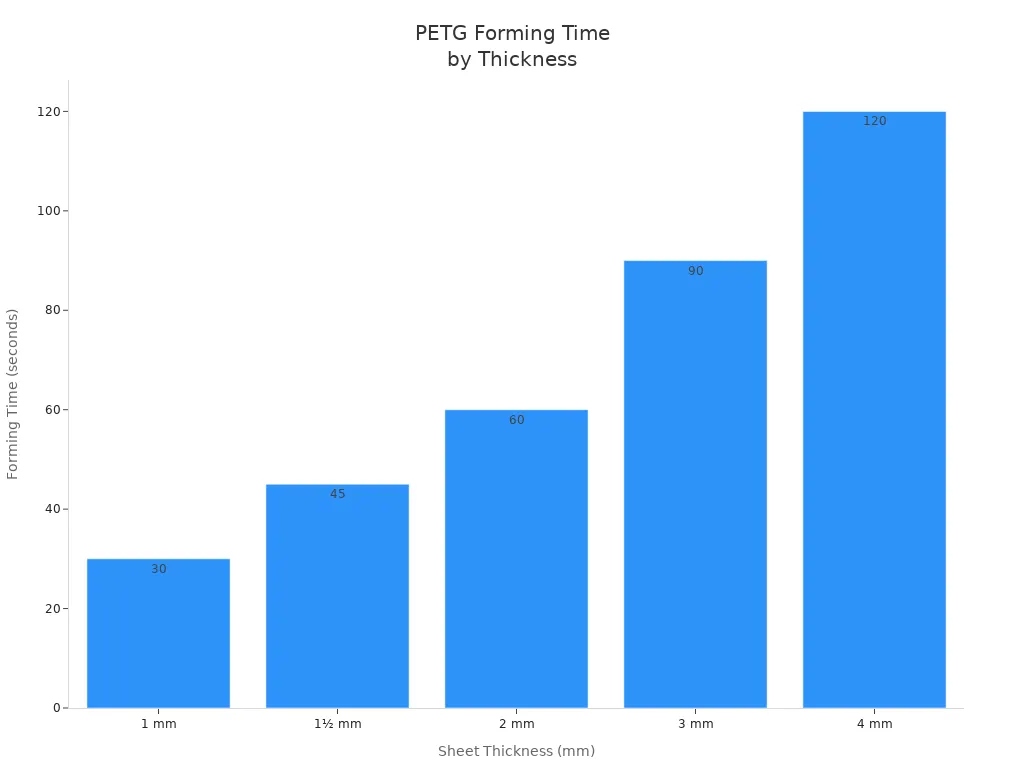
| Material | Forming Ease | Mold Release Success |
|---|---|---|
| PETG | Very easy | High |
| Styrene | Easy | Medium |
| PET | Stiff | Lower |
Tip: PETG helps you save time and money when forming big sheets.
Recycling is good for the planet and your wallet. PET is the best for recycling. It uses recycling code #1 and gets recycled a lot. PETG can be recycled, but not everywhere accepts it. Styrene is harder to recycle and costs more to throw away.
PET: Recycling code #1, gets recycled a lot, cheap to get rid of.
PETG: Can be recycled, but not always accepted.
Styrene: Hard to recycle, costs more to dispose.
Picking PET helps you save money and protect the environment.
You want to find the cheapest vac formed plastic for your project. Many online stores and specialty suppliers offer affordable sheets. Here’s a quick look at some popular options:
| Supplier | Product Description | Price |
|---|---|---|
| MY YARD | PET Sheet - 19.75" x 12" x 0.01" (50 sheets) | $99.00 |
| MY YARD | PET Sheet - 19.75" x 12" x 0.02" (30 sheets) | $74.00 |
| MY YARD | PET Sheet - 12" x 8" x 0.01" (50 sheets) | $49.00 |
| MY YARD | PET Sheet - 12" x 8" x 0.02" (30 sheets) | $54.00 |
| Mayku | PETG Transparent Sheet Pack - 1mm (10 sheets) | $59.99 |
| Vaquform | VFlex Forming Sheets - 12 Pack - 1.50mm | $55.00 |
You can also check dental supply marketplaces for vacuum forming for free samples or small packs. Stores like Burkhart Dental Supply and Practicon sell cost-effective materials for dental molds, but you can use them for props or DIY projects too.
Tip: Always compare prices and shipping fees. Some suppliers offer better deals if you buy more at once.
Buying in bulk helps you stick to your budget. Many suppliers give discounts when you order large amounts of plastic. Here’s a quick guide to bulk pricing:
| Quantity Range | Price per kg |
|---|---|
| 500 - 4999 kilograms | $4.80 |
| 5000 - 9999 kilograms | $4.50 |
| >= 10000 kilograms | $4.00 |
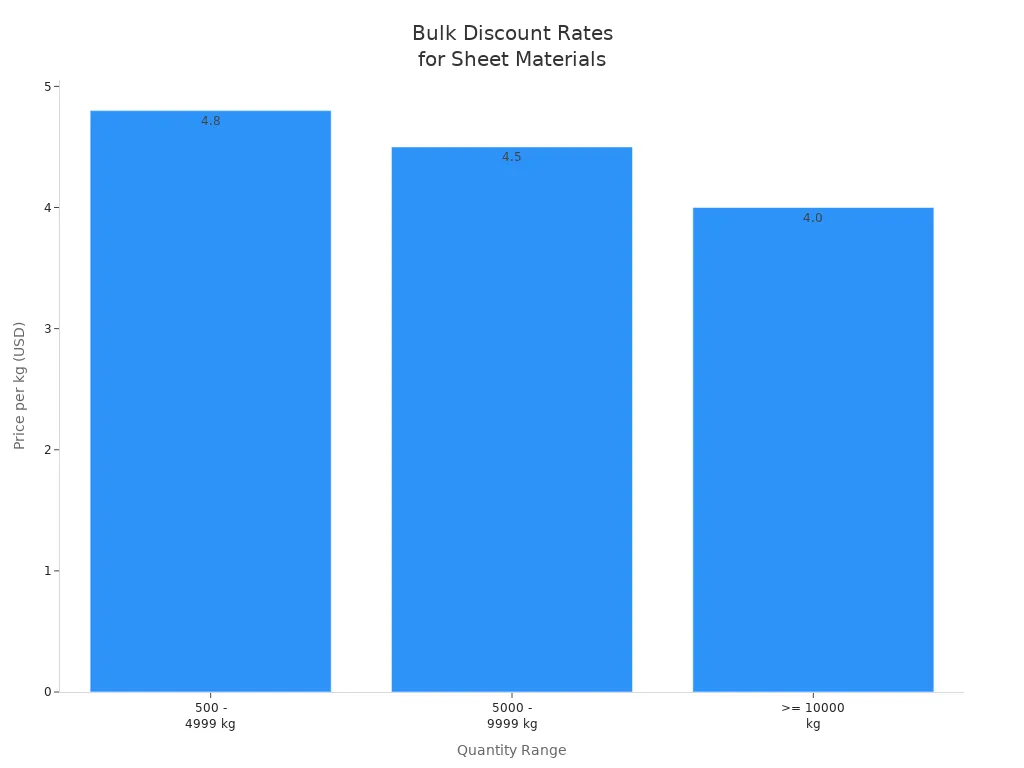
You can pick from many thickness options, from thin sheets for vacuum forming for free test runs to thicker sheets for sturdy parts. Wooden molds work well for prototyping and keep your costs low. If you want affordable and cost-effective materials, always ask about bulk deals and thickness choices.
Note: Thinner sheets cost less and heat up faster, which is great for quick tests or learning vacuum forming for free.
If you want to spend less, try PET, PETG, or styrene. Styrene is good for hobby projects and DIY work. PETG is strong, so businesses like it. Think about finish and durability before you choose. Here are some ways to save money:
| Strategy | Description | Potential Savings |
|---|---|---|
| Buying Overstocks | Buy extra inventory for less money | You can save a lot |
| Closeouts | Get items that stores stopped selling | You save even more |
Pick the material that works for you. Always look at prices to get the best deal.
You can use a sharp utility knife or scissors for thin sheets. For thicker sheets, try a fine-tooth saw. Always wear safety gloves.
Yes! You can paint most vac formed materials. Clean the surface first. Use spray paint or acrylics for the best results.
PET and PETG are food-safe. You often see them in food trays and containers. Styrene is not usually used for food packaging.


