
Views: 0 Author: Site Editor Publish Time: 2025-07-07 Origin: Site
In the world of modern manufacturing, creating plastic products with precision and efficiency is crucial. Have you ever wondered how products such as plastic trays, car parts, or even medical packaging are made? The process behind these products is called vacuum forming, and it relies heavily on a vacuum forming machine. This process has been a cornerstone of manufacturing for decades due to its affordability, versatility, and ability to produce high-quality items. But how does a vacuum forming machine actually work, and what makes it so vital to industries worldwide?
In this article, we will explore the mechanics of vacuum forming machines, the steps involved, the types of products they create, and their advantages and limitations. By the end of this article, you will have a comprehensive understanding of vacuum forming machines and why they are indispensable for various sectors such as automotive, packaging, and medical industries.
A vacuum forming machine is a specialized tool used in the process of thermoforming, where heat and vacuum pressure are combined to mold plastic sheets into specific shapes. In simple terms, it involves heating a flat sheet of plastic until it becomes soft and then using a vacuum to pull the plastic over a mold, shaping it into the desired form. The process is popular due to its cost-effectiveness and the relatively simple technology involved, making it accessible for both small-scale and large-scale manufacturing.
This process is commonly used to create a range of products, from packaging to automotive parts and medical devices. One of the key advantages of vacuum forming is its ability to produce custom parts with minimal tooling costs, allowing manufacturers to produce complex shapes quickly and efficiently. But how does this machine work in practice? Let's break down the process step by step.
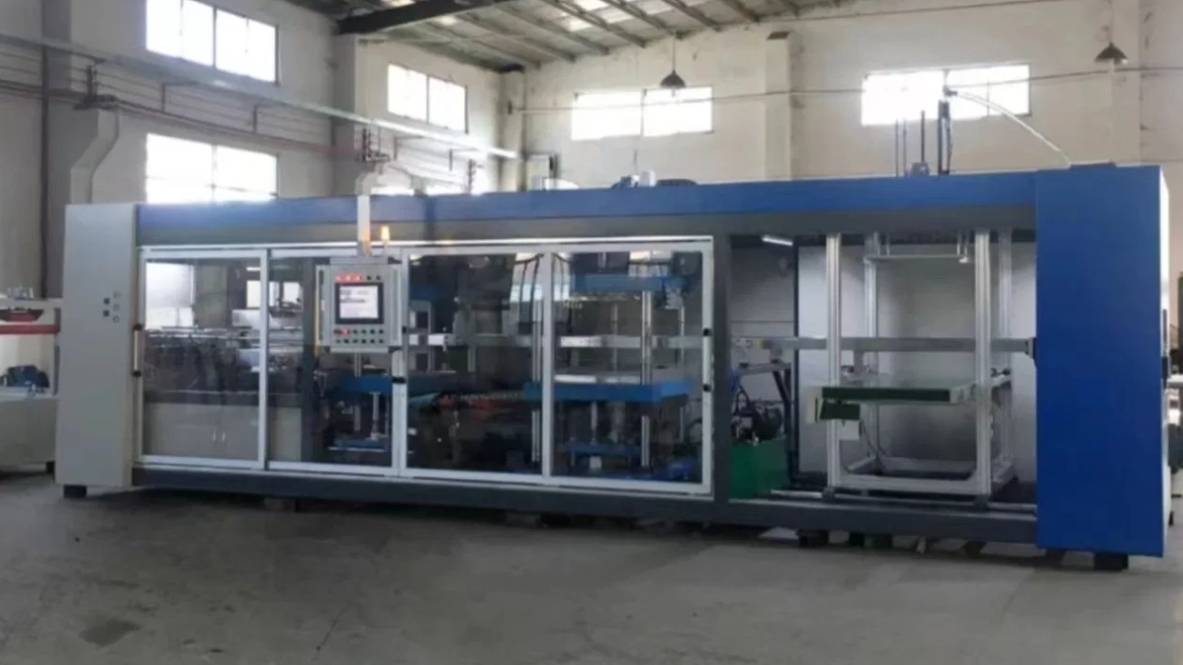
The vacuum forming machine operates through a series of coordinated steps that transform a flat sheet of plastic into a precisely shaped part. Below, we outline the core stages of the process to give you a clearer understanding of how these machines work.
The first step in the vacuum forming process involves securing the plastic sheet onto the machine. A sturdy clamp holds the plastic sheet tightly against a frame. The clamping system is essential to prevent the plastic from moving or sagging during the heating and forming process. In industrial-grade machines, this clamping system can hold plastic sheets that are up to 10mm thick. However, in smaller machines, such as DIY models, the clamp might only handle thinner sheets. The goal is to ensure the plastic stays perfectly flat and secure as it’s heated.
Once the plastic is clamped, the next step is to heat it to the correct temperature. Vacuum forming machines use various types of heating elements, such as infrared heaters, to evenly heat the sheet. The plastic must reach a temperature where it becomes pliable but not too hot to distort or burn. The heating elements are often divided into several zones, allowing manufacturers to control the heat distribution more accurately.
The duration of the heating process depends on the material being used and the thickness of the sheet. For instance, thicker materials take longer to heat up than thinner ones. The plastic sheet is typically heated from above, ensuring it softens uniformly. This step is crucial because uneven heating can lead to defects in the final product.
Once the plastic has been heated, it is ready to be molded. This is where the magic happens: a vacuum pump is activated to remove the air between the mold and the plastic sheet. The vacuum sucks the heated plastic sheet into the mold, ensuring that it conforms to the shape of the mold's contours. The vacuum pressure pulls the plastic tightly against the mold, ensuring a high level of detail and precision.
The vacuum forming machine can be equipped with different types of molds, including male (positive) and female (negative) molds. In male molds, the plastic is pulled over the outside, forming the inner dimensions, while in female molds, the plastic is pulled inside the mold to form the outer dimensions. Depending on the design, the machine can switch between these mold types to create different kinds of parts.
After the plastic has been pulled over the mold, it needs to cool and solidify. The cooling process is essential for ensuring that the plastic retains its shape. Cooling fans are often employed to speed up the process. Some machines even use spray mists of water to accelerate cooling, especially for larger items. The plastic must remain at a stable temperature during cooling to avoid warping or distorting.
Cooling times vary based on the material and the thickness of the plastic. Thicker materials take longer to cool than thinner ones, but the cooling process is crucial for ensuring that the plastic stays firmly in place once the vacuum is released.
Once the plastic has cooled and solidified, it is removed from the mold. However, the product may still have excess plastic around the edges. This extra material is trimmed off using various cutting tools, such as rotary trimmers, die-cutters, or mechanical presses. This step is crucial for ensuring that the final part has clean edges and is ready for use.
Additionally, the part may undergo finishing processes, such as surface polishing, painting, or adding textures. In some cases, printing or decorating the surface of the plastic may also be required, especially for consumer products like packaging or signage.
The vacuum forming machine can work with a variety of thermoplastic materials. These are plastics that become soft and pliable when heated, allowing them to be shaped over a mold. Some of the most commonly used materials in vacuum forming include:
Polycarbonate (PC): Known for its toughness and impact resistance, polycarbonate is often used for creating durable products like machine parts, automotive components, and protective covers.
Polystyrene (PS): This versatile plastic is lightweight, rigid, and affordable, making it ideal for products such as food packaging, disposable cups, and trays.
Polypropylene (PP): Offering excellent resistance to heat, fatigue, and chemicals, polypropylene is commonly used in packaging, automotive, and medical applications.
Polyvinyl Chloride (PVC): PVC is durable, easy to process, and resistant to chemicals, making it ideal for products like signage, flooring, and medical components.
Polyethylene (PE): Known for its flexibility and resistance to chemicals, polyethylene is commonly used for food packaging, storage containers, and protective equipment.
Acrylic (PMMA): Acrylic is a transparent, shatter-resistant plastic commonly used in applications requiring clarity, such as signage, displays, and protective covers.
Each of these materials has unique properties that make them suitable for different applications. For instance, polycarbonate is often chosen for its strength and durability, while polystyrene is preferred for its cost-effectiveness in high-volume packaging production.
Different vacuum forming machines are designed to handle various production scales and complexities. Depending on the needs of the manufacturer, different machines may be used:
DIY vacuum forming machines are typically small, entry-level machines ideal for hobbyists and small businesses. These machines are designed for smaller-scale production, with limited features and capabilities. They are perfect for prototyping or low-volume production, such as creating custom toys, masks, or packaging. The heating system is usually simple, and the vacuum pump is not as powerful as those in industrial machines.
Tabletop machines are more robust than DIY models and can handle larger production volumes. These machines are commonly used in industries like automotive and aerospace for creating parts such as dashboards, vents, and panels. The heating elements in these machines are more powerful, and the clamping system can handle larger plastic sheets.
Single heater machines are suitable for smaller products that require less heat to form. These machines typically have one heater and are used for items like food packaging and small consumer goods. They are efficient, affordable, and ideal for companies that need to produce low to medium volumes.
Double heater machines offer enhanced temperature control, making them ideal for products requiring precise heating, such as medical components, automotive parts, and consumer electronics. With two heaters, these machines can heat the plastic more evenly and consistently, allowing for more complex and detailed products.
The vacuum forming machine is used in various industries to create a wide range of products. Some common applications include:
From bumpers to dashboard panels, many automotive components are made using vacuum forming. The process allows for the creation of lightweight, durable parts with intricate details, making it ideal for automotive manufacturers.
Vacuum forming is commonly used to produce blister packs, clamshell packaging, and trays. This method is particularly well-suited for packaging products that need to be securely held in place, such as electronics, food items, and medical devices.
In the medical field, vacuum forming is used to create items like medical trays, clamshells, and protective covers. The ability to use sterilizable materials like PETG and PVC makes vacuum forming an ideal choice for producing medical components that must meet strict hygiene standards.
From toys to household appliances, vacuum forming is used to produce a wide variety of consumer products. The flexibility of the process allows for the creation of complex shapes with consistent quality, making it ideal for manufacturers of consumer goods.
Cost-Effective: Vacuum forming is an affordable manufacturing process, especially for small to medium production runs. It requires minimal tooling and setup costs compared to other methods like injection molding.
Speed: The process is quick, and products can be produced in a matter of hours. This makes vacuum forming ideal for rapid prototyping and short production cycles.
Flexibility: The ability to create custom molds and products with ease allows for a high degree of design flexibility. Manufacturers can experiment with different shapes and materials to create unique products.
Consistency: Once a mold is created, the process can produce identical parts consistently, ensuring high-quality output.
Limited to Thin-Walled Products: Vacuum forming is best suited for producing products with thin walls and simple shapes. It is less effective for parts that require thick walls or intricate designs.
Material Limitations: Not all plastics are suitable for vacuum forming. Some materials may not perform well under the heat and pressure applied during the process.
Production Speed: While vacuum forming is relatively fast, it may not be the most efficient method for mass production, especially when large quantities are needed.
In conclusion, vacuum forming machines are indispensable tools in the manufacturing process, allowing industries to create a wide variety of products quickly and affordably. From automotive parts to medical equipment, vacuum forming offers numerous benefits, including cost-effectiveness, speed, and design flexibility. By understanding the mechanics of this process and choosing the right materials and machines, manufacturers can leverage vacuum forming to create high-quality products with precision.
If you are looking to invest in a vacuum forming machine that can handle your production needs efficiently, Wenzhou Mingdu Machinery offers reliable and high-quality solutions to help streamline your manufacturing processes. Their machines are designed to meet the demands of a wide range of industries, ensuring that you can create durable and precise products every time.
A: The main advantage of a vacuum forming machine is its affordability, speed, and ability to produce high-quality parts with minimal tooling costs.
A: Vacuum forming is ideal for producing parts with simple shapes and thin walls. However, for parts requiring deep draws or intricate details, pressure forming may be more suitable.
A: Vacuum forming machines can handle various thermoplastics, including polycarbonate, polystyrene, polypropylene, PVC, polyethylene, and acrylic.
A: Vacuum forming is best suited for low to medium-volume production. For mass production, injection molding or other methods may be more cost-effective.
A: To achieve the best results, it’s important to use the right material, maintain proper temperature control, and use high-quality molds. Regular maintenance and careful handling of the plastic sheet are also crucial for optimal performance.


