
Views: 0 Author: Site Editor Publish Time: 2025-08-21 Origin: Site
You should know how forming machines affect factories today. The world market for metal forming tools was $27.59 billion in 2024. This number is growing fast. It is important to learn how a forming machine works. You also need to know why safety features are important.
| Reason | Why It Matters |
|---|---|
| Production quality | Forming makes products last longer. |
| Safety features importance | Knowing safety keeps workers safe. |
| Efficiency and precision | Forming helps make more products fast. |
Forming machines change metal and plastic into products. They do not cut the material. This helps save resources and makes less waste.
Safety features in forming machines keep workers safe from harm. These features help make the workplace safer.
Automation and new technology like CNC and robotics help work go faster. They also make the work more exact and efficient.
Picking the right forming machine, like roll forming or vacuum forming, is important. It helps get the right shape and good quality in products.
Keeping forming machines in good shape is very important. Regular care helps them last longer and stops expensive problems.

A forming machine shapes things like sheet metal and plastics. It turns flat sheets into 3D objects. The machine presses, bends, or stretches the material. It does not cut away any material, so there is less waste. In metal fabrication, forming machines make strong and exact parts. Metals and plastics can change shape when you use force. After you shape them, they keep their new form. This process is good for making many items fast. It helps save both time and resources.
Tip: Forming machines help you make lots of parts fast. You do not make much waste. You can shape materials into hard forms with less work.
Sheet metal forming uses bending, pressing, and stretching.
Flat sheets become useful shapes.
The material stays strong during the process.
Forming machines are important in today’s factories. You find them in places that make cars, appliances, and packaging. Over time, forming machines got better with new technology. Automation lets machines do the same job over and over. This means people can do harder tasks. CNC technology helps you shape parts with great accuracy. Robotics and robotic systems make work faster and more exact. 3D printing lets you make special designs quickly. New techniques help you work faster and make more products. CAD and laser-guided technology help put parts in the right place.
| Technology | Contribution to Manufacturing Processes |
|---|---|
| Automation | Machines do the same jobs, so people do harder work. |
| CNC Technology | Gives machines control for making parts very exact. |
| Robotics | Makes work faster and lowers mistakes by using smart machines. |
| Robotic Systems | Speeds up assembly and makes it more accurate with sensors and tools. |
| 3D Printing | Lets you make detailed parts fast and saves money. |
| Cutting-edge Techniques | Makes production faster and helps you make more items. |
| CAD and Laser-guided Tech | Helps put parts in the right spot and makes assembly better. |
You need forming machines to keep factories working well. These machines help you make products quickly and with good quality.
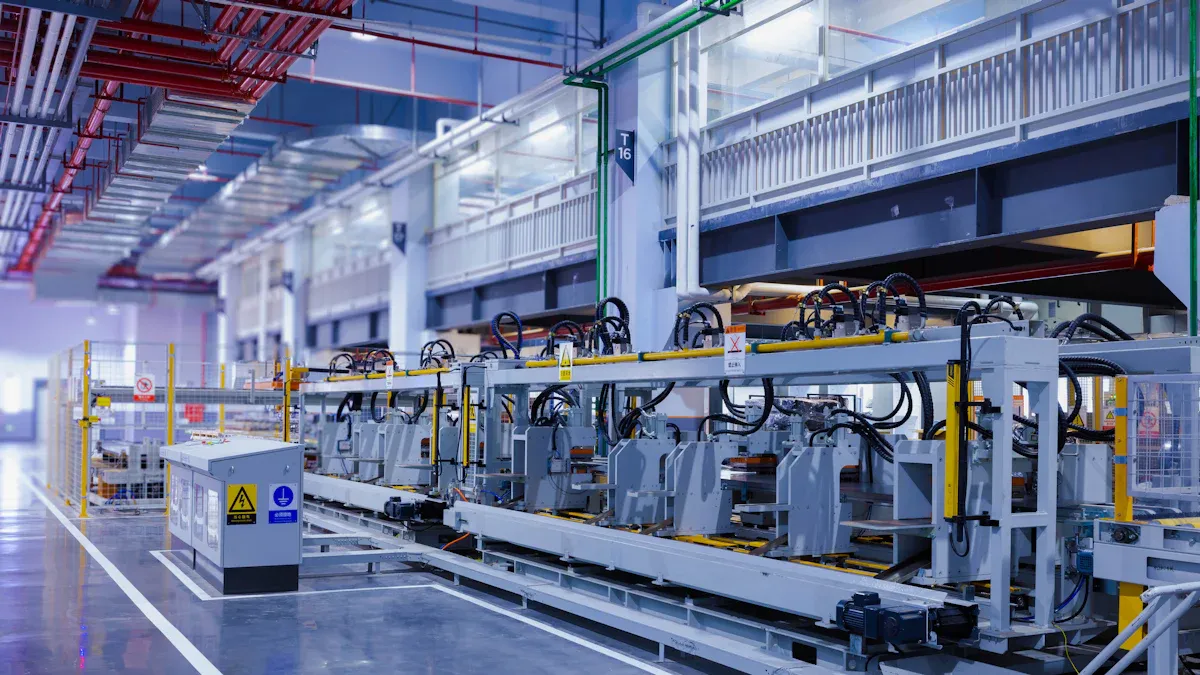
When you visit a modern factory, you see many forming machines. Each machine shapes materials in its own way. You need to know the main types to pick the right tool. Here are the most common forming machines used today:
Metal Rolling: This process presses metal between two cylinders. It makes metal thinner and smoother.
Metal Extrusion: You push hot metal through a die. This makes long pieces with the same shape.
Metal Forging: You press metal between dies. This makes strong parts for tough jobs.
Metal Drawing: You pull metal through a die. This stretches it into detailed shapes.
Metal Stamping: You press metal sheets between dies. This forms many parts quickly.
Let’s learn about some important forming machines you might use.
A roll forming machine uses rollers to shape long strips of metal. You feed metal through the rollers. Each roller bends the metal a bit more. At the end, you get the final shape. This works best for making parts with the same cross-section, like beams or channels.
Tip: Roll forming equipment helps you make strong, light parts. You also make less waste.
Roll forming machines are used in many industries:
Automotive manufacturing
Aerospace manufacturing
Construction
Appliance manufacturing
Consumer products (like bicycles and lawnmowers)
Art and sculpture
You also use roll forming equipment to make:
Solar panel mounting structures
Hat channels, C-channels, and Z-purlins for solar farms
Ballast trays for commercial roofs
Flooring, window and door frames, roof trusses
Roll forming machines have many benefits:
Tight tolerances and smooth finishes
In-line fabrication for complex shapes
High efficiency for big production runs
Cost savings when making lots of parts
Consistent quality and precision
Flexibility for different metals and sizes
Strong, lightweight designs
Low power use and less noise
You should use a roll forming machine when you need many parts fast and with good quality.
A vacuum forming machine shapes plastic sheets using heat and suction. You heat the plastic until it gets soft. Then you pull it over a mold and use a vacuum to suck out the air. The plastic takes the shape of the mold and cools into a solid part.
Vacuum forming machines are used in many industries. Here is a table with some common uses:
| Industry | Application |
|---|---|
| Automotive | Body panels, interior trim |
| Medical | Sterile packaging, equipment covers |
| Aerospace | Precision components |
| Consumer Goods | Packaging, display trays |
| Telecommunications | Custom housings, panels |
| Security | Enclosures, shields |
| Cosmetics | Packaging, display trays |
| Electronics | Casings, mounting panels |
| Sporting Goods | Shells, gear |
| Food and Beverage | Packaging, containers |
You can use many types of plastic with a vacuum forming machine. Some common plastics include:
ABS (acrylonitrile butadiene styrene)
PETG (polyethylene terephthalate glycol)
PVC (polyvinyl chloride)
Polycarbonate
Polypropylene
HIPS (high-impact polystyrene)
Vacuum forming is a quick way to make custom plastic parts. You often use it for packaging, trays, and covers.
A stretch forming machine pulls and bends metal sheets over a die. You clamp the metal at both ends and stretch it until it fits the die. This process is good for making large, curved parts.
Stretch forming machines are used in these sectors:
| Sector | Primary Uses |
|---|---|
| Aerospace | Aircraft skins, cowls, airframe parts |
| Automotive | Curved profiles for car parts |
| Marine | Boat and ship hulls, components |
| Industrial | Conveyors, equipment parts |
Stretch forming machines shape big metal sheets in one step. You get strong parts with little springback. This means you do not need much extra finishing.
Note: Stretch forming machines work differently from roll forming machines and vacuum forming machines. Stretch forming pulls metal to its limit and wraps it around a die. Roll forming uses rollers to bend metal. Vacuum forming heats plastic and pulls it over a mold.
There are other forming machines that help shape metal and plastic in special ways. Some of these are:
Bead rollers: Add stiff lines or designs to sheet metal.
English wheels: Shape smooth curves in metal sheets.
Shrinker stretchers: Shrink or stretch metal edges for custom shapes.
Press forming machines: Use a press and die to shape metal sheets.
Metal drawing machines: Pull metal through a die for detailed parts.
Metal stamping machines: Press metal sheets between dies for mass production.
Each forming machine has its own job. You should pick the right one based on the shape, material, and number of parts you need.
Forming processes help shape materials into useful things. Each forming machine uses its own way to do this. The main goal is to change the shape, not cut away material. In metal forming, you use rollers, dies, or molds. A die works like a mold and shapes metal when pressed by a punch. This happens in die forming, where metal sheets are bent or stretched. Roll forming is another way to shape metal. You push a strip of metal through rollers. Each roller bends the metal a bit more. At the end, you get the shape you want. This method is good for making many long parts.
For plastics, vacuum forming is often used. You heat a plastic sheet until it gets soft. Then you stretch it over a mold. A vacuum pulls the plastic tight to the mold. The plastic cools and keeps its new shape. This process makes light parts fast.
There are some big differences between metal forming and plastic forming. Metal forming gives you strong parts that handle heat and carry electricity. Plastic forming makes lighter parts that are easy to shape. These parts need less finishing. The table below shows more differences:
| Aspect | Metal Forming | Plastic Forming |
|---|---|---|
| Advantages | Strength, conductivity, heat resistance | Ease of forming, reduced finishing, lighter weight |
| Disadvantages | Secondary operations, design limits, high tooling | Limited wear resistance, structural weaknesses |
A forming machine has many important parts. Each part helps control the process and get good results. Here are the main parts you find in most forming machines:
Machine base
Roller stands and tooling
Drive system
Front-end equipment
Strip accumulators and slack loops
Roll die mill
Cutoff and discharge
Secondary operations
How you set up these parts changes how well the machine works. Good lubrication saves energy. Clean parts last longer and break less. Easy-to-check features help with maintenance and keep the machine running well.
Forming machines give you many good things in factories. They help you work faster and make better parts. You do not need as many workers, so you save money. These machines can shape lots of materials for many jobs. Some machines make two parts at the same time, so you use less space. Every part you make is strong and high quality.
Here is a table that shows the main advantages of using forming machines in manufacturing:
| Advantage | Description |
|---|---|
| Increased Efficiency | You can make two shapes at once. This helps you finish jobs faster and make more parts. |
| Cost Savings | You spend less money on workers and time, so your business saves money. |
| Versatility | You can make many shapes and sizes for different jobs. |
| Space Optimization | One machine can do more work, so you need less room. |
| Improved Quality | You get parts that are always the same and meet tough rules. |
Forming helps you make lots of parts fast. This keeps your customers happy. You waste less material, so you save money and help the planet.
Forming is used in almost every kind of factory. Many businesses use forming machines to make important things. Here is a table that shows where you find forming in manufacturing and what products you get:
| Industry | Products Manufactured |
|---|---|
| Construction | Beams, wall panels, purlins, metal roofing |
| Automotive | Roof rails, door beams, car frames |
| Energy | Solar panel frames and mounting systems |
| Transportation | Container frames, train siding, airplane wing edges |
| Agriculture | Panels for farm buildings, animal feeding systems |
You also see forming in packaging and airplanes. For example, you use forming to make food trays, airplane panels, and curved parts for RVs. These things are strong, light, and made for special jobs.
Tip: If you pick the right forming machine, you can make almost any shape for your job. This helps you do better in your business and make great products.
When picking a forming machine, look at important features. The right machine helps you work faster and make better products. Think about automation, size, flexibility, and digital controls. Machines with automation and AI can change roller pressure and alignment as you work. This makes your process faster and cuts down on waste. You want machines that let you switch profiles quickly or make two shapes at once.
Here is a table that shows different machine setups and what they do best:
| Configuration Type | Best For | Key Features |
|---|---|---|
| Single-Sided Roll Forming Machine | Simple metal profiles | Basic roller stations, cost-effective |
| Double-Sided Roll Forming Machine | Two profiles at once | Dual-track forming, high efficiency |
| Multi-Profile Roll Forming Machine | Quick profile changes | Flexible roller sets |
| Cassette-Type Roll Forming Machine | Custom jobs | Interchangeable roller cassettes |
| Flying Cut-Off Roll Forming Machine | Fast production lines | On-the-fly cutting system |
Match the machine to the material you use. Cold rolled steel works well for roofing. Aluminum is good for light parts in aerospace.
Tip: Pick forming machines with digital controls and quick-change tools. These features help you save time and make more products.
Keep your forming machine in good shape to avoid problems. This also keeps workers safe. Every day, check oil levels, look for wear, tighten bolts, clean, and lubricate moving parts. Test safety features daily and write down what you do. Each week, clean the machine well, check electrical systems, inspect belts and pulleys, and test safety features.
Here is a table with common maintenance jobs:
| Frequency | Maintenance Task | Description |
|---|---|---|
| Daily | Check oil levels | Make sure oil is at the right level. |
| Daily | Inspect for wear | Look for cracks or rust. |
| Daily | Tighten bolts | Secure any loose bolts. |
| Daily | Clean the machine | Remove dust and debris. |
| Daily | Lubricate parts | Prevent friction and wear. |
| Daily | Check safety features | Test emergency stops and guards. |
| Weekly | Clean thoroughly | Deep clean rollers and guides. |
| Weekly | Inspect electrical system | Check wires and cables. |
| Weekly | Check alignment | Make sure everything lines up. |
Safety is very important in factories. Protect yourself from moving parts, sharp edges, and flying debris. Always wear gloves and safety glasses. Keep walkways clear and use guards on machines. Train everyone to use emergency stops and follow lockout/tagout rules.
New trends in forming are changing how factories work. Digital sheet forming lets you shape metal from computer designs. This saves money and makes work faster. Automation and AI help you make fewer mistakes and use less material. IoT sensors track machine performance all the time. You can manage production from anywhere with cloud-based systems. Energy-efficient motors and solar-powered lines help you save power and lower pollution. Water-based lubricants and recyclable metals help protect the environment.
Here is a table with some new innovations:
| Innovation/Trend | Description |
|---|---|
| Digital Sheet Forming | Forms metal from digital designs, saves time |
| Automation and AI | Boosts precision, reduces waste |
| IoT Sensors | Tracks machine performance in real time |
| Cloud-Based Management | Allows remote monitoring and predictive maintenance |
| Energy-Efficient Motors | Cuts power use |
| Solar-Powered Lines | Reduces carbon footprint |
| Water-Based Lubricants | Safer for workers and the environment |
Note: If you use new forming technology, you can make your factory safer, faster, and better for the planet.
You now know how a forming machine changes materials. It helps factories make strong parts fast and with less waste. Forming is used in many places, like packaging and airplanes. Try to learn about new forming technology and ways to use it. Use what you know when picking machines or planning projects. Look for more choices if you need special forming help.
Tip: Keep learning about forming to do well in factories.
You can use metals like steel, aluminum, and copper. You can also use plastics such as ABS, PVC, and polycarbonate. Always check your machine’s manual for the best material choices.
You should check your machine daily for oil, wear, and safety. Clean and inspect it weekly. Regular care helps your machine last longer and work better.
Some machines let you switch roller sets or dies. You can make many shapes with these. Look for machines with quick-change features for the most flexibility.
Forming machines have moving parts and sharp edges. You must use guards, wear safety gear, and follow all safety rules. This keeps you and your team safe.
Automation helps you make parts faster and with fewer mistakes. You save time and money. You also get better quality and more consistent results.

