
Views: 0 Author: Site Editor Publish Time: 2026-08-21 Origin: Site
Selecting the wrong manufacturing process can derail your entire product launch. You risk misaligned tooling budgets, unacceptable cycle times, or sudden structural failure in the end-use environment. For engineers and procurement teams, making the correct choice goes far beyond simple material thickness. It dictates the entire manufacturing methodology, forcing critical decisions between roll-fed automation and sheet-fed processing. This choice ultimately controls your scalability and return on investment. This guide breaks down the technical thresholds, economic realities, and compliance considerations required to specify the correct thermoforming process for your project. You will understand precisely how material properties align with production volume demands. We will show you exactly how to evaluate your tooling options and navigate strict industry standards before you commit to a physical prototype.
The Technical Divider: The industry-standard threshold separating thin and heavy gauge thermoforming is typically 0.060 inches (1.5mm).
Process Mechanics: Thin gauge relies on continuous, roll-fed plastic for high-volume, rapid-cycle production, whereas heavy gauge utilizes individual pre-cut sheets for low-to-medium volume, structurally rigid components.
Tooling Economics: Thin gauge requires multi-cavity tooling optimized for speed, which can carry high upfront costs but ultra-low per-part costs. Heavy gauge tooling is generally single-cavity, offering lower entry costs but higher per-part material and labor costs.
Application Scope: Thin gauge dominates disposable or retail packaging; heavy gauge is engineered for permanent equipment enclosures, automotive panels, and medical device housings.
The manufacturing industry relies on a specific measurement to separate these two distinct methods. The universal benchmark sits exactly at 0.060 inches, or 1.5 millimeters. Materials thinner than this standard fall into the lighter category. Materials thicker than this mark enter the heavy category. However, many production facilities operate in a "medium gauge" gray area. This intermediate zone spans from 0.060 to 0.120 inches. Your specific equipment capabilities dictate how you handle materials falling inside this overlapping range.
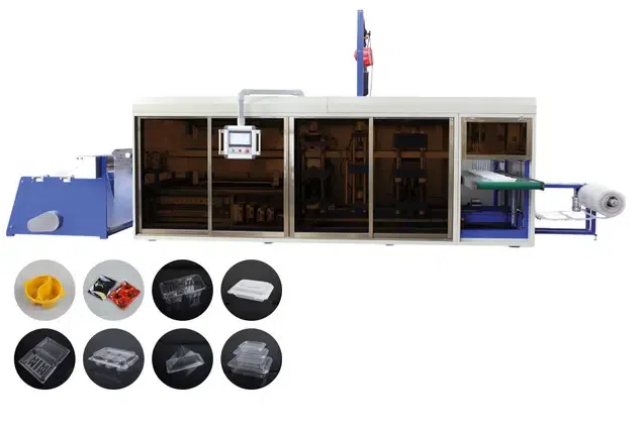
The primary difference between the two processes lies in how the machinery handles the raw plastic. Continuous roll-fed systems drive the lighter process. Operators feed extruded plastic rolls directly into sequential heating and forming stations. This continuous setup works perfectly for pliable materials. Common examples include PETG, PVC, and thin High-Impact Polystyrene (HIPS). In contrast, the heavier process relies entirely on individually loaded, pre-cut plastic sheets. You typically use highly rigid materials for this method. Popular choices include ABS, Polycarbonate, or High-Density Polyethylene (HDPE). The machine clamps a single sheet tightly in place. Overhead and lower heaters then warm the plastic until pliable. Finally, the system forms the heated sheet over temperature-controlled aluminum tooling using intense vacuum pressure.
Cycle times highlight another massive divide between these manufacturing methods. Automated roll-fed machines execute highly rapid cycles. They often heat, form, trim, and eject multiple parts in mere seconds. This incredible speed allows for massive daily production outputs. The heavier process operates at a much slower, deliberate pace. Heating a thick polycarbonate sheet takes considerable time. Cooling the newly formed part takes even longer. Rushing the cooling phase causes the thick plastic to warp out of tolerance. Therefore, a single heavy production cycle can span several minutes.
Feature | Lighter Process (Roll-Fed) | Heavier Process (Sheet-Fed) |
|---|---|---|
Material Format | Continuous extruded rolls | Individual pre-cut sheets |
Typical Thickness | Under 0.060 inches (1.5mm) | Over 0.060 inches (1.5mm) |
Common Materials | PETG, PVC, thin HIPS | ABS, Polycarbonate, HDPE |
Cycle Time | Seconds per cycle | Minutes per cycle |
Automation Level | Highly automated inline trimming | Manual or CNC secondary routing |
Understanding the inverse relationship between upfront tooling expenses and per-unit production costs is crucial. You must evaluate tooling ROI carefully to avoid severe budget overruns. Engineers who master the nuances of thin gauge vs heavy gauge thermoforming consistently deliver projects under budget. The lighter process demands significant initial capital. Engineers design complex, multi-cavity aluminum tools to withstand continuous, high-speed operation. These tools feature intricate water-cooling channels. Building these advanced molds requires expensive precision machining and weeks of engineering time.
However, this high upfront investment unlocks ultra-low per-part costs. The automated nature of roll-fed machines minimizes labor overhead drastically. You only see a viable return on investment when your production volumes remain exceptionally high. A reliable evaluation criterion suggests minimum runs of 50,000 units. Volumes below this threshold rarely justify the expensive multi-cavity tooling required for thin gauge thermoforming.
Conversely, tooling for thicker materials offers a remarkably lower barrier to entry. You usually rely on simpler, single-cavity tools. Prototyping phases might even use inexpensive wood or composite molds before you commit to cast aluminum. This lower entry cost makes the process highly cost-effective for short production runs. Specifying heavy gauge thermoforming fits perfectly when you only need a few hundred permanent parts per year.
You must also weigh the associated risk factors carefully. Slower cycle times inherently increase your labor costs per unit. Scrap rates impact your budget more heavily because each thick plastic sheet costs significantly more than a section of thin roll-fed plastic. As a result, the per-part cost remains relatively flat over time. If your product suddenly scales to massive volumes, producing thick parts via vacuum forming becomes inefficient. You might need to transition to injection molding to stay profitable at highly scaled volumes.
Different product lifecycles demand specific material performance characteristics. You must match your manufacturing method directly to the end-use environment. We often see costly project failures because teams specify an inadequate material thickness for a load-bearing application. Understanding how each process supports different product demands prevents these field failures.
Lighter materials excel in sterile and protective environments. They provide excellent, cost-effective solutions for tamper-evident retail packaging. Medical device manufacturers rely heavily on them to create sterile barrier systems. These flexible packages easily meet strict ISO 11607 compliance standards for medical device packaging. Electronics manufacturers also utilize them for static-dissipative shipping trays. However, these thin parts face strict physical limitations. They offer very low impact resistance. You should never use them for load-bearing structures. They also degrade quickly during long-term outdoor exposure.
Thicker materials deliver robust, permanent structural integrity. Engineers specify them for high-impact resistance and vital UV stability. You can easily achieve stringent UL flame-retardant ratings, including UL94 V-0, using specialized polycarbonate or ABS blends. These tough plastics serve as ideal replacements for heavy sheet metal. They also offer a cheaper, faster alternative to expensive fiberglass components. You frequently see them used in MRI machine housings, aerospace interiors, and heavy agricultural equipment panels.
Keep in mind the need for secondary operations. Thick components rarely exit the mold ready for final assembly. They almost always require extensive post-forming work. Technicians use advanced 5-axis CNC routing machines to trim the excess plastic safely. They cut precise mounting points, drill hardware holes, and ensure tight-tolerance edges.
Specify UV-capped ABS if your equipment enclosure lives outdoors in direct sunlight.
Use static-dissipative PETG for circuit board transit trays to prevent electrostatic discharge.
Verify your tool draft angles accommodate the thicker plastic to avoid material webbing during the draw.
Matching the exact process to your product guarantees optimal performance in the field. Industry applications distinctly separate into two different categories based on product lifespan and structural needs. Visualizing your end result helps you pick the right manufacturing avenue.
Lighter plastics absolutely dominate the retail and disposable markets. High-volume consumer goods rely entirely on rapid, continuous production to maintain profit margins. You should specify the lighter process for the following scenarios:
Retail clamshells and clear blister packs hanging on store display shelves.
Single-use food service containers, including deli trays, bakery boxes, and produce punnets.
Medical device dunnage and disposable surgical kit trays intended for single-use sterilization.
Thicker materials dominate the durable goods sector. These permanent parts must survive harsh handling, extreme weather, and constant daily use. You should specify the heavier process for the following robust applications:
Diagnostic equipment enclosures, such as blood analyzers and protective radomes.
Automotive dashboards, interior transit panels, and ATV body cowlings.
Kiosk housings, ATM bezels, and reusable material handling pallets used in industrial logistics.
A simple shortlisting logic simplifies the decision. Ask yourself what role the plastic plays in the customer's hands. If the plastic is merely the "packaging" meant to protect or display the real item, choose the lighter option. If the plastic component actually is the functional product itself, you almost certainly require the heavier, more robust process.
Engineers and procurement teams must align on project goals before cutting any aluminum tooling. Walking through a strict evaluation matrix prevents costly redesigns and wasted capital. Answer these four specific questions to finalize your strategy before requesting quotes.
Volume vs. Lifespan: Determine your production scale immediately. Is this a consumable item requiring hundreds of thousands of units every single month? Or are you building a permanent capital good requiring only 500 units annually? High volumes dictate continuous roll-fed machines.
Structural Demands: Evaluate the physical stress the part will endure. Does the component need to support internal weight? Will it endure blunt impacts on a factory floor? Does it house sensitive electronics requiring a rigid, protective shell? Structural demands push you strongly toward thicker, sheet-fed materials.
Aesthetic and Finish Requirements: Assess the visual expectations of the end-user. Does the part require custom color-matching? Do you need specific textured finishes to hide fingerprints in high-traffic areas? Thick plastics excel at providing high-gloss cosmetic surfaces straight from the mold, eliminating the need for expensive secondary painting.
Budget Allocation: Review your available capital strategically. Is your budget optimized for a high upfront tooling cost coupled with a very low unit cost? Or do you need a low initial tooling investment, accepting a higher per-unit cost in return?
The decision between manufacturing methods ultimately depends on a precise intersection of variables. Part thickness, production volume, and end-use structural requirements all play equal roles in your success. Selecting the lighter process ensures ultra-fast cycle times and exceptionally low unit costs for packaging applications. Choosing the heavier alternative provides the rigid durability necessary for permanent equipment enclosures and heavy-duty industrial components.
Your next step involves early collaboration. Advise your buying teams to engage with a manufacturing partner early in the design phase. Practice Design for Manufacturability (DFM) from day one. Before you request a final quote, prepare your 3D CAD models clearly. Outline your estimated annual volumes accurately to establish tooling expectations. Compile all necessary regulatory requirements, including UL flame ratings, FDA material compliance, or ISO medical standards. Presenting this complete data package ensures your partner provides highly accurate estimates and secures your project's long-term success.
A: Rarely. While it can be used for internal dividers or light non-structural covers, its lack of rigidity and impact resistance makes it unsuitable for permanent exterior enclosures. It degrades quickly under stress and offers zero load-bearing capabilities.
A: Yes, particularly for large, rigid parts in low-to-medium volumes (250 to 5,000 units annually). Heavy gauge thermoforming tooling is significantly less expensive and faster to produce than large steel injection molds. This makes it ideal for scaling durable goods without massive capital risk.
A: Most heavy gauge thermoforming equipment can handle sheets up to 0.500 inches (1/2 inch or 12.7mm) thick, though 0.060 to 0.375 inches is the most common operational range for industrial applications. Exceeding a half-inch requires highly specialized heating and cooling controls.


