
Views: 0 Author: Site Editor Publish Time: 2026-09-20 Origin: Site
Nameplate power ratings on thermoforming equipment often mislead buyers. They represent the maximum theoretical load required for safe electrical installation. They do not reflect actual running consumption. Relying on spec sheets alone leads to inaccurate operating expense forecasting.
Plant managers and procurement teams need precise energy measurement. Accurate data is critical for justifying retrofits. It also helps you compare new equipment vendors effectively. You cannot manage costs without knowing exactly what your machines consume during a live production cycle.
This guide explores how to capture empirical energy data. We will isolate power-hungry components and translate electrical readings into actionable metrics. You will learn specific methodologies to baseline your equipment. We will move away from theoretical numbers and focus on real-world factory floor measurements.
Many operators confuse a machine's connected load with its operating consumption. Connected load dictates the peak electrical requirement. It determines wire gauges, breaker sizes, and factory electrical infrastructure. However, a machine rarely operates at this absolute peak. Once heaters reach their target temperature, they cycle on and off. Motors draw peak current only during brief acceleration phases. If you estimate daily expenses using the nameplate kilowatt rating, you will drastically overestimate your energy bills. This calculation error often stalls essential capital equipment upgrades.
Energy data feeds directly into calculating your long-term operating budgets. Over a typical equipment lifecycle of five to ten years, electricity bills often surpass the initial purchase price. You must track empirical data to determine the true plastic forming production cost. Without measured data, manufacturers often apply a flat overhead percentage to all products. This practice obscures the profitability of individual production runs. Thicker materials require more heat and slow down cycle times. Measuring actual energy draw allocates costs fairly across different product lines.
Buyers must request empirical energy data when comparing different machine configurations. Do not accept vague marketing claims. A three-station machine and a four-station machine will display vastly different energy profiles. You need to run pilot tests. Ask vendors to measure the energy consumed while running your specific mold and material. Comparing actual energy test results provides a transparent metric. It allows you to select equipment based on financial reality rather than technical assumptions.
The heating tunnel dominates the electrical demand in any thermoforming process. Analyzing thermoforming heater power requirements reveals the largest opportunities for savings. Different heating elements display unique consumption profiles. Ceramic heaters are durable but take longer to heat up and cool down. They waste energy during standby periods. Quartz heaters react faster, offering better control. Halogen and infrared (IR) heating elements provide the most immediate response. They penetrate the plastic sheet efficiently. This rapid penetration reduces overall heating time. Shorter heating times directly lower the overall electrical draw per cycle.
The mechanical movement of indexers, platens, and plug assists requires significant power. Traditional machines rely heavily on pneumatic or hydraulic systems. These systems depend on central factory compressors or localized hydraulic pumps. Compressors run constantly, wasting massive amounts of energy. Modern servo-driven systems change this dynamic. Servo motors consume electricity only when actively moving a component. They hold their position efficiently using built-in brakes. Standby power consumption drops significantly with servo technology. Upgrading actuators directly impacts your bottom line.
Forming the plastic requires reliable vacuum pressure. Cooling the molded part demands high-volume airflow. Older vacuum pumps often run continuously. They dump excess capacity through relief valves. This continuous operation wastes electricity. Upgrading to variable frequency drive (VFD) controlled pumps solves this issue. VFDs adjust the motor speed to match the exact vacuum demand in real time. Cooling fans can also utilize VFDs. Matching fan speed to the ambient factory temperature and cycle time prevents over-cooling. It eliminates unnecessary electrical waste.
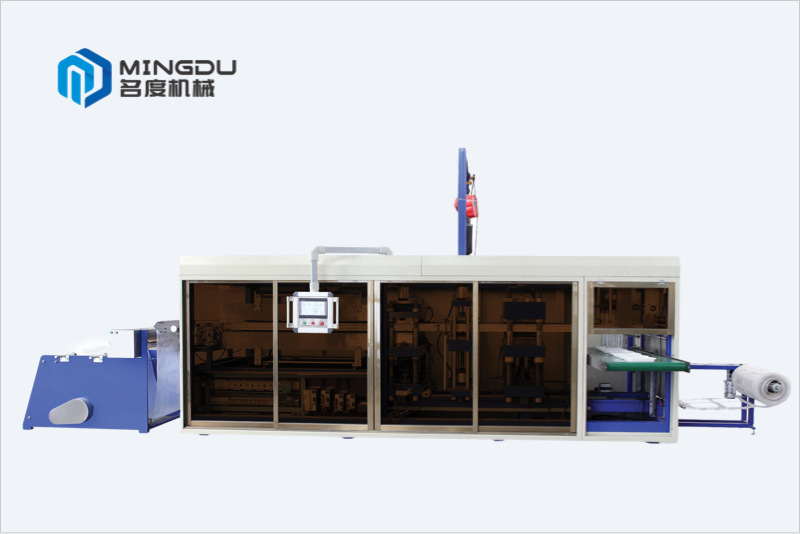
You cannot improve what you do not measure. Capturing accurate data requires specific hardware strategies. Choose a method based on your immediate goals and budget.
Portable analyzers are perfect for baseline audits. Maintenance teams use clamp-on ammeters and portable data loggers. You attach these clamps directly to the main power feed of the machine. The logger records voltage, current, and power factor over a set period. This method works best for troubleshooting specific issues. It also helps verify the current consumption of legacy equipment before committing to a retrofit. Spot audits provide a quick snapshot of machine health.
Spot audits have limitations. They only show a brief window in time. Permanent sub-metering offers continuous tracking. You install DIN-rail mounted energy meters directly inside the machine's electrical cabinet. These meters monitor individual circuits. Implementing inline machine power monitoring hardware isolates the heater draw from the motor draw. Continuous tracking links energy usage to real-time production shifts. It highlights inefficiencies caused by operator error or degraded components.
Modern factories demand system-level integration. New equipment often features programmable logic controllers (PLCs) with integrated power monitoring modules. The PLC extracts electrical data and sends it to a central SCADA system. This approach fits perfectly into Industry 4.0 environments. It enables granular, cycle-by-cycle analysis. You can correlate a specific energy spike to a particular mold parameter. System-level integration makes predictive maintenance easier and more accurate.
Power Monitoring Methods Comparison Chart
| Monitoring Method | Equipment Required | Primary Use Case | Data Granularity |
|---|---|---|---|
| Spot Audits | Portable power analyzer, clamp-on ammeters | Pre-retrofit verification, troubleshooting | Low (Session-based) |
| Permanent Sub-Metering | DIN-rail energy meters | Continuous OPEX tracking, departmental billing | Medium (Circuit-based) |
| PLC/SCADA Integration | Integrated PLC modules, network infrastructure | Industry 4.0, cycle-by-cycle optimization | High (Parameter-based) |
Timing your measurement is crucial. When a machine first turns on, it draws maximum power. Cold heaters demand intense electrical current to reach operating temperatures. If you measure during this heat-up phase, your data will skew heavily. You must isolate the steady state. Take measurements only after the machine stabilizes. Wait until it runs continuous, uninterrupted production cycles. This steady-state measurement represents the actual thermoforming machine energy consumption you will pay for day in and day out.
Hourly kilowatt draw (kW) fails to tell the whole story. A machine running fast might use more kilowatts per hour but produce vastly more parts. You must standardize your measurements. The industry standard is measuring kilowatt-hours per kilogram of processed material (kWh/kg).
This golden metric standardizes comparisons. It allows you to evaluate different machine sizes, distinct mold layouts, and varying material thicknesses on an even playing field.
Operators frequently manipulate process parameters to fix quality issues. These changes directly impact power draw. Extending the heating time by a few seconds increases heater consumption. Raising the forming pressure demands more from the vacuum pumps and compressors. Speeding up the cycle requires motors to accelerate faster, increasing current spikes. You must document exact parameter settings alongside your energy readings. A baseline is useless if you do not know the machine settings used during the test.
Gathering empirical data is the first step toward smart procurement. You must benchmark your current factory floor. Analyze the kWh/kg data across your existing assets. Identify the worst offenders. Once you pinpoint inefficient machines, you face a choice. You can maintain them, retrofit them, or replace them. Retrofitting older machines with IR heaters or servo drives often yields excellent returns. However, if the machine chassis is failing, replacement becomes the only viable option. Solid data makes this decision objective.
Do not let vendors dictate the narrative during equipment evaluations. You must ask highly specific questions. Request standardized data. When evaluating thermoforming energy efficiency, ask the OEM for precise figures. Say, "Can you provide standardized kWh/kg data for running PET at 0.5mm thickness on this specific machine model?" If a vendor hesitates or provides only theoretical maximums, view it as a warning sign. Top-tier manufacturers conduct extensive internal testing. They should readily supply empirical performance data for common polymers.
Procurement teams must spot exaggerated claims. Some vendors promise unrealistic energy savings. You can cross-reference their claims using basic thermodynamics. Every polymer has a specific heat capacity. This metric defines the absolute minimum physical energy required to raise the material to forming temperature.
Measuring energy consumption moves procurement and operational decisions from guesswork to a data-driven strategy. Relying on nameplate specifications guarantees financial forecasting errors. You must isolate heating loads, embrace servo technology, and implement proper inline metering. Always calculate efficiency using the golden metric of kWh/kg. This standardizes your data across different products and machines.
Do not wait for your next capital purchase to start measuring. Initiate a 48-hour spot audit on your highest-volume machine this week. Establish your baseline immediately. Furthermore, mandate empirical energy testing in your next equipment request for proposal (RFP). Real data empowers you to optimize production costs and secure the most efficient equipment for your factory.
A: Yes. Thicker materials and polymers with higher specific heat capacities (like PET versus PS) require significantly longer heating times. They demand higher heater output. This reality heavily skews kWh/cycle metrics, which is why benchmarking by weight is critical.
A: Peak power occurs during the initial machine start-up when bringing cold heaters up to operating temperature. Average power is the stabilized, steady draw observed during continuous cycling. Operating budgets should always be calculated using average power.
A: Yes. Servos only consume significant electrical power while physically moving components. They hold position highly efficiently. Pneumatic systems rely on continuous, energy-intensive compressed air generation, which wastes massive amounts of factory power.


