
Views: 0 Author: Site Editor Publish Time: 2026-09-21 Origin: Site
High scrap rates and costly assembly failures drain budgets fast. In large-format thermoforming, dimensional instability causes massive headaches for production teams. You lose valuable time, and you waste expensive materials. Material shrinkage remains an unavoidable physics problem. Polymers will always contract as they cool down. Unpredictable warping, however, represents a fundamental process control failure. It usually means someone missed crucial thermal management steps during production. You need a rigorous approach to fix these costly errors.
This article serves as a complete technical evaluation guide. We designed it specifically for engineering and procurement teams. You will learn how to accurately diagnose root causes of dimensional shifts. You will also discover ways to optimize mold designs for better thermal stability. Finally, you will learn to vet manufacturing partners effectively. A reliable partner must hold tight tolerances consistently on large pulls.
Large plastic parts possess high surface-area-to-volume ratios. This geometric reality makes them highly susceptible to warping. The core of thick plastic sheets cools at a much slower rate than the exterior surface. This uneven thermal drop creates significant internal stress. plastic forming distortion almost always originates from these temperature differentials during the transition from a pliable state to a rigid state.
You must understand material memory to combat this issue. Heating stretches polymer chains, pulling them out of their natural rested state. Cooling then locks these molecular chains into their new shape. When uneven cooling occurs, localized contraction happens across the part geometry. The cooler sections shrink and harden first. They then physically pull on the warmer, softer sections. This internal tug-of-war pulls the final part completely out of tolerance.
Different materials exhibit vastly different shrink rates. Amorphous polymers generally offer better stability than semi-crystalline polymers. You must account for these baseline assumptions during the initial design phase.
| Material Type | Polymer Structure | Estimated Shrinkage Rate | Warping Risk Level |
|---|---|---|---|
| High-Density Polyethylene (HDPE) | Semi-Crystalline | 0.015 - 0.030 in/in | High |
| Acrylonitrile Butadiene Styrene (ABS) | Amorphous | 0.003 - 0.008 in/in | Moderate |
| Polycarbonate (PC) | Amorphous | 0.005 - 0.007 in/in | Low to Moderate |
| Polypropylene (PP) | Semi-Crystalline | 0.010 - 0.025 in/in | High |
These physical realities drive severe downstream business impacts. When dimensional stability fails, you pay a steep price. Consider these primary consequences:
Many operators believe simply leaving the part on the mold longer prevents warping. This misconception ruins countless production runs. The overall cooling time matters less than the cooling gradient. You need uniform temperature reduction across the entire surface area. Active thermoforming cooling control guarantees dimensional repeatability.
Mold temperature regulation serves as your first line of defense. High-quality production molds feature integrated water-cooled channels. These channels circulate fluid to pull heat away from the plastic consistently. Engineers must design these channels using fluid dynamics principles. The system must maintain turbulent flow within the channels to maximize heat transfer efficiency. Stagnant or slow-moving water creates localized hot spots on the tool surface.
Airflow strategies provide the second layer of temperature management. Variable-speed cooling fans play a crucial role. You must position these fans strategically above the forming station. They should target thicker areas of the plastic sheet explicitly. Over-cooling thin sections causes them to freeze prematurely. This freezing forces the thicker, warmer sections to warp as they continue contracting later in the cycle.
Relying solely on ambient factory air temperatures introduces massive implementation risks. Seasonal weather shifts will destroy your quality consistency. A part formed perfectly in winter might warp severely during a humid summer afternoon. Controlled manufacturing environments combined with closed-loop chiller systems eliminate this variability.
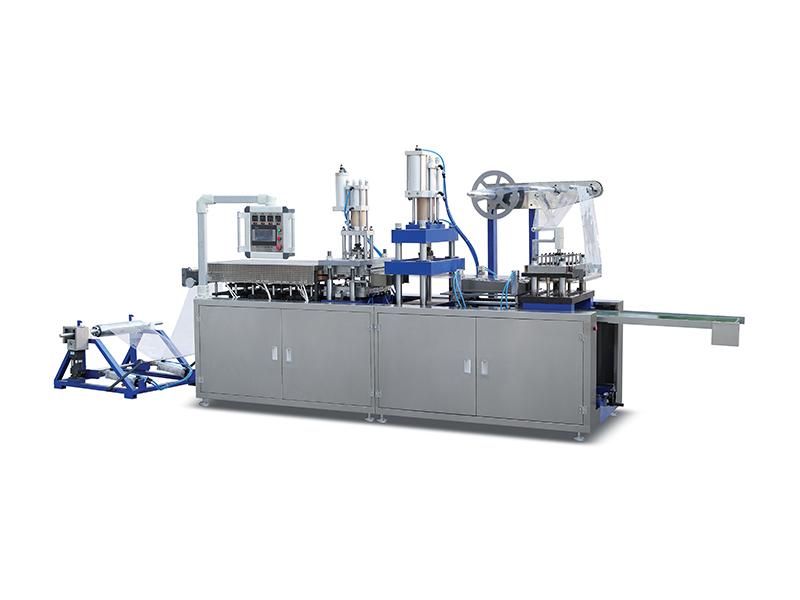
Tooling material directly dictates thermal control capabilities. If you want to reduce warping in thermoformed plastic parts, you must abandon cheap tooling for production runs. Wood and epoxy resin molds act as thermal insulators. They trap heat and cause highly uneven cooling rates. We strongly recommend CNC-machined aluminum molds for any volume production. Aluminum provides highly predictable thermal conductivity.
Draft angles and corner radii require rigorous engineering review. Inadequate draft angles create severe stress concentrations during demolding. Sharp internal corners trap heat and prevent uniform material distribution. Warping almost always originates at these poorly designed stress points. We recommend maintaining a minimum draft angle of two to three degrees for most materials. Generous radii allow the heated polymer to flow smoothly over the tool surface.
Strategic vacuum flow also impacts dimensional stability. Vacuum hole placement ensures the material pulls uniformly against the temperature-controlled mold surface. If vacuum holes are too sparse, air pockets form. These pockets insulate the plastic from the cooling tool, creating localized hot spots. large plastic part forming demands carefully mapped evacuation grids.
You must also evaluate mold type. Shrinkage behaves differently on male versus female molds. When plastic cools on a male mold, it shrinks tightly around the tool. This gripping action holds the part in place but makes demolding difficult. When plastic cools inside a female mold, it shrinks away from the tool walls. This pulling away reduces contact with the cooling surface, increasing warpage risks. You must select the mold type based on the critical tolerance surfaces of your specific part.
A dangerous vulnerability window exists immediately after demolding. The exterior of a thick-gauge plastic part might feel cool to the touch. However, the internal core remains hot and pliable. It continues to cool and contract long after leaving the machine. This prolonged thermal shift causes severe post-mold distortion.
Cooling fixtures, also known as shrink fixtures, are non-negotiable for large format parts. You must place large parts on custom jigs immediately after demolding. We typically construct these jigs from wood, composite board, or cast aluminum. They mirror the final required geometry of the part perfectly.
Clamping and restraint mechanisms lock the part into this fixture. Restraining the part during its final temperature drop forces it to conform to your dimensional specifications. Toggle clamps hold the edges securely while localized fans blow ambient air across the thicker cross-sections. You restrict the polymer's natural desire to curl inward by holding it rigidly in place.
We acknowledge the added tooling cost of building dedicated cooling fixtures. Procurement teams often try to cut this expense. This is a false economy. The drastic reduction in scrap, rework, and assembly failures easily offsets the initial fixture investment.
Selecting a manufacturing partner based purely on piece-price guarantees future quality disasters. You need a reliable framework for evaluating their quality control processes. Unpredictable thermoforming part warping reveals a vendor lacking modern process control. You must audit their capabilities rigorously before cutting any metal.
Start by testing their DFM (Design for Manufacturing) competency. Does the vendor proactively suggest material changes? Do they request radii adjustments or draft angle modifications during the quoting phase? A competent partner will push back on flawed designs. They will identify thermal stress points on your CAD models immediately. If they accept a challenging large-part design without questions, consider it a red flag.
Next, examine their process auditing procedures. You should request sample documentation from previous projects. Look for comprehensive First Article Inspection (FAI) reports. Ask if they utilize thermal imaging cameras during pilot runs to identify mold hot spots. Elite manufacturers employ statistical process control (SPC) to track dimensional variations across long production runs.
Finally, physically or virtually assess their equipment capabilities. Advanced large-format thermoforming requires modern machinery. Multi-zone quartz heating elements allow operators to create precise temperature profiles across the plastic sheet. Automated, closed-loop cooling controls eliminate operator guesswork. Legacy, manual machinery simply cannot hold tight tolerances on large surface areas consistently.
Dimensional instability ruins production schedules and inflates budgets unnecessarily. Reducing warping requires a completely holistic approach. You cannot solve it by tweaking a single machine dial. You must combine fundamental material science with active thermal management and precision aluminum tooling. Every stage of the process, from heating to post-mold fixturing, plays a critical role in locking in final tolerances.
Take action on your current manufacturing challenges today. Audit your existing large part designs to identify sharp internal corners and inadequate draft angles. Then, request a comprehensive DFM review from a qualified thermoforming manufacturer. A proactive partner will help you engineer the warping out of the process before production even begins.
A: Warping after demolding results from residual core heat and the lack of post-mold cooling fixtures. The exterior surface cools much faster than the interior core. This differential creates internal stress. You must place the part on a custom cooling jig and clamp it until the core temperature fully stabilizes.
A: Yes, mold material dictates thermal stability. CNC-machined aluminum offers highly consistent, rapid heat draw through integrated water channels. Wood and epoxy act as thermal insulators. They trap heat, cause uneven cooling rates, and drastically increase the likelihood of final part distortion.
A: Absolutely. Zoned heating ensures the plastic sheet enters the forming station at a completely uniform temperature. Without zone control, the sheet stretches unevenly. Localized stretching leads to unpredictable wall thicknesses. Thin areas will cool too quickly, pulling on thicker areas and causing severe distortion.
A: Fixture time depends entirely on material thickness, ambient temperature, and specific polymer shrink rates. Generally, the part must remain fully clamped until its internal core temperature matches the ambient room temperature. Removing it prematurely allows residual stress to curl the edges inward.


