
Views: 0 Author: Site Editor Publish Time: 2026-09-20 Origin: Site
Producing OSHA-compliant industrial guards requires balancing high-impact material capabilities and cost-efficient production. Thermoforming offers significantly lower tooling costs than injection molding. This makes the process ideal for low-to-medium volume safety covers. However, selecting the right equipment strictly dictates your final output quality. You must secure machinery capable of executing precise, repeatable processes.
Whether you plan to transition production in-house or upgrade legacy equipment, evaluation remains critical. You must closely analyze required draw depths, material gauge handling capabilities, and cycle consistency. Improper machinery choices often lead to rejected parts and potential safety liabilities on the factory floor. Decision-makers cannot afford guesswork when operator safety is on the line.
This article provides a technical evaluation framework to guide your machinery purchasing decisions. You will learn how to select equipment capable of producing heavy-duty, compliant safety components. We also explore the specific differences between vacuum and pressure forming methods. By following these guidelines, you can align production capabilities directly to your required specifications.
Industrial guards demand thick, durable plastic materials. These heavy-gauge materials are notoriously difficult to form. Poor equipment configuration often causes webbing or uneven thinning in the final product. Your machinery must align perfectly to your specific production volume. It must also accommodate your most complex part geometry without sacrificing structural integrity.
You cannot compromise on the physical properties of an industrial safety enclosure. If the plastic thins out too much in the corners, the guard becomes a liability. Weak corners fail rapidly under impact. You must carefully assess the capabilities of any proposed machinery.
To ensure proper selection, evaluate these crucial success metrics:
Taking time to define these metrics prevents costly purchasing mistakes. It ensures you invest in equipment capable of scaling alongside your operational demands.
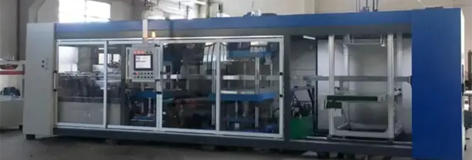
Evaluating the right approach for machine guard thermoforming requires understanding two distinct processes. Vacuum forming and pressure forming both utilize heat and molds. However, they manipulate the plastic sheet differently. Your choice depends heavily on part complexity and aesthetic requirements.
Vacuum forming machines rely entirely on atmospheric pressure. The equipment heats the plastic, drapes it over a mold, and vacuums out the trapped air. This process works perfectly for a standard protective plastic cover. It handles simple geometries well. It also represents a budget-conscious capital expenditure for many facilities.
However, vacuum forming carries distinct limitations. The process provides lower detail definition. You cannot achieve injection-molded-like aesthetics. The equipment struggles to create sharp undercuts or highly detailed surface textures.
Pressure forming machines offer a more robust solution. They introduce high-pressure compressed air on the non-mold side of the heated sheet. This forces the plastic tightly into intricate mold cavities. These machines are best for highly engineered enclosures. They easily create sharp radii, built-in ventilation louvers, and tight structural ribbing.
The trade-offs involve higher initial equipment costs and more expensive tooling. Pressure forming requires heavier-duty machine construction. The frame must safely withstand immense positive pressure during every cycle.
Forming Technology Comparison| Feature Category | Vacuum Forming | Pressure Forming |
|---|---|---|
| Best Application Use | Standard protective covers, simple shapes | Complex industrial guards, intricate vents |
| Detail Resolution | Low to moderate | High (mimics injection molding) |
| Capital Investment | Generally lower | Significantly higher |
| Tooling Requirements | Basic aluminum or wood molds | Robust temperature-controlled metal molds |
| Structural Ribbing | Difficult to achieve | Easily integrated during forming |
Heavy-gauge plastics require specialized handling capabilities. Standard machinery often fails when processing sheets up to 0.500 inches thick. You must evaluate the internal components of the equipment.
Heater zoning and temperature control dictate your success rate. High-impact materials like Polycarbonate (PC) and ABS demand highly precise heat. Modern equipment utilizes zoned quartz or ceramic heaters. These zones prevent material degradation. They also ensure uniform thickness across deep draws.
If you rely on single-zone heating, the center of the sheet sags. The edges remain too cool. Zoned control allows you to push specific heat percentages to targeted areas. This precise manipulation prevents webbing and tearing.
Platen force and structural rigidity represent another non-negotiable specification. The framework must handle extreme forces. Manipulating heavy-gauge plastics requires massive clamping pressure. The machine must resist deflection over time. If the frame bends slightly under pressure, your parts lose dimensional accuracy.
Mold changeover and tooling agility directly impact your daily efficiency. Many facilities produce a highly diverse catalog of parts. You might switch from a small sensor cover to a massive panel guard in one shift. Quick-change platen systems minimize downtime. Tool-less adjustments directly improve Overall Equipment Effectiveness (OEE). They allow your operators to transition setups rapidly.
Common best practices include:
Industrial guards exist primarily to protect human operators. Consequently, OSHA enforces strict regulations regarding machine guarding. Your final output must meet or exceed these rigorous standards.
Output consistency directly affects regulatory compliance. OSHA compliance (e.g., preventing access to nip points and rotating parts) dictates zero guard failure under impact. A thermoforming machine for industrial guards must guarantee repeatable material distribution. You cannot tolerate thin corners or brittle edges. The machinery must hold temperature and pressure variables perfectly steady across long production runs.
Machine operator safety represents the second compliance factor. The equipment itself presents inherent hazards. Pinch points, high heat, and moving platens endanger your internal staff.
You must ensure the machine features comprehensive safety systems. Look for integrated light curtains across the loading zones. Insist on dual-hand controls to keep operator hands clear of closing platens. Automated sheet loading mechanisms further reduce risks. They remove the operator from the immediate hazard zone entirely.
Common mistakes in this area include bypassing safety interlocks to speed up production. Modern machines integrate these safety features into the core programming. If a light curtain trips, the machine safely aborts the cycle and opens the platens immediately.
Purchasing the equipment only represents the first milestone. Integrating it into your existing facility introduces logistical challenges. You must proactively assess these realities before finalizing the acquisition.
Facility integration risks often disrupt initial deployment schedules. Pressure forming machines require significant pneumatic support. You must assess your current compressed air supply. Verify the available CFM and PSI. The equipment will starve and fail if your compressor cannot meet peak demands during the forming cycle.
Electrical loads present similar integration risks. Multi-zone heating banks draw immense amperage. You must ensure your facility grid can handle the sudden power surges. Consult your electrical engineers early in the evaluation process. They can determine if you need updated transformers or dedicated circuitry.
Operator training and technical adoption determine long-term success. Legacy equipment often relied on the intuitive "art" of an experienced operator. Modern Programmable Logic Controller (PLC) interfaces change this dynamic. They reduce thermoforming to a reproducible, data-driven science.
You must train your staff to interpret PLC diagnostics. They need to understand recipe management and alarm codes. Modern interfaces minimize reliance on specialized legacy operators. They allow cross-trained technicians to run successful production cycles using saved heating profiles.
Selecting the right OEM (Original Equipment Manufacturer) requires rigorous vetting. You are purchasing a long-term production partner, not just a piece of metal. You need a structured evaluation framework to compare potential vendors.
A client may occasionally request a highly unusual custom plastic guard. Your machine must handle these unexpected requests smoothly. Evaluate vendors based on their ability to prove their technical claims.
Applying this framework eliminates unreliable vendors early. It focuses your attention on partners capable of supporting heavy-gauge industrial applications.
Selecting the right machinery for industrial guards demands careful technical analysis. It is an exercise in matching heating precision and platen force directly to your specific material and geometry requirements. Vacuum forming provides cost-effective simplicity. Pressure forming delivers intricate, injection-molded quality. Both methods require robust, heavy-duty frameworks to manipulate thick plastics successfully.
Your next action step involves standardizing your requirements. Finalize a comprehensive material specification sheet. Draft a maximum part-size blueprint based on your largest anticipated guard. Once you compile this data, you can confidently request custom machine quotes from your shortlisted OEM vendors. This proactive preparation ensures you acquire equipment capable of driving safe, compliant, and highly repeatable production.
A: Heavy-gauge machines typically handle plastic sheets from 0.060 inches up to 0.500 inches thick. This specific range confidently covers most industrial safety enclosure requirements. The robust clamping frames and advanced heating elements easily manipulate these thicker gauges without causing structural failure.
A: Yes, they can handle various sizes effectively. The machine must feature a large forming area equipped with adjustable window frames or reducing plates. Highly zoned heating systems are also essential. They allow operators to turn off outer zones, preventing energy waste when heating smaller molds.
A: Thermoforming machine tooling costs are typically 70% to 90% lower than injection molding tools. This mathematical advantage makes the process an incredibly sound choice for short runs. It is highly recommended for production volumes falling strictly under 5,000 to 10,000 units per year.


