
Views: 0 Author: Site Editor Publish Time: 2026-09-15 Origin: Site
A flawlessly thermoformed cup is completely unmarketable if the rim is defective. Inconsistent curling quickly leads to lid seal failures, stack jamming, and compromised consumer safety. Upgrading or integrating a dedicated plastic cup curling machine is a critical capital decision. You must align this equipment precisely with your material outputs—whether PET, PP, or PLA—and your specific line speed.
We designed this guide to provide production managers and procurement engineers with a strictly evidence-based framework. You will learn how to evaluate machinery effectively and avoid common purchasing pitfalls. We also cover how to mitigate integration risks on your factory floor. Ultimately, you will discover practical methods to standardize cup rim quality at scale.
Manufacturers often underestimate the financial impact of poor rim curling. A defective lip creates cascading failures across the entire supply chain. These failures frustrate end-users and trigger costly client rejections.
Minor microscopic variances in the rim lip compromise snap-on lids. Food and beverage brands rely on a tight acoustic "snap" to assure consumers. If the rim is uneven, air gaps form instantly. These gaps prevent heat-sealing films from adhering properly. Downstream leakage ruins secondary packaging and damages brand reputation.
Food service environments rely heavily on automated dispensing systems. Uncurled or misaligned edges cause cups to stick together tightly. When two cups jam in a dispenser, the entire service line halts. A proper rolled rim creates a structural bumper. This bumper guarantees smooth separation during high-speed automated dispensing.
Scrap rates represent a massive hidden drain on factory profitability. You already spent energy thermoforming the plastic. Trashing the final product due to a bad rim wastes resin, electricity, and labor. A mere 2% reduction in defective rims directly recovers raw material costs. It also maximizes your overall thermoforming yield.
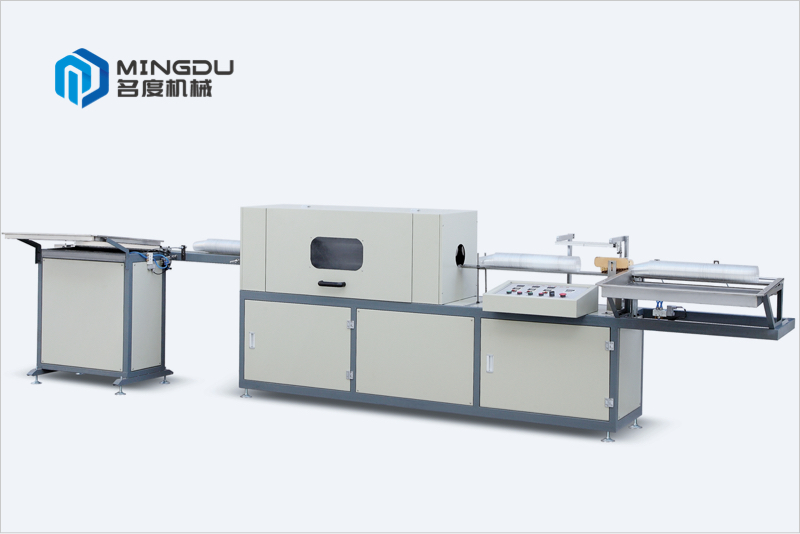
Understanding how an automatic plastic cup rim machine operates helps you identify potential failure points. Modern equipment relies on a precise sequence of mechanical and thermal actions.
The process begins at the feeding station. The machine separates and feeds pre-formed cups into the curling track. Consistency here is non-negotiable. Poor feeding mechanisms crush or warp the thin sidewalls. Advanced systems use vacuum suction or precision-timed mechanical screws. They isolate each cup gently before advancing it forward.
Rotary heating is the heart of the curling process. Independent temperature zones along the curling screw are absolutely mandatory. You cannot apply maximum heat instantly. Progressive softening prevents thermal shock. The plastic gradually approaches its glass transition temperature as it moves along the screw track.
Once softened, the plastic enters the forming section. The machine rolls the edge outward and inward. This physical process creates a structural, rigid lip. Tooling geometry determines the exact shape of the roll. The pressure applied must remain perfectly constant. Fluctuation causes uneven wall thickness around the rim circumference.
Many buyers ignore the cooling phase. However, it represents a critical stabilization period. If the plastic remains too hot during discharge, it warps. Proper equipment integrates active air cooling or chilled guides. These components freeze the polymer chains in their new shape. Cups then reach the automatic stacker safely.
A "one-size-fits-all" approach to plastic always fails. Different polymers exhibit vastly different thermodynamic realities. You must match your equipment to your material.
Polymers absorb and retain heat differently. Operators cannot simply swap materials without adjusting the machine's thermal parameters. Ignorance of these properties leads to immediate yield drops.
PET (Polyethylene Terephthalate) has a notoriously low thermal tolerance. It demands highly precise, lower-temperature heating. If you overheat PET, it crystallizes. The rim turns white, becomes brittle, and snaps under pressure. Successful PET cup curling relies on gentle, incremental warming zones to maintain optical clarity.
Polypropylene behaves entirely differently. It features a higher melting point and superior heat capacity. PP requires robust, sustained thermal output. Dedicated PP cup curling equipment utilizes specific screw pitches. These specialized screws apply persistent pressure and heat, ensuring the rim rolls smoothly without snapping or rebounding.
Modern factories frequently switch between different polymers. You need a machine capable of handling these shifts efficiently. Assess the machine's ability to switch material profiles via digital PLC (Programmable Logic Controller) adjustments. Digital recipe storage eliminates heavy mechanical retrofitting. Operators simply load the saved parameters for the new material.
Material Capability Comparison
| Material | Heat Tolerance | Cooling Needs | Common Curling Risks | Ideal Machine Feature |
|---|---|---|---|---|
| PET | Low (Prone to crystallization) | Moderate | Whitening, brittleness, cracking | Micro-step temperature control |
| PP | High (Retains heat longer) | High (Requires rapid stabilization) | Rebounding, incomplete rolling | Sustained heating zones, active cooling |
| PLA | Very Low (Highly sensitive) | Moderate | Melting, severe warping | Ultra-precise PLC recipes |
Procurement teams must evaluate machinery rigorously before signing a purchase order. Use the following structured criteria to vet manufacturers.
Do not fixate on the maximum CPM (Cups Per Minute) listed on a brochure. Theoretical speed rarely translates to real-world performance. You must assess the guaranteed defect-free yield at sustained operational speeds. A machine running at 800 CPM producing 5% scrap is vastly inferior to one running at 700 CPM producing zero scrap.
Demand machines equipped with PID (Proportional-Integral-Derivative) temperature controllers. These systems constantly calculate and adjust the heat output. Verify the variance margins. You want a variance of ±1°C maximum. Tighter margins prevent localized burning on one side of the rim and under-curling on the other.
Evaluate the actual downtime required to switch between different cup diameters. Time spent changing tooling is time lost. Request a demonstration of the changeover process. Tool-less or quick-release mechanisms represent a major competitive necessity today. They allow operators to swap rim profiles rapidly.
Examine the physical frame rigidity. Vibration is the enemy of precision. A lightweight frame vibrates at high speeds, causing curling inconsistencies. Always verify CE or UL certifications. Ensure the integration of standard safety interlocks to protect operators from pinch points and burn hazards.
Common Troubleshooting Chart
| Defect Observed | Probable Root Cause | Recommended Action |
|---|---|---|
| Uneven rim thickness | Fluctuating screw pressure | Recalibrate mechanical screw alignment |
| White/brittle edges (PET) | Excessive localized heat | Reduce zone 2/3 heating temperatures |
| Unrolled flat spots | Inadequate progressive softening | Increase initial zone temperature |
| Stuck cups at discharge | Insufficient cooling phase | Increase blower speed or chiller output |
Buying a reliable cup rim curling machine only solves half the puzzle. You must integrate it seamlessly into your broader factory ecosystem. Poor integration creates severe bottlenecks.
You must match the throughput of the curling machine with your existing thermoformers. If the thermoformer outpaces the curler, cups pile up. This mismatch causes staging delays and potential contamination. Implement variable frequency drives (VFDs). They allow the curling machine to speed up or slow down automatically based on upstream supply.
Curled cups must transition smoothly into secondary packaging. Automatic bagging or sleeving units rely on precise orientation. If cups flip or tumble during discharge, the packaging machine jams. Ensure the discharge chute geometry matches the entry magazine of your bagging equipment perfectly.
The learning curve of the HMI (Human-Machine Interface) poses a significant risk. Overly complex screens confuse operators. This confusion leads to human error. There is also a severe risk of operators manually overriding pre-set temperature recipes. You must implement password-protected HMI tiers. Lock critical thermodynamic parameters away from daily operators.
Curling machines contain several high-wear components. Silicone rollers and heating elements degrade over time. You must formulate a standardized preventative maintenance schedule. Replace silicone rollers before they harden and crack. Regular inspections avoid unplanned downtime and sudden spikes in scrap rates.
Standardizing cup rims relies fundamentally on thermal precision and mechanical stability. You cannot achieve perfection using outdated, single-zone equipment. Your entire production line depends on the structural integrity of that tiny rolled lip.
When you start shortlisting OEMs, prioritize those offering transparent scrap-rate guarantees. Look for multi-zone temperature control and proven material-specific configurations. Avoid vendors refusing to discuss actual yield rates. A reliable partner will gladly prove their machine's capabilities.
Your immediate next step is requesting a live material test. Send your specific PP or PET cup samples directly to the manufacturer. Ask them to validate tooling compatibility. Demand a video showing your exact cups running at the advertised speed before finalizing procurement.
A: Modern machines prioritize efficiency. It typically takes 30 to 60 minutes depending on the machine design. Quick-release mechanisms and tool-less adjustments speed up this process significantly. Older models requiring manual screw realignment take considerably longer.
A: Yes, handling both is possible. However, it requires a machine featuring highly adjustable PLC heating profiles. You will likely need interchangeable curling screws designed specifically for the unique thermodynamic properties of each material.
A: Melting usually stems from incorrect temperature setpoints or single-zone heating failures. Improper feeding speeds also play a role. If the cup stalls momentarily inside the heating chamber, localized burning occurs almost instantly.
A: No. Modern inline machines require minimal supervision. Once operators set the PLC recipes and load the feeding magazines, the system runs autonomously. Staff only need to perform periodic quality checks and reload raw materials.


