
Views: 0 Author: Site Editor Publish Time: 2026-11-17 Origin: Site
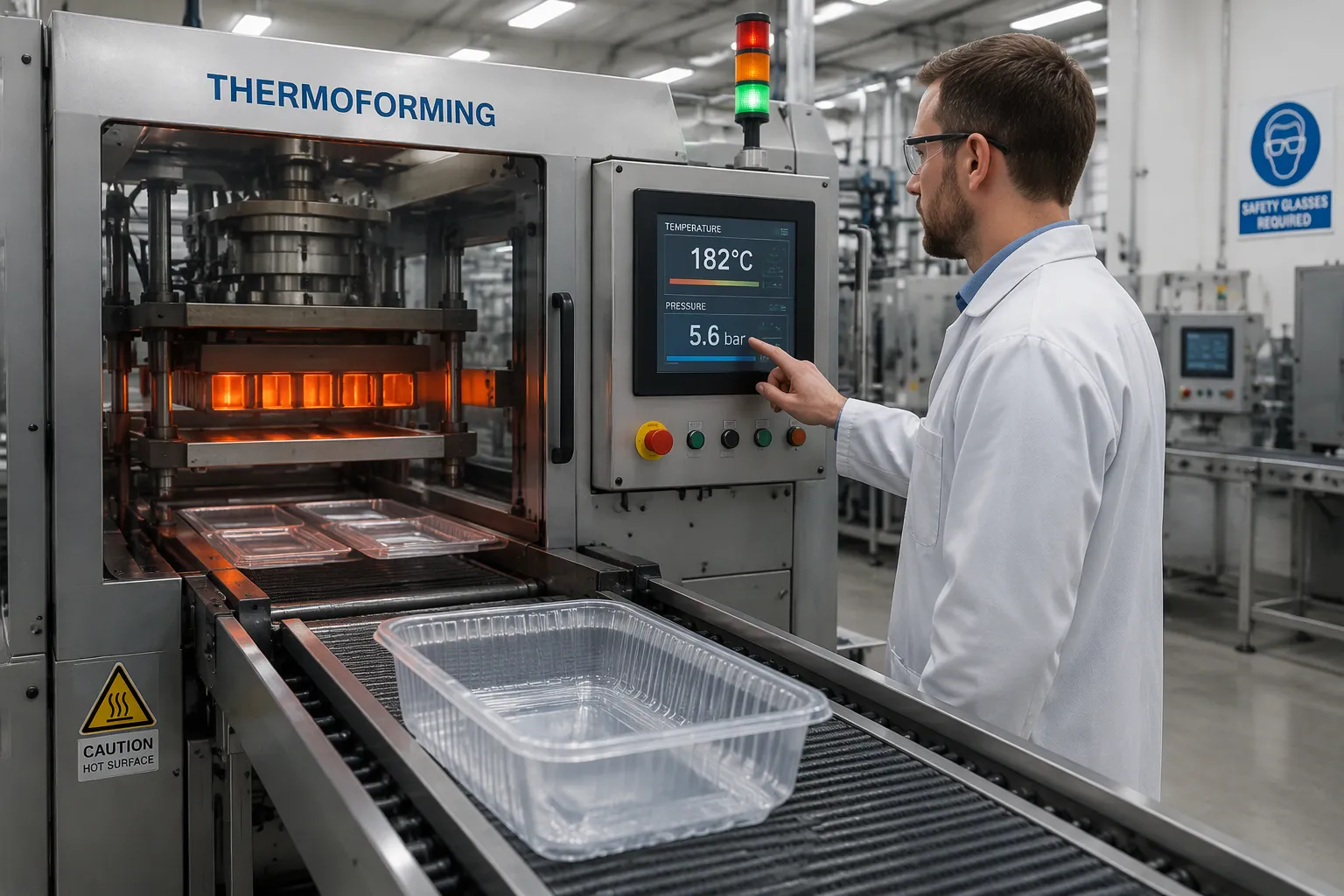
An automatic thermoforming machine heats a plastic sheet until it gets soft, then shapes that sheet into finished parts. Controlled heat, vacuum, and pressure run the forming process. Automated feeding, forming, and trimming keep the sequence moving with little help from an operator.
The word "automatic" marks a real difference. Manual machines need an operator for each step. Semi-automatic machines automate part of the cycle. An automatic thermoforming machine runs the full sequence on its own.
Readers who want to understand the mechanics can follow the step-by-step explanation below. It shows how thermoforming turns flat plastic sheets into shaped parts. Each stage plays a clear role.
An automatic thermoforming machine heats plastic until it gets soft, then shapes it into parts using vacuum or pressure.
The machine does the whole cycle by itself: feeding, heating, forming, cooling, and trimming.
The main parts are heaters, a clamping frame, a mold, a vacuum system, and a trimming station.
Everyday materials such as PET, PP, and PVC each work best for different products, depending on their strength and clarity.
Pick roll-fed machines for large amounts of packaging. Choose sheet-fed machines for thick parts and short runs.
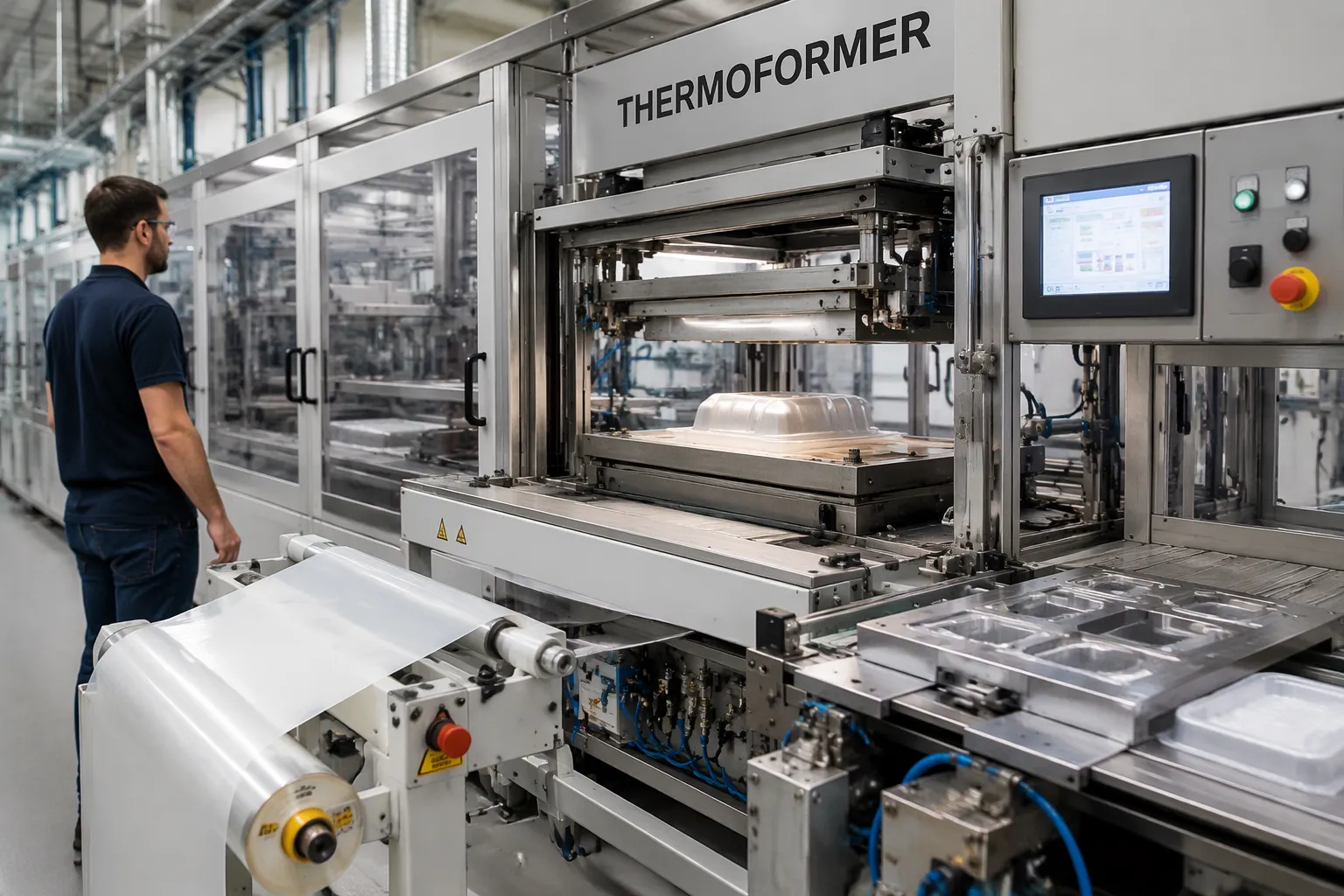
An automatic thermoforming machine is a production system that turns flat stock into shaped parts. The machine heats a thermoplastic sheet until the material gets soft and easy to bend. A clamping frame holds the sheet in place. The machine then presses that sheet against a mold. Vacuum, pressure, or both pull and push the material into the mold cavity. Automated feeding and trimming finish the cycle with little help from an operator.
The definition and purpose of an automatic thermoforming machine focus on repeatable output. The machine turns flat stock into finished parts at a steady pace. The definition and purpose of an automatic thermoforming machine also include the trimming stage, which separates finished parts from the surrounding web. This full sequence sets the equipment apart from simpler forming tools. Thermoforming itself is a heat-based process, and the automatic version links every stage into one controlled flow.
Readers may meet the same equipment under other names. "Thermoformer" is a common short form in production settings. "Vacuum forming machine" is another label, especially when vacuum does most of the shaping work. Both terms describe the same core process: heat, shape, cool, and trim. The definition and purpose of an automatic thermoforming machine stay the same no matter the label. Buyers who compare catalogs should check the actual capabilities, not just the name on the listing.
Machines differ in how much of the cycle runs without an operator. Manual machines need a person at every stage: loading, heating, forming, and unloading. Semi-automatic machines automate the heating and forming steps, yet an operator still loads material and removes parts. Automatic thermoforming equipment runs feeding, heating, forming, cooling, and trimming as one linked sequence. The operator's role changes with each level of automation. Thermoforming runs follow a fixed sequence in each mode.
Each mode fits a different production context. Manual operation suits prototypes, small batches, and thick-gauge work where setup changes often. Semi-automatic operation fits medium runs and shops that need flexibility between jobs. The automatic thermoforming machine suits high-volume production with stable part designs. None of these modes is inherently better. The right choice depends on batch size, part geometry, and the acceptable level of manual handling. Production volume usually drives the decision.
The word "automatic" therefore signals a specific capability. The machine coordinates its own steps and keeps cycle timing consistent. That consistency matters in vacuum thermoforming, where small changes in heat or timing affect part quality. Vacuum thermoforming depends on a good seal between sheet and mold. A vacuum thermoforming machine that runs automatically also cuts the labor tied to each cycle. Operators shift from doing steps to watching the process.
Material handling also separates the modes. An automatic thermoforming machine takes plastic sheets from a roll or a stack and moves them through the stations without pause. Semi-automatic units often rely on hand-loaded plastic sheets, which slows the pace between cycles. Vacuum forming remains the core shaping method in all three modes. The difference lies in how much of the surrounding work the machine does on its own. Thermoforming shops weigh these tradeoffs against their order patterns. A vacuum thermoforming machine with full automation pays off when runs stay long and designs stay stable.
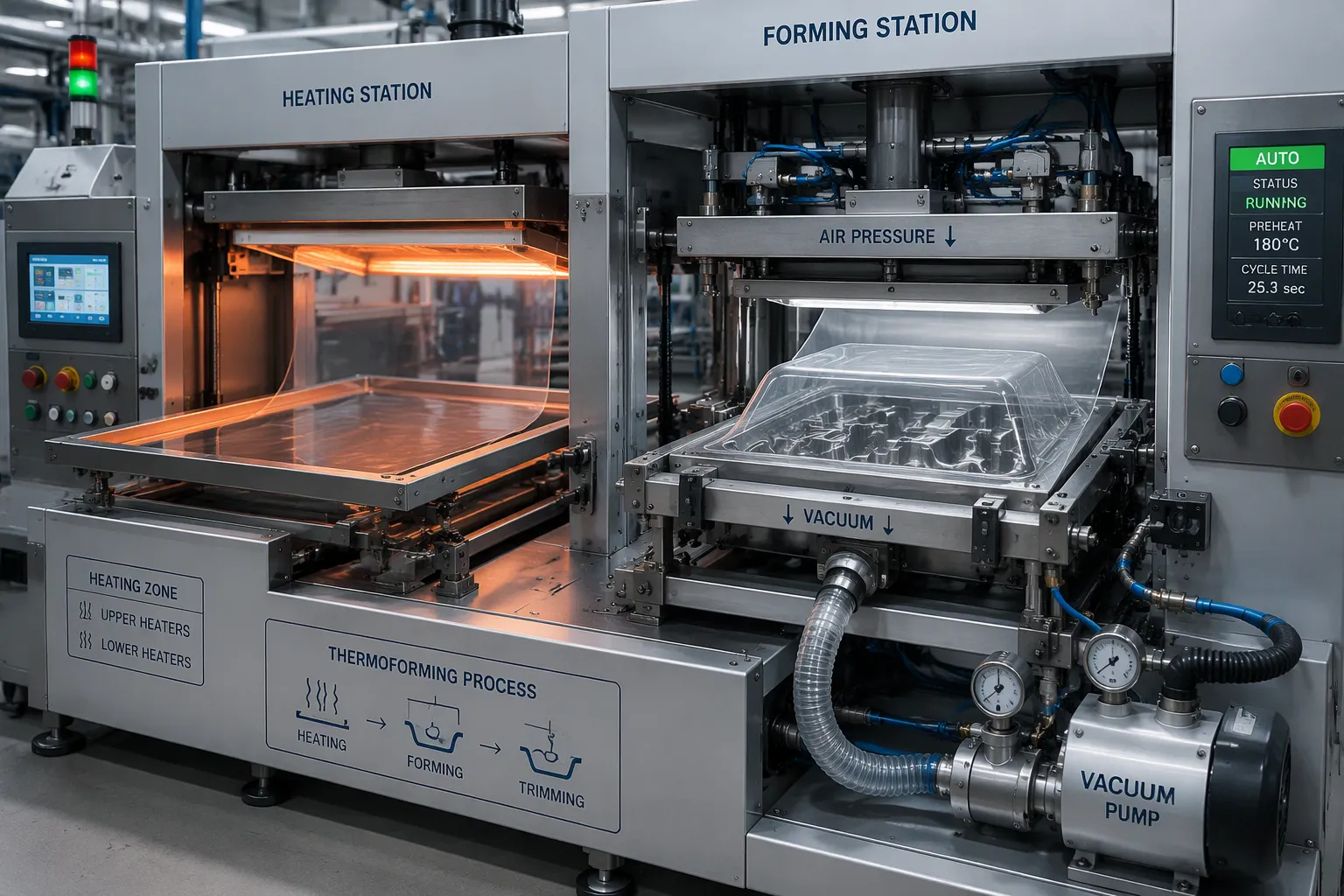
The main sequence starts with feeding the sheet. A loader moves plastic sheets from a stack or roll into the clamping frame. The frame grips the sheet edges and carries it into the heating station. Even heating matters here. Special heaters, often placed in zones above and below the sheet, raise the material until it is soft and easy to bend. Zone control lets the machine match heat to the sheet's thickness and the part's shape. Uneven heat makes uneven walls, so this stage sets the quality of everything that follows.
Once the sheet reaches forming temperature, the frame moves it to the mold station. This is where the working principles of vacuum thermoforming become visible. A vacuum pump removes the air between the softened sheet and the mold surface. Atmospheric pressure then pushes the sheet down, and the vacuum helps pull the plastic against a mold with fine detail. Pressure forming adds a second force: compressed air above the sheet drives the material into the cavity. That assist helps when a part needs sharper corners or deeper draws. Mechanical forming uses a matching plug or die to press the shape instead. Each method fits different part designs, and many machines combine them.
Readers who wonder how an automatic thermoforming machine works should note the coordination. Feeding, heating, and forming run as timed, linked steps. The machine holds each stage for a set interval and passes the sheet along without manual handling. That rhythm keeps heat and vacuum consistent from cycle to cycle. Consistent heat and vacuum produce repeatable wall thickness and detail. A vacuum thermoforming machine relies on this same logic, whether it shapes trays, clamshells, or panels.
Forming ends, and cooling begins. The shaped plastic stays on the mold while air or water circuits draw heat away. The part must stiffen enough to hold its shape before release. Rushing this stage causes warping or sag, so the machine controls cooling time along with the rest of the cycle. Mold release follows. Air pressure or ejector pins lift the part from the mold surface, and the frame advances the web to the trimming station.
Trimming separates finished parts from the surrounding web. A trim press or cutting tool follows the part outline and cuts clean edges. Some machines trim in-line; others move the web to a separate station. Either way, the step completes the automatic thermoforming operations that began with feeding. The full flow — feed, heat, form, cool, release, trim — defines how an automatic thermoforming machine works in practice.
The same flow applies across machine types. A roll-fed vacuum thermoforming machine feeds continuous plastic sheets from a roll, which suits high-volume packaging. Sheet-fed systems handle discrete cut sheets, which fit thicker parts and shorter runs. Both follow the same forming and trimming logic. Understanding how an automatic thermoforming machine works helps buyers match machine type, material, and part design to the job at hand.
An automatic machine depends on several main parts. The heaters sit above and below the sheet path. They warm plastic sheets until the material bends easily. Zone control lets the machine match heat to the sheet thickness. The clamping frame grips plastic sheets at the edges and carries them between stations. The mold gives the part its shape. Each of these main parts and their jobs supports a certain stage of the cycle. The main parts work as one system.
A vacuum or pressure system does the shaping work. The vacuum pump pulls air from between the sheet and the mold. Compressed air can help the draw. The cooling system then removes heat through air or water circuits. Cooling time affects part flatness and dimensional stability. The trimming station cuts finished parts from the web. Sharp tooling keeps edges clean. Together, these main parts and their jobs complete the sequence. Knowing the main parts and their jobs helps operators trace faults to the right station.
The materials used in automatic thermoforming cover a wide range. PET offers clarity and stiffness for packaging. PET suits clear food containers. PP brings toughness and heat resistance. PVC forms easily and takes fine detail. PS gives low-cost rigidity for trays and cups. ABS adds impact strength for durable parts. Each of these materials used in automatic thermoforming suits different product demands.
Material choice depends on what the product needs. Wall thickness, draw depth, and service temperature all guide the decision. The materials used in automatic thermoforming must also match the forming method. Vacuum thermoforming favors materials that stretch evenly under heat. Pressure forming handles tighter detail. A shop should test candidate materials used in automatic thermoforming against its mold design before committing to a full run. Small trials reveal how each sheet behaves under heat. Vacuum thermoforming also suits many tray and clamshell designs.
A vacuum thermoforming machine uses a vacuum to pull soft plastic onto the mold. The pump takes air out of the space between the sheet and the mold surface. Outside air pressure then pushes the sheet against the mold. This is the main idea behind vacuum forming, and it shapes trays, clamshells, and panels with simple mold designs. The job of vacuum thermoforming machine setups centers on this pull. A tight seal between sheet and mold decides how well the detail comes through.
Shops also use pressure forming and mechanical forming for other part needs. Pressure forming adds compressed air above the sheet, which pushes material into sharper corners and deeper draws. Mechanical forming presses a plug or matching die into the sheet. Each method fits a different job. Vacuum forming suits broad, gentle shapes. Pressure forming suits crisp detail. Mechanical forming suits parts that need a controlled wall thickness. The job of vacuum thermoforming machine controls stays the same across these options: keep heat, timing, and force steady.
Roll-fed systems pull continuous plastic from a roll. The machine heats, forms, and trims in one linked line. This setup suits high-volume packaging, where the same part runs for long stretches. A roll-fed vacuum thermoforming machine keeps material moving without manual loading. The goal of vacuum thermoforming machines here is steady, repeatable output.
Sheet-fed systems take separate cut sheets instead. An operator or loader places each sheet in the frame. This setup fits thicker plastic, shorter runs, and parts with frequent design changes. Readers who ask how a vacuum thermoforming machine works with thick stock will find sheet-fed units the common answer. Both setups share the same vacuum thermoforming logic. Buyers should match feed style to run length, part thickness, and changeover needs.
Automatic thermoforming is used most in packaging. Trays, clamshells, blister packs, and cups come off roll-fed lines in long runs. Food service depends on the same process for disposable containers, lids, and serving ware. Medical trays and device packaging need clean edges and repeatable cavities. A vacuum thermoforming machine meets that need with steady mold contact. Consumer products add panels, housings, and display parts. Each industry weighs applications, benefits, and operating considerations against its own quality goals.
Product shape guides the machine choice. Shallow trays work well with simple vacuum draws. Deep draws and sharp corners do better with pressure assist. Thick panels often run on sheet-fed equipment. A shop that maps applications, benefits, and operating considerations early avoids problems later. The same logic applies across industries, because the forming principles stay the same.
Consistent output is one of the main benefits of using a vacuum thermoforming machine. Automated feeding and timed cycles keep heat and vacuum steady, so wall thickness varies less from part to part. Repeatable forming comes from that steadiness. Less manual handling cuts operator fatigue and shortens changeover time. These benefits of using a vacuum thermoforming machine show up most clearly in long production runs.
Practical factors shape real performance. Material thickness affects heating time and draw depth. Mold design controls detail, draft angles, and release. Maintenance keeps heaters, pumps, and trim tooling within tolerance. Cycle consistency ties all of these together. Teams should review applications, benefits, and operating considerations as a set, not alone. A vacuum thermoforming machine rewards careful planning. Thermoforming rewards it too, and so does vacuum thermoforming on any scale. Shops that track applications, benefits, and operating considerations per job build better process sheets. Plastic sheets behave differently across gauges, and sheets from different suppliers can shift results. Plastic grade selection matters as much as machine settings. Sound applications, benefits, and operating considerations planning keeps thermoforming output predictable.
An automatic thermoforming machine heats a plastic sheet, shapes it against a mold, cools the part, and trims it, all in one automated sequence. The flow runs from feeding through heating, forming, cooling, mold release, and trimming.
Components, materials, machine type, and application should match the product you plan to make and how much you produce. Plastic sheets act differently at different thicknesses, and mold design shapes the final result. Thermoforming works best when the machine and material fit the job. Shops that plan this way build steadier processes as product designs and order patterns change.
It heats a plastic sheet until soft, then shapes it against a mold using vacuum, pressure, or both. The machine cools the part, releases it, and trims it. Feeding, forming, and trimming run as one linked sequence with little operator input.
A clamping frame grips the sheet edges and carries it between stations. The frame keeps the material sealed against the mold so the vacuum can draw it tight. A steady seal decides how well the mold detail transfers to the part.
Trays, clamshells, blister packs, cups, and simple panels fit well. Shallow draws and broad shapes work with a basic vacuum pull. Deep draws and sharp corners often need pressure assist. Thick panels usually run on sheet-fed equipment.
Yes. Both heat, form, cool, and trim in the same order. Roll-fed lines pull continuous stock for long packaging runs. Sheet-fed units take separate cut sheets, which suits thicker material and shorter runs with frequent design changes.
Material thickness, mold design, heater control, and cooling time drive results. Consistent heat and vacuum keep wall thickness steady. Regular maintenance on heaters, pumps, and trim tooling protects that consistency over long production runs.


