
Views: 0 Author: Site Editor Publish Time: 2026-11-25 Origin: Site
Food packaging protects food, keeps it fresh, and makes it easier to store and move. The right choice depends on the type of food and how long it stays fresh. A product that goes bad quickly needs different protection than one that travels long distances.
Packaging falls into two useful groups. By function, it divides into primary, secondary, and tertiary levels. By material properties, it divides into flexible, rigid, and semi-rigid formats. Each group serves a clear purpose, and each one keeps food fresh, safe, and easy to transport in its own way.
The sections below explain every category with examples and purposes. Readers can then match the right packaging to their own needs, with confidence in safety and performance.
Primary packaging touches the food directly and keeps it safe and fresh.
Secondary packaging groups primary packages together so they are easier to handle and display.
Tertiary packaging moves big loads through the supply chain in a smooth, efficient way.
Flexible packaging is light and saves space, but it does not protect products as well.
Rigid packaging is strong and lasts a long time, which makes it good for items that break easily.
Packaging is grouped by function into three levels: primary, secondary, and tertiary. Each level answers a different question. Primary packaging touches the food. Secondary packaging groups primary units together. Tertiary packaging moves bulk loads through the supply chain. Materials follow a similar split. Primary materials make up the package itself, while ancillary materials support the package, such as labels, closures, and adhesives. This section sets up the three functional levels. Later sections cover each level in detail.
Primary packaging is the first layer of the product, and it touches the contents directly. Its job is to hold, protect, and preserve the food. It also makes the product look appealing and tells end consumers about its features. This layer shields food from moisture, air, shocks, and contamination. It keeps the product in good shape and carries key information: ingredients, allergens, expiry date, and batch number. Primary packaging is often the only packaging the end consumer will see or touch. It must be safe, attractive, and informative all at once. The choice of primary packaging materials depends on the food type and the needed shelf life. A product that spoils quickly needs a stronger barrier than a dry good that sits on a shelf for months.
Secondary packaging is the second layer. It groups several individually packaged products into a single batch. This level does not touch the food itself. Instead, it makes handling, transport, storage, and display easier in warehouses, during transit, and on store shelves. Secondary packaging gives the extra protection that keeps primary units intact. It must be solid, easy to open, and, if possible, reusable. It also works as a marketing tool. Common formats include cardboard boxes, plastic crates, trays, and shrink wrap. These materials prevent spills, make stacking easier, and help large shipments reach stores or warehouses in good condition.
Tertiary packaging is the third layer, meant for mass transport and storage. It is also called handling packaging. This level groups a large amount of secondary packaging together, protects it, and keeps it steady for safe transport. Examples include pallets, large containers, and stretch wraps. Tertiary packaging protects goods from falls and shocks and makes the most of available space. It is not meant for customers. Businesses use it to move food in large quantities and to make sure products arrive at stores and suppliers in good condition. Both secondary and tertiary packaging are key to supply chain efficiency. They provide structure, safety, and scalability in operations.
Primary packaging is the layer that touches the food directly. It holds the product, protects it, and gives the buyer the information they need at the store. This layer does several jobs at once: it holds the food for handling and transport, it protects against moisture, oxygen, light, dirt, and crushing, and it clearly shows what is inside and how much there is.
The right packaging materials make this layer part of a shelf-life plan. Some foods stay fresh with basic containment. Others lose quality fast when they soak up moisture or react with oxygen. In those cases, the packaging must protect the food and help preserve it. Food safety depends on this layer too. It must block contamination, survive handling, and still be easy for the consumer to open and close. Only food-safe materials belong here, because this layer touches the food itself. A weak seal or a poor barrier hurts safety and shortens shelf life.
Formats in food packaging vary a lot. Common examples include cardboard cartons, plastic trays, glass bottles and jars, metal cans, and vacuum-sealed pouches. Multi-layered structures, such as cartons that combine paperboard with a coating or film, add stiffness and barrier protection in one package. A pouch is a format, not a material. Plastic, paper, and aluminum are materials. A pouch may use one film or several layers. A tub may be molded from plastic and paired with a separate film seal and lid.
Each format fits a different starting situation. Bags and wraps suit food that is poured out or already holds its shape. Cups and tubs work well for food that is spooned out or reclosed after opening. Bottles and jars serve products that are poured through a defined opening. Trays give food a shallow layout for display. Cans and process-specific cartons follow a tested filling and preservation system. Buyers should check seal integrity, film construction, and process compatibility before choosing. Good packaging choices match the format to the food and the distribution route.
Secondary packaging groups, holds, and protects primary units during shipping, handling, and store display. It never touches the food directly. Instead, it acts as a cushion between products so they do not get damaged on the way. A case of yogurt cups or a shrink-wrapped pack of bottles shows this layer at work. The grouping turns separate sales units into packs that are easy to count and handle.
This layer must survive many rounds of shipping and handling. Goods often pass through several facilities before they reach a store. Secondary packaging takes that wear so the primary packaging arrives intact. That protection helps keep food safe along the journey. This layer does not set shelf life, but it protects the units that do. Some formats also work as shelf-ready displays. A printed tray goes straight onto the store shelf after workers remove the shrink film. That approach makes restocking simpler and holds shelf space for the store. The layer also carries barcodes, product information, and branding for retail shelves. These markings help with tracking, stocking, and display. In short, secondary packaging helps move food safely and efficiently without touching the food itself.
Formats in food packaging change with the product and the retail channel. Common options include trays and punnets, bag-in-box, display cartons, shrink-wrapped bundles, and corrugated cases. Strong, food-safe cardboard trays and punnets suit vegetables, fruit, prepacked bread, snacks, potato products, and meat products. Display boxes go directly onto supermarket shelves with the products inside. Shrink-wrapped bundles group small items and create a package that shows if it has been opened.
Each format has its own packaging materials and design requirements. Cartons need container dimensions, a pack recipe, a carton style, a dieline, and approved artwork. Trays need a count, a wall and display design, product retention, and buyer requirements. Shrink bundles need a grouping pattern, a film specification, and any supporting pad or tray. Cases need contents per case, dimensions, weight, closure, labels, and shipping channel details. A well-designed group is easy to handle without wasting material or space.
Tertiary packaging is the outside layer. It groups, protects, stores, and moves large amounts of food products. Workers call the result a unit load. This layer turns many secondary packages into one unit that can be moved. It keeps goods safe during warehousing, loading, shipping, and distribution.
The jobs of this layer are more than just holding things. It protects products from damage during handling, stacking, vibration, and transport. It groups many items so a forklift or pallet jack can move them as one load. That handling speed makes loading, unloading, and storage faster. Tertiary packaging also holds labels, barcodes, and RFID tags for tracking and inventory control. It meets carrier, customs, and legal rules too. Wood packaging, for example, must follow ISPM-15 rules for international shipments. This layer never faces the consumer. Its job is to move goods through the supply chain efficiently, not to look good on a shelf.
Common packaging formats in food packaging supply chains include:
Pallets: flat platforms that hold stacked boxes, cartons, bags, or containers. Stretch wrap, straps, or covers keep the load secure.
Stretch wrap: a flexible plastic film that holds a pallet load together and blocks dust, dirt, moisture, and minor surface damage.
Shipping crates: strong containers that protect large, heavy, fragile, or valuable products from impact and rough handling.
Large corrugated containers: heavy-duty boxes for bulk storage and domestic or international shipping.
Bulk containers: bulk boxes, pallet boxes, intermediate bulk containers, and large plastic bins.
Each format uses different packaging materials. The choice of materials depends on load weight, the handling environment, reuse plans, cost targets, and sustainability goals. A pallet of shrink-wrapped master cartons suits warehouse storage. A wooden crate suits heavy or fragile goods. These examples show how tertiary packaging supports safety and shelf life across the chain without touching the food itself.
Flexible packaging uses light, bendy materials that take the shape of the product. Common formats in food packaging include plastic bags, single-use and reusable bags, doy-packs, and vacuum-sealed pouches. The packaging materials you pick control barrier performance, print quality, and cost.
Material | Key Properties | Barrier Level | Common Uses |
|---|---|---|---|
PE (Polyethylene) | Low cost, heat-sealable | Moisture | Bags, sachets, liners |
PP (Polypropylene) | Clarity, crisp feel | Moisture + grease | Snack bags, wrappers |
Strength, printability | Oxygen + moisture | Pouches, roll stock | |
BOPP | Excellent clarity | Grease + moisture | Snack packaging, overwrap |
Paper / Kraft | Print-friendly | Light only | Eco-friendly pouches |
Multi-layer structures mix these materials to meet specific targets. A PET/PE laminate gives strength plus a heat seal for general food pouches. A BOPP/CPP structure delivers clarity and a moisture seal for snacks and bakery items. A PET/ALU/PE foil laminate gives the most oxygen and moisture protection for coffee and emergency food. Mono-PE structures are used more and more for recyclable food pouches, which supports sustainable packaging goals. The right structure depends on the barrier needs and the target shelf-life.
Flexible packaging has clear advantages. It is lightweight and saves space. One truck of flexible bags can package the same amount of nylon 6 resin as 40 trucks of 30-gallon drums. A single-serve liquid pouch gets a 97:3 product-to-package ratio, according to the Flexible Packaging Association. Airtight seals protect products from sunlight, temperature changes, and moisture, which extends shelf life. Flexible formats also resist tampering and are easy to open and reseal. Filling and sealing lines often run faster with flexible formats, which boosts production efficiency.
Limitations exist too. Flexible structures give less structural protection than rigid formats. They can tear easily, and some formats are not fully airtight, which raises leakage risk. Filling and sealing often need special equipment, which adds cost. These trade-offs matter for food preservation and safety. Buyers should match the format to how fragile the product is and how it will be shipped.
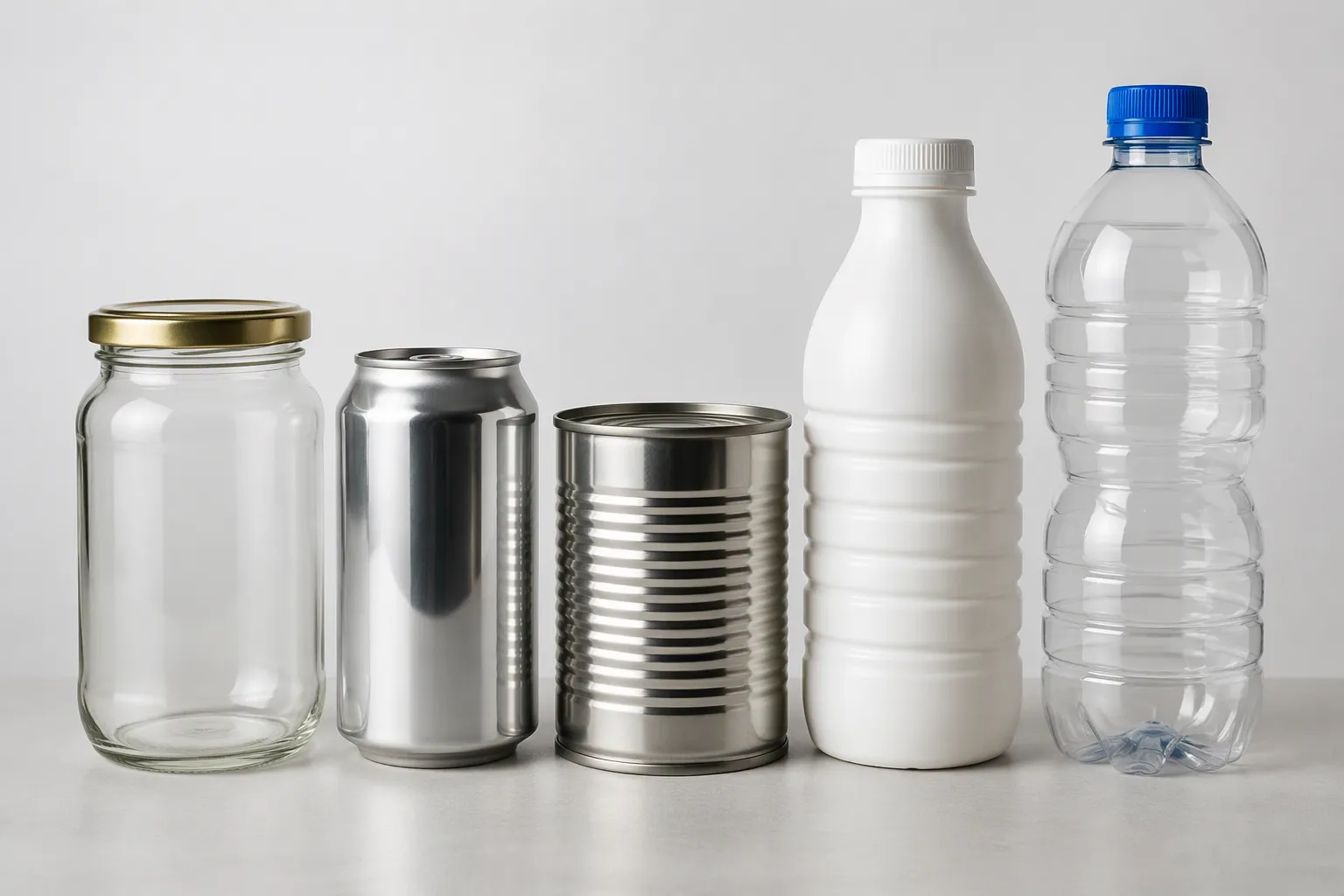
Rigid packaging uses materials that hold their own shape, even when weight is put on them. Glass jars, metal cans, and stiff plastic bottles and trays are all part of this group. These formats keep their shape whether they are full or empty, so they are easy to stack and display.
The table below compares common rigid packaging materials.
Material | Key Traits | Common Formats |
|---|---|---|
Glass | Does not let air through, does not react with food, can be recycled again and again | Jars, bottles |
Aluminum | Light metal, blocks light, oxygen, and moisture | Cans, tins |
Steel | Strong alloy, stands up to hard hits | Food cans, pails |
HDPE | Tough plastic, resists moisture and impact | Bottles, tubs |
Clear plastic, strong gas barrier, resists breaking | Drink bottles, food containers |
Glass keeps products sealed and fresh, and it helps food and drinks last longer on the shelf. Aluminum is used for beverage cans and food tins. Steel works well for food cans and larger containers. HDPE and PET are used for bottles, tubs, and trays. Each material brings its own barrier and strength to food packaging.
Rigid packaging has clear benefits. It gives strong protection for delicate items like berries, prepared salads, cut fruit, and baked goods. Clear rigid packaging lets customers check products before they buy. Stackability makes good use of shelf space from top to bottom. Faster loading works well for high-volume retailers. These traits help keep food fresh and safe all along the supply chain.
There are limits too. Rigid packaging weighs more and takes up more space in warehouses and during transport. The extra volume and weight raise the carbon footprint. Production costs are higher than flexible formats because rigid packaging needs more material and labor. Rigid containers cannot adjust to different product sizes or odd storage spaces. Condensation can form when temperatures change, though opaque materials hide the moisture. Hot products in rigid containers need proper handles to avoid skin burn risk. Rigid formats are more likely to be recycled than flexible ones, which supports sustainable packaging goals. Buyers should weigh these trade-offs against protection needs. Rigid packaging fits best where durability and long shelf life matter most.
Semi-rigid packaging keeps its shape when light weight is put on it, but it still bends a little under pressure. This middle ground sits between flexible films and fully rigid containers. Common formats include cardboard cartons, molded pulp trays, and some plastic tubs.
Fiberboard serves many food packaging needs. It carries meat, fish, pizza, burgers, bread, poultry, and French fries. Cartons with compartments often hold multipacks of yogurt cups. Molded pulp packaging comes from a water and fiber mixture pressed into shape. The raw material is about 96% water and 4% fiber, with wax or resins added for water resistance. Egg trays, produce trays, and clamshell containers for eggs and bottles all use this format. The source fibers include sugarcane bagasse, recycled paper, corrugated paper, and natural fiber. These materials are biodegradable, compostable, and renewable, which supports sustainable packaging goals.
Paperboard grades round out the options. Folding boxboard uses outer layers of virgin chemical pulp and inner layers of mechanical pulp. Solidboard gains strength from sulfate pulp and works for milk and juice when laminated with polyethylene. Chipboard comes from recycled paper and often carries inks, so it stays away from direct food contact. Each grade brings its own balance of strength, barrier, and cost.
Semi-rigid packaging balances protection and weight well. It cushions products better than flexible films and costs less to ship than heavy rigid containers. Molded pulp offers strong cushioning for fragile items. Paperboard cartons print well and stack neatly on shelves. These traits help with food preservation and safety during handling.
The limits are real. Semi-rigid formats protect less than rigid glass or metal, so they suit shorter shelf-life products. They flex less than flexible pouches, which makes them harder to fit into tight spaces. Moisture weakens paperboard over time. Buyers should match the format to the product's fragility and its distribution route.
Specialty packaging does more than just hold food. It adds extra features that help keep food safe and fresh. These packages can even react with the food or the air around it to protect quality and safety.
Active and intelligent packaging includes systems that soak up, release, or report on conditions inside the package. Active types change the environment. Oxygen scavengers pull leftover oxygen down below 0.01 percent by volume, and makers often build them from iron, ascorbic acid, or palladium. Ethylene absorbers slow down how fast produce ripens. Moisture scavengers control dampness for mushrooms, strawberries, and fresh meat. Emitters release carbon dioxide or antioxidants to protect fatty fish, nuts, and oils. Antimicrobial films and sachets stop spoilage organisms from growing, and agencies like the FDA and the European Union run approval steps for food contact.
Intelligent types share information instead. Time-temperature indicators show temperature changes along the supply chain by changing color or shape. Freshness indicators check quality during storage and when you buy the product. These tools help with food safety without changing the food itself.
Barrier films and modified atmosphere packaging make shelf life longer by controlling the gases around food. Modified atmosphere packaging swaps the air inside a package for a gas mix, usually carbon dioxide and nitrogen, to slow oxidation. Barrier films then seal the product so more oxygen cannot get in. Common materials include polyethylene for moisture and oxygen, ethylene vinyl alcohol for oxygen-sensitive meats and dairy, and aluminum foil.
Modified atmosphere packaging aims for a balance where oxygen stays low enough to slow aerobic activity and carbon dioxide stays high enough to hold back ethylene-driven ripening. For many fresh produce types, that means oxygen at 2 to 5 percent and carbon dioxide at 3 to 10 percent, though the targets differ by product. Tiny holes of 1 to 200 microns help balance these gases and stop anaerobic respiration. This approach boosts food preservation and limits air, moisture, and bacteria problems across the cold chain.
Every packaging level has its own clear job. Primary packaging touches the food and keeps it safe. Secondary packaging groups units together for handling and display. Tertiary packaging moves large loads through the supply chain.
Flexible, rigid, and semi-rigid materials each trade protection for cost and convenience. Flexible formats save weight and space. Rigid formats give durability and a long shelf life. Semi-rigid formats balance the two.
No single option is best. The type of food, the shelf life, and the distribution needs decide the fit, and each format works best in its own setting.
Specialty food packaging technology now adds active and barrier functions. These tools extend shelf life, improve food safety, and support food preservation. They add safety benefits without favoring one material.
Primary packaging touches the food directly and keeps it safe where it is sold. Secondary packaging groups primary units together for handling and display. Tertiary packaging moves bulk loads through the supply chain. Each level has its own clear job in food packaging.
Flexible packaging saves weight and space, so it works well for shipping large amounts. Rigid packaging gives durability and a long shelf life for fragile or premium items. The food type and the distribution route decide the fit. Both formats support food safety when they are matched correctly.
Semi-rigid formats hold their shape under light weight but still bend under pressure. Cardboard cartons and molded pulp trays are common examples. This packaging balances protection and shipping cost. It suits shorter shelf-life products better than heavy rigid containers.
Active packaging removes oxygen or moisture, and intelligent packaging reports temperature or freshness. Modified-atmosphere packaging swaps air for a gas mix to slow spoilage. These packaging tools extend shelf life and protect quality across the cold chain.


