
Views: 0 Author: Site Editor Publish Time: 2026-11-19 Origin: Site
Thermal forming plastic is a simple idea. A manufacturer applies heat to a flat plastic sheet until it turns soft and pliable. The soft sheet then takes the shape of a mold, and cooling locks that shape in place. Thermoforming ranks among the most common and cost-effective ways to make plastic parts. Packaging trays, clamshell containers, and vehicle panels all come from this method. The process suits both small runs and large production volumes. Thermoforming also works with many standard plastic sheets. Simple molds keep tooling costs low, and the method handles large parts well. Cooling holds the final shape.
Thermal forming uses a mold to shape a heated plastic sheet into a part.
The process has four steps: heat, form, cool, and trim.
Vacuum forming and pressure forming are two common ways to do it.
Thermoplastics such as polystyrene and polyethylene work well for this process.
Thermal forming keeps the cost of tools low and makes it easy to work with large parts.
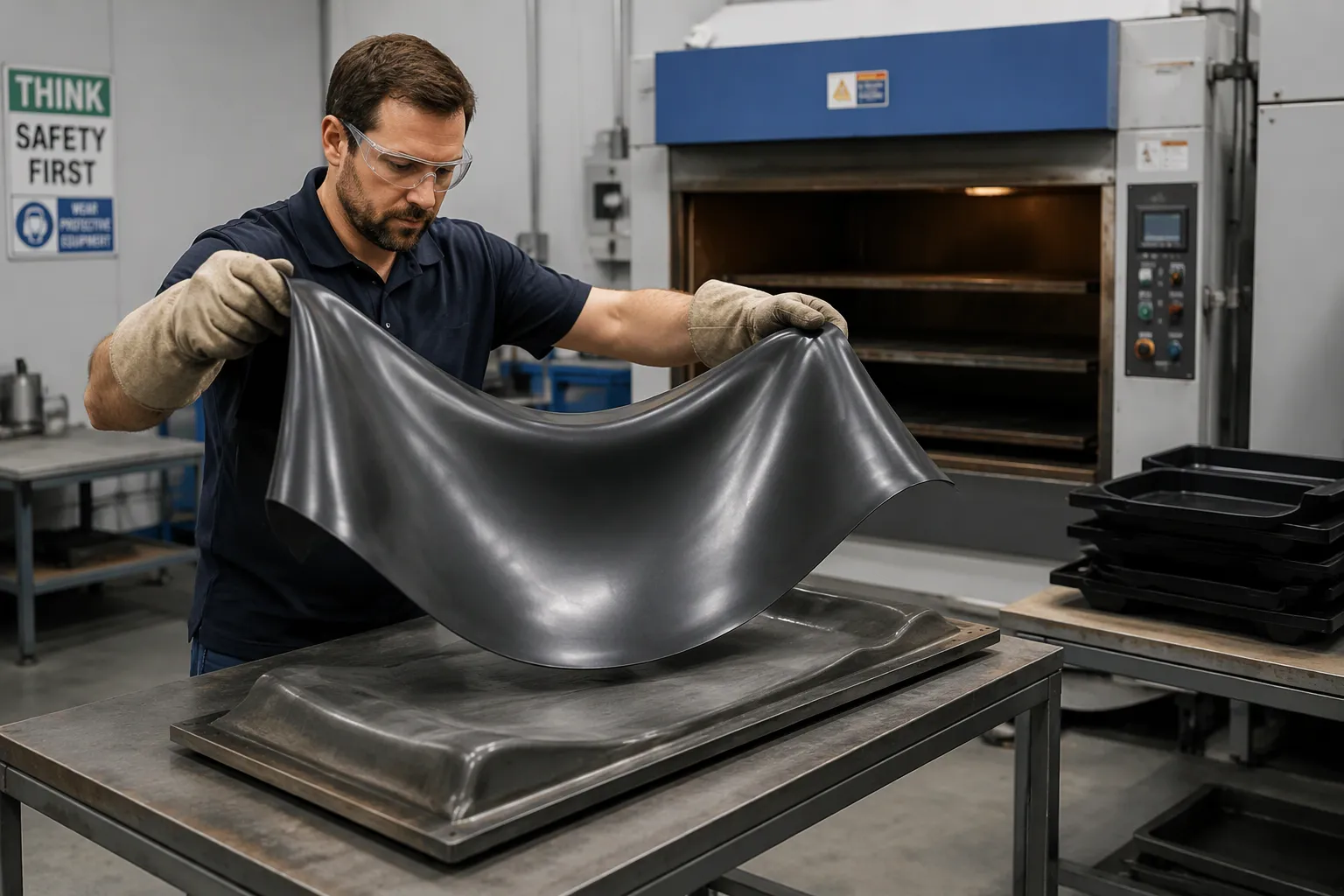
Thermoforming is a way to make plastic parts. It heats a thermoplastic sheet until it is soft enough to form. The soft sheet then takes the shape of a mold. Cooling sets the shape, and trimming gives you the finished product. That short sequence answers the question of what is thermoforming in practical terms.
The material choice matters here. Thermoplastics soften when heated and harden again when cooled. This behavior allows repeated reshaping without a chemical reaction. A factory can heat one sheet, form it, and cool it in a single cycle. The same sheet cannot be reused after trimming, but the scrap can often be reground. Thermoplastics include common sheets such as polystyrene, polyethylene, and polypropylene. Each one softens at a different temperature, so operators set the oven to match the material.
The forming temperature sits above the point where the sheet turns rubbery but below the point where it melts and sags. Operators watch the sheet closely during heating. An overheated sheet loses strength and tears during stretching. An underheated sheet resists the mold and leaves weak corners. Skilled setup work keeps the sheet in the right window.
Thermoforming differs from injection molding and extrusion in one key way. It shapes a flat sheet rather than melted pellets or a continuous stream. Injection molding forces molten plastic into a closed steel tool. That method suits small, complex parts made in very high volumes. Extrusion pushes melted plastic through a die to make long profiles such as pipe or siding. Both methods serve their own niches well.
Plastic thermoforming fits best when parts are large, thin-walled, and needed in moderate volumes. A single-sided mold costs far less than a matched steel tool. That lower tooling cost makes thermoforming attractive for prototypes, short runs, and oversized panels. The process also handles wide sheets that would not fit inside a typical injection mold. Designers gain freedom for deep draws and broad surfaces.
The trade-offs are worth noting. Thermoformed parts usually carry looser tolerances than injection-molded parts. Wall thickness varies as the sheet stretches over the mold. Secondary operations remove the excess material after cooling. These limits rarely matter for trays, covers, and housings. They matter more for precision components with tight fits.
Readers who compare methods should match the part to the process. Small and intricate favors injection molding. Continuous length favors extrusion. Large, shallow, and cost-sensitive favors thermoforming. Each method earns its place in a modern plant.
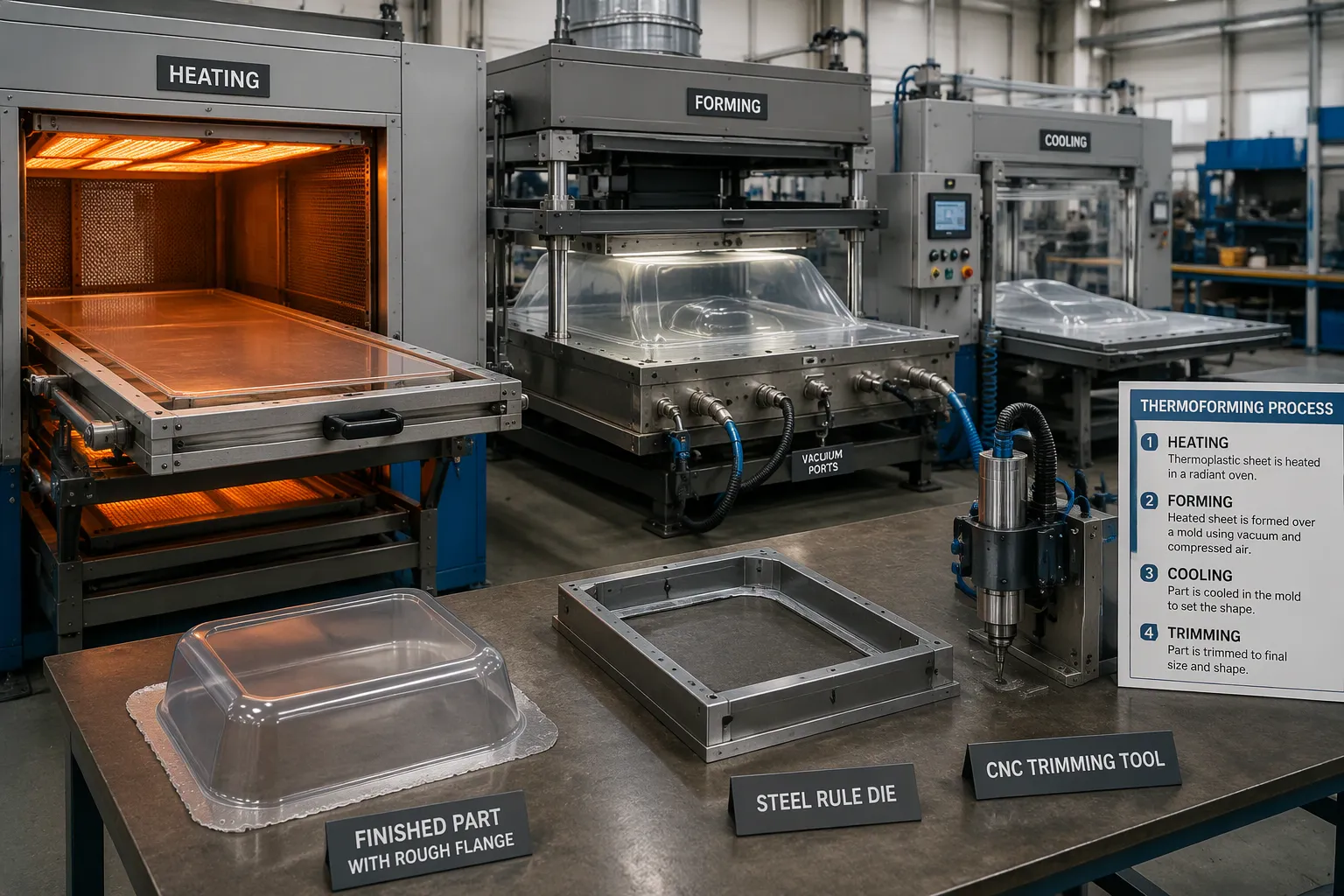
The plastic thermoforming process follows a clear order of steps. Workers load a thermoplastic sheet into a clamping frame. The frame carries the sheet into an oven. There, heating a thermoplastic sheet raises its temperature until it starts to soften. The sheet turns rubbery and easy to bend. This stage needs care. An oven that runs too hot makes the sheet weak. Too cool, and the sheet will not stretch. Thermoplastics soften in a predictable way. Thermal forming plastic relies on that trait. Different thermoplastics need different oven settings. The oven sends heat through radiant panels above and below the sheet.
The next stage moves fast. The heated thermoplastic sheet moves to a forming station. A single-sided mold sits beneath or above it. The plastic thermoforming process then uses heat, vacuum, and pressure to pull or push the sheet against the mold surface. Vacuum forming pulls air out from between the sheet and the tool. Pressure forming adds compressed air on the opposite side. Together they press the soft sheet into every detail of the cavity. The heated thermoplastic material stretches across the tool. Shops build molds from aluminum, wood, or composite materials.
Cooling locks the shape. Air or a water-cooled tool pulls warmth out of the part. The plastic stiffens and holds the mold contour. Workers then release the clamp and remove the part. This typical thermoforming process takes seconds to minutes per cycle, depending on sheet thickness and part depth. A heated sheet cools quickly once it leaves the oven. Thick sheets hold warmth longer and need more cooling time. Thin sheets set almost at once.
The cooled part still has a rough edge. A flange of unformed sheet surrounds the shaped area. Trimming removes this extra material and brings the part to final size. Shops pick from several tools. A steel rule die cuts simple outlines at high speed. CNC routers handle complex curves and low volumes. Sawing and laser cutting serve special cases. The trim fixture holds the part steady during the cut. A sharp die makes a clean edge. A dull die tears the plastic and leaves a ragged line.
Finishing comes after trimming. Holes, slots, and mounting points get drilled or punched. Some parts get a protective film, a printed graphic, or a coat of paint. Others need solvent or ultrasonic welding to join two halves. Assembly steps vary by product. A tray may need no finishing at all. A vehicle panel may pass through several stations before it ships.
The plastic thermoforming process rewards careful planning at every stage. Designers who study the thermoforming process in detail avoid common faults. Thin corners, webbing between features, and uneven walls all trace back to setup choices. A well-run line checks each heated sheet before forming. It also inspects trimmed parts against a gauge. Setup sheets record oven zones, cycle times, and clamp pressure for each part number. Workers follow those sheets on every run. These habits keep scrap low and quality steady.
Readers who want the full picture should note one more point. The forming process changes wall thickness as the sheet stretches. Deep draws thin the walls near the base. Shallow parts keep a more even gauge. This behavior sets plastic thermoforming apart from methods that fill a closed tool. It also explains why designers add material where the draw runs deepest.
Vacuum forming and pressure forming are the two main methods used in the industry. In vacuum forming, a heated sheet rests over a mold, and a pump removes air from the gap between them. Outside air pressure then pushes the soft sheet down onto the tool. This vacuum forming process works well for shallow parts with simple shapes, like trays and covers. The tooling stays cheap, and the cycle runs fast.
Pressure forming adds a second force. Compressed air pushes the sheet from above while vacuum pulls from below. The extra pressure presses plastic into sharper corners and finer surface detail. Pressure forming costs more to set up, but it delivers parts that look close to injection molded. Shops choose between the two based on detail, budget, and volume. Both methods use a single-sided mold, so tooling stays affordable.
Twin-sheet forming heats two thermoplastic sheets at the same time. The machine forms each sheet against its own mold half, then presses the halves together while the edges stay molten. The result is a hollow part with bonded walls, like a fuel tank or a double-walled case. This approach builds strength without extra assembly steps.
Matched-mold forming uses two metal molds that press the heated sheet between them. The closed tool controls both surfaces, so wall thickness stays more even and detail shows on both sides. These thermoforming processes cost more than vacuum methods, but they hold tighter tolerances. Designers pick them when a part needs crisp features or consistent walls. Each method fits a different job, and the right choice depends on shape, volume, and budget.
Most thermoplastics work well with thermoforming. Polystyrene, polyethylene, and polypropylene all get soft when heated and keep their shape after cooling. Each one is right for a different job. Polystyrene forms easily and costs little, so it works for disposable trays and display packs. Polyethylene adds toughness and chemical resistance, which helps for tanks and liners. Polypropylene takes higher temperatures and repeated bending, a good fit for hinged containers and automotive trim.
Material choice guides the setup. Every thermoplastic softens at its own temperature, so operators adjust the oven to the sheet in front of them. A sheet that runs too hot sags and tears. A sheet that runs too cool fights the mold and leaves thin corners. Clear sheets need even heating to avoid haze. Thick sheets need more oven time to warm all the way through. The plastic thermoforming process rewards teams who treat material, oven settings, and mold design as one system.
Thermal forming plastic appears in many industries. Packaging leads the list. Trays, clamshells, blister packs, and cup lids come off vacuum lines every day. Vehicle panels, interior trim, and fender liners use the same basic method. Medical settings depend on thermoforming for sterile packaging and equipment housings. Retail displays, machine guards, and refrigerator liners complete the list.
The method fits these products for clear reasons. Parts stay large and thin-walled, and tooling costs stay low. A single-sided mold serves short runs and prototypes without a big investment. Twin-sheet methods build hollow parts such as fuel tanks and double-walled cases. Matched-mold tooling gives crisper detail when a product needs it. Buyers who weigh shape, volume, and budget usually find a thermoforming route that fits. The process keeps earning its place on factory floors.
Thermal forming plastic turns a heated sheet into a shaped part. The sheet gets soft, meets a mold, and cools into its final form. The process follows four steps: heat, form, cool, and trim. Vacuum forming, pressure forming, twin-sheet forming, and matched-mold forming each serve different needs. Thermoplastics such as polystyrene, polyethylene, and polypropylene remain the workhorses. Thermoforming stays practical because tooling costs stay low and large parts remain easy to produce. Industries from packaging to automotive still rely on it. Readers can now compare methods and pick the thermoforming approach that fits their next project.
The method heats a plastic sheet until it turns soft. The soft sheet then takes the shape of a tool, and cooling holds that shape. Trimming finishes the part. People use the word thermoforming for this same sequence. The idea stays simple even on a large production line.
Start with the part shape and the budget. Vacuum forming handles shallow parts with simple curves at low tooling cost. Pressure forming adds sharper detail and crisper surfaces. Twin-sheet forming builds hollow parts with bonded walls. Matched-mold forming holds tighter tolerances. Each thermoforming route fits a different job.
Most thermoplastics form well. Polystyrene, polyethylene, and polypropylene are common choices. Each softens at its own temperature, so operators set the oven to match the sheet. Clear sheets need even heat to avoid haze. Thick sheets need more oven time. Material and oven settings work as one system in thermoforming.
Tooling is the big lever. A single-sided tool costs far less than a matched steel tool, and that gap shapes the whole budget. Sheet material, cycle time, and trimming add to the total. Large, thin-walled parts often cost less through thermoforming than through other methods.
The process holds looser tolerances than injection molding. Wall thickness shifts as the sheet stretches, and deep draws thin the walls near the base. Secondary operations remove excess material after cooling. Designers plan for these limits. Thermoforming still suits trays, covers, housings, and panels, where slight variation rarely matters. Shops build molds with the draw depth in mind.


