
Views: 0 Author: Site Editor Publish Time: 2026-11-19 Origin: Site
Thermoforming polyethylene means heating a plastic sheet until it gets soft. Then you pull it against a mold using vacuum or air pressure to shape a finished part. This method is still a useful, money-saving manufacturing choice in 2026. Engineers often compare thermoforming with injection molding when they start a project. Injection molding works well for making many small, complex parts. Thermoforming polyethylene is better for large parts, low tooling cost, and fast turnaround. Three questions guide the decision: how does the process work, which polyethylene properties matter, and where does the material fit best? The sections below answer each one with practical detail.
Thermoforming turns plastic sheets into large parts. It costs little for tools and finishes quickly.
Polyethylene gives strong resistance to impacts, moisture, and chemicals, which makes it good for tough applications.
Thermoformed polyethylene trays and bins are used in material handling, food service, and logistics industries.
Tooling with temperature control makes parts better for tight tolerances and cuts down on waste.
Picking the right polyethylene grade helps you meet the rules and save money over time.
Every thermoforming process follows the same basic steps, and each stage affects the final part quality.
Heating. The sheet goes into an oven until it gets soft. Even heating matters most here, because hot and cold spots stretch differently and cause thin walls later.
Forming. The soft sheet seals against the mold, and vacuum or air pressure pushes it into the cavity shape. Vacuum works for gentle draws, while pressure forming handles deeper details and sharper corners.
Trimming and finishing. The cooled part comes out of the tool, and a trim station cuts the edge, opens holes, and removes extra material.
The process of thermoforming needs tight control at each step. Skilled operators watch the sheet sag during heating and adjust the cycle before defects show up.
High-density polyethylene follows the same route with one key difference. The industrial thermoforming process reheats a sheet that was extruded earlier until it softens below its melting temperatures, then pushes it against the mold. The material never flows as a melt during shaping. This is why thermoforming polyethylene keeps the sheet's built-in stress pattern and surface finish.
Tooling choice drives part quality. Temperature-controlled tooling holds the mold surface at a set point, so cooling stays even and parts resist warping and sink marks. Non-temperature-controlled tooling costs less and works for simple shapes, short runs, and loose tolerances. Buyers should match tooling to the tolerance the application really needs.
Polyethylene also runs molten in extrusion blow molding, injection molding, and rotational molding. Each route fits different shapes and volume needs. Thermoforming fits best for large panels, deep trays, and low-to-mid volumes where tooling cost and lead time drive the decision. The thermoforming process also works for short production runs and design changes, because tooling changes stay cheap.
A quick note on terminology: engineers often shorten high-density polyethylene to HDPE in drawings and specifications. The thermoforming process treats it as a sheet-fed material, not a molding compound.
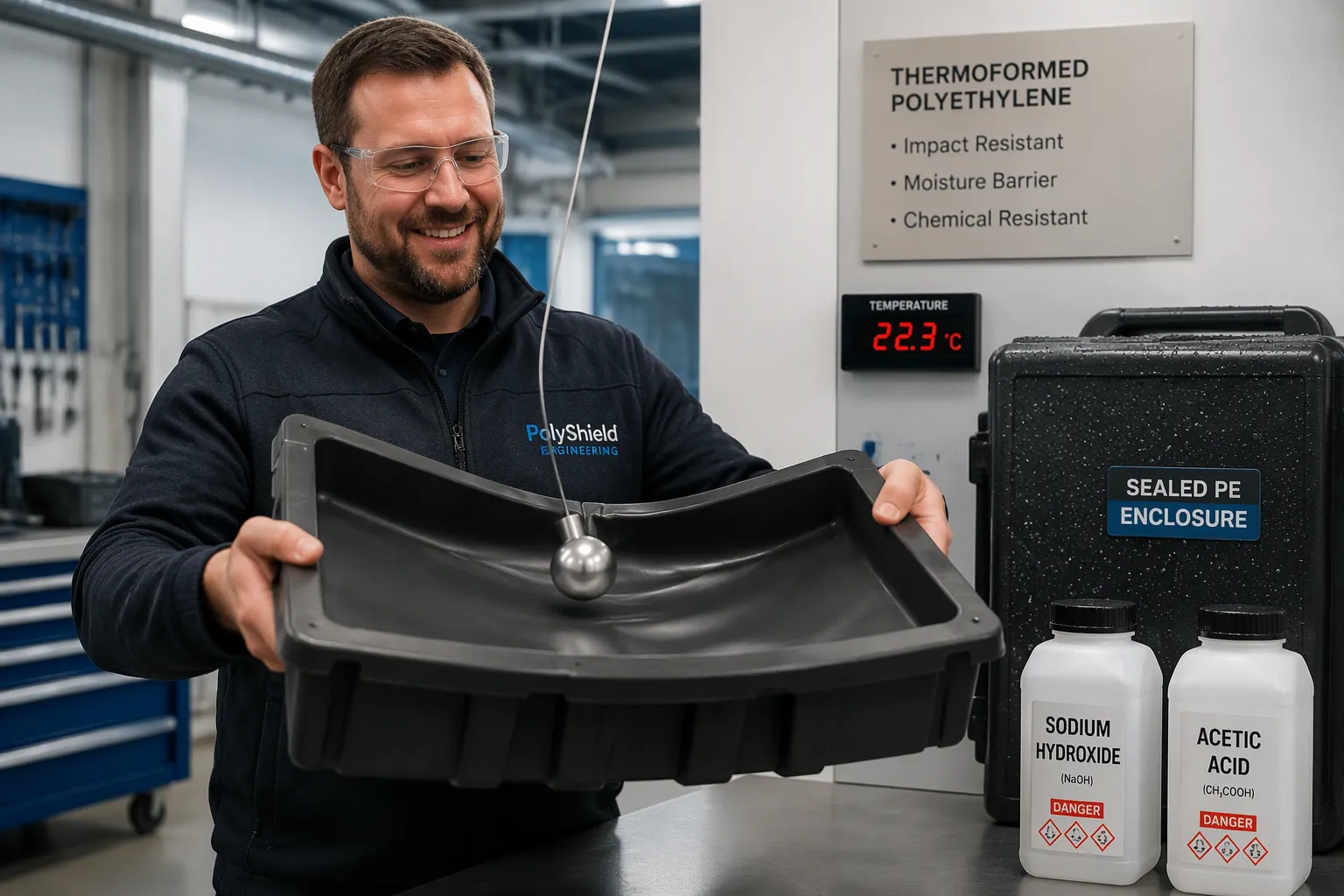
Polyethylene takes in impact energy well. A thermoformed tray or panel bends when hit and springs back into shape instead of cracking. This makes it a good choice for high-stress uses like returnable bins and machine guards. The material also bends without breaking, and it resists tearing at trimmed edges and drilled holes. Engineers who choose polyethylene get a part that survives rough handling every day.
The mechanical properties of polyethylene stay useful across a wide temperature range. The polymer gets softer little by little as heat goes up, so designers should check the service temperature before they settle on a wall thickness. Its tensile strength is in the moderate range for a thermoplastic material, which makes it a poor fit for thin, load-bearing structural members. Thicker walls or ribbed shapes fix most stiffness problems.
Polyethylene has strong barrier properties against water and moisture vapor. A sealed thermoformed enclosure keeps contents dry in wet or humid places. The same barrier behavior limits oxygen and grease transmission, which helps in food and industrial packaging. These barrier properties come from the polymer's nonpolar structure, and they hold up well in demanding settings.
Polyethylene resists most acids, bases, and cleaning agents. Thermoformed parts therefore work in washdown areas, chemical storage, and outdoor installations. The material also blocks electricity, which supports use in equipment housings and cable covers.
Comparisons with other thermoplastic materials should stay practical. ABS forms sharper details and takes paint more easily. Polycarbonate wins on clarity and stiffness. Acrylic offers optical quality. Polyethylene fits best where toughness, moisture resistance, and chemical durability matter more than surface gloss. Each of these thermoplastic materials has a place, and grade selection should follow the application.
Recyclability makes the case stronger. HDPE carries the number 2 resin code, and many municipal programs accept it. Thermoformed scrap can go back into the recycling stream, which supports sustainability goals. Buyers should check local acceptance before they promise recycled content in a specification.
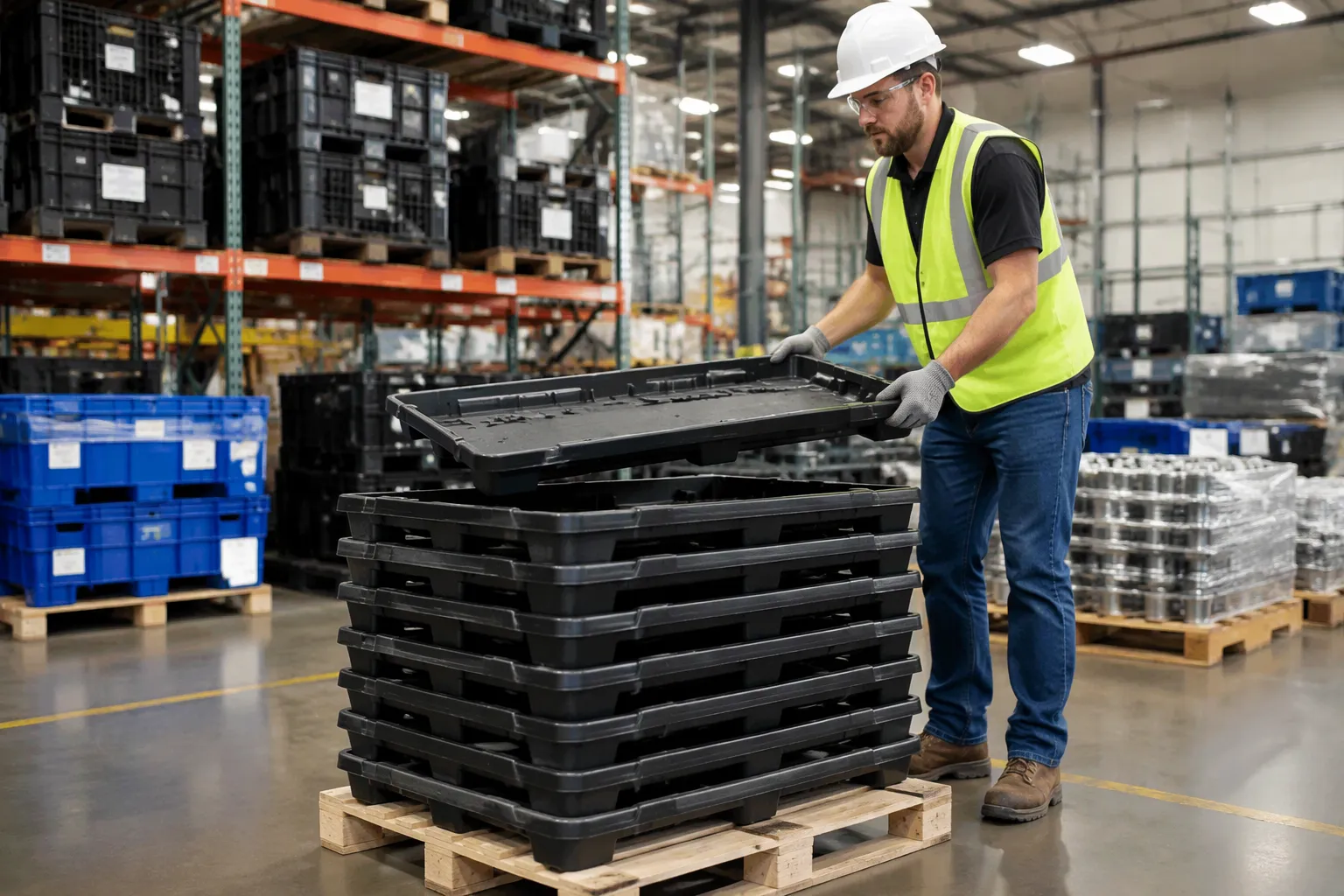
Thermoformed polyethylene is used in many industries, and trays are the most common product. Material handling teams use heavy-duty trays to move parts between work stations. Food service workers depend on food trays that stand up to moisture and cleaning products. Logistics companies stack trays in warehouses and on trucks, where rough handling happens every day. Food trays also show up in cafeterias, catering, and cold storage. Packaging lines use trays as inner padding for fragile goods. Returnable trays reduce waste over many trips. Each tray design is based on the load it must hold and the space it must fit.
Whether an application works depends on technical performance. Impact resistance lets a loaded tray survive drops and crashes on a dock floor. Moisture resistance keeps food trays and packaging dry in humid warehouses and washdown areas. Durability in daily use comes from the material's toughness and its resistance to tearing at edges and holes. These properties explain why thermoforming polyethylene holds a steady place in tray production. The thermoforming process also allows deep draws and ribbed walls, so a tray gains stiffness without extra weight. Designers who compare options should note that molded pulp thermoforming suits fiber-based packaging, while polyethylene trays fit wet, heavy, or repeated-use duty. The moulded pulp thermoforming process forms pulp slurry against a screen, and that route differs from sheet-based thermoforming. Both methods have value, and the choice follows the load, the environment, and the reuse plan.
High-density polyethylene handles the toughest jobs. Returnable bins, pallets, machine guards, and chemical tanks all gain from its impact strength. High-density polyethylene also works for cutting boards, outdoor enclosures, and cable covers. Food trays molded from this grade meet food service needs for moisture resistance and easy cleaning. Packaging applications include divider trays, totes, and shipping containers. A short checklist helps match grade to duty:
Requirement | Grade Consideration |
|---|---|
High impact loads | Tough, high-molecular-weight grade |
Food contact | Food-grade compliant resin |
Chemical exposure | Grade rated for the specific agent |
Outdoor service | UV-stabilized grade |
Recycled content goals | Grade with verified recycled input |
Buyers should confirm each point with the supplier before release. The properties of the chosen grade decide the final part performance. A thermoplastic like polyethylene rewards careful grade selection with long service life.
Thermoformed polyethylene parts often have to follow food-contact rules. In the United States, the FDA controls food-contact resins. Suppliers must prove the grade has a valid compliance statement. European buyers want EU food-contact framework compliance. Both paths need paperwork from the resin maker, not just the converter.
Other standards depend on the market. Flammability tests apply to equipment housings and cable covers. Drop and load tests apply to returnable trays and bins. Recycled content claims need proof, and the number 2 resin code helps here. A converter should list every standard the part must meet before quoting. Testing adds cost and time to the thermoforming process.
Sheet thickness drives cost first. Thicker sheet uses more resin, and resin is the biggest line in most quotes. Tooling type comes next. Temperature-controlled tooling costs more up front. Yet it cuts scrap and rework on tight-tolerance parts. Non-temperature-controlled tooling suits simple trays and short runs.
Part size and production volume shape the rest. Large parts need bigger ovens and more trim handling. Low volumes favor thermoforming, because tooling stays cheap compared with injection molding. High volumes shift the math toward faster cycles and automated trimming.
Buyers should weigh value over the product life cycle, not just the unit price. A durable tray that survives many trips often costs less per trip than a cheap one replaced often. Packaging buyers see the same pattern. Sturdy thermoformed packaging protects goods, cuts damage claims, and adds a reliable moisture barrier. Food service operators also value trays that clean easily and resist chemicals. Replacement costs fade over years of daily use. Logistics teams count the same savings when trays stack well and last through repeated handling.
The process section showed how heating, forming, and trimming turn a soft sheet into a finished part. The properties section covered impact strength, moisture barrier behavior, and chemical resistance. The applications section linked those traits to trays, bins, and enclosures in material handling, food service, and logistics.
Thermoforming polyethylene works best when the application fits its property profile. The method offers versatility, compliance that meets regulations, and cost savings over the product life cycle when the fit is right.
Readers should check their part requirements against the grade-selection checklist. A qualified thermoforming partner can confirm the right grade and tooling before production starts.
Yes. Tooling costs stay low when you compare them with injection molding. Design changes also cost little, since tooling changes stay cheap. So short runs and prototype rounds fit the process well.
Temperature-controlled tooling holds the mold surface at a set point. Cooling stays even, and parts resist warping and sink marks. Buyers should pick it for tight-tolerance parts. Simple trays and short runs work fine with non-temperature-controlled tooling.
In the United States, the FDA controls food-contact resins. European buyers want EU food-contact framework compliance. Both paths need a valid compliance statement from the resin maker. Flammability and drop tests apply where the market requires them.
The buyer lists the duty first: impact loads, food contact, chemical exposure, outdoor service, or recycled content goals. The supplier then matches a grade to each point. Getting it in writing before release protects both sides.


